
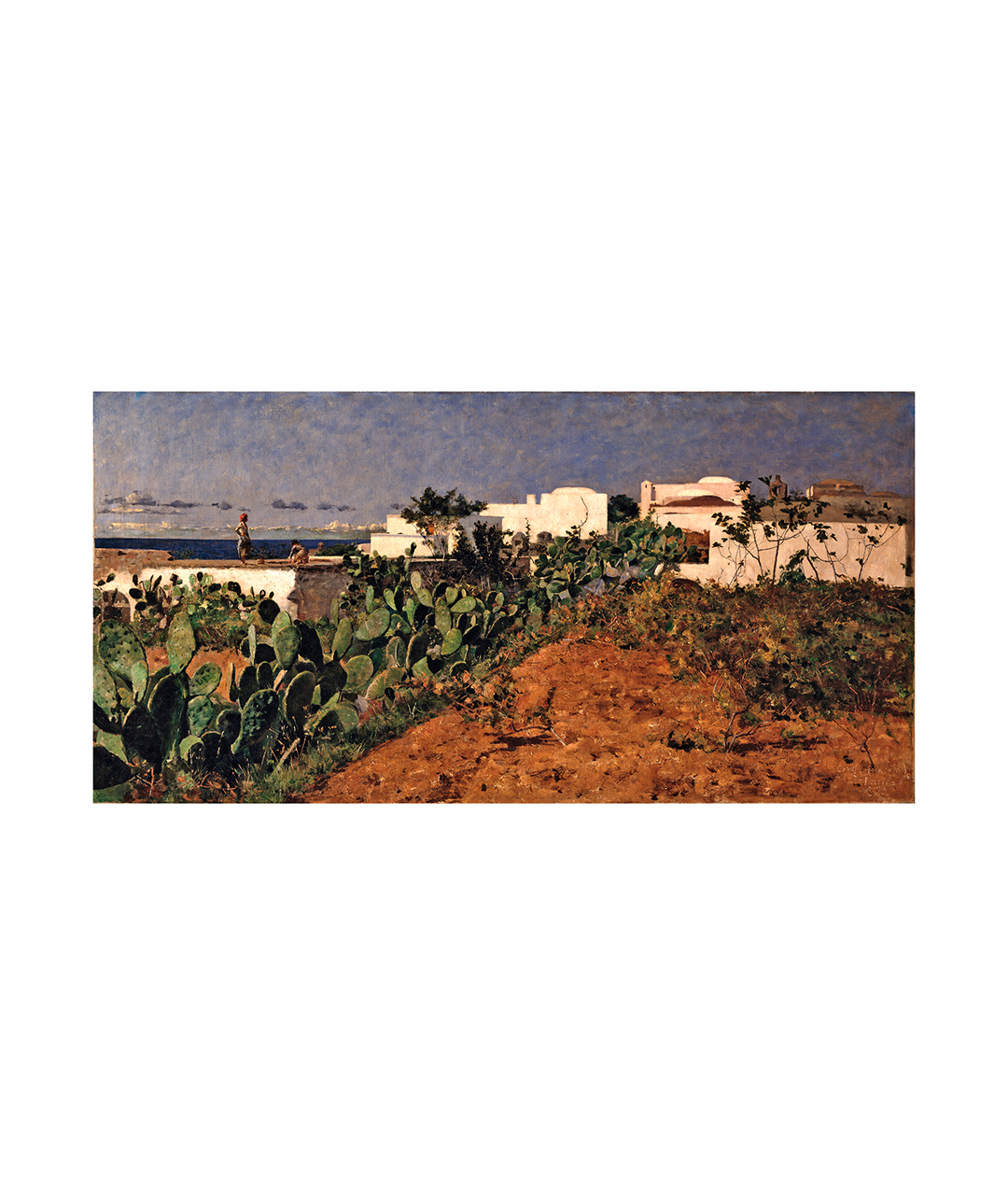
 Henrique Pousão (1859-1884) 1882 Oil on canvas Casas Brancas de Capri (The White Houses of Capri) is a landscape by the naturalist painter, Henrique Pousão. It is a work that clearly shows the artist's exceptional qualities: his talent for composition and his particular sensit…
Collections
National Treasures
- Henrique Pousão (1859-1884) 1882 Oil on canvas Casas Brancas de Capri (The White Houses of Capri) is a landscape by the naturalist painter, Henrique Pousão. It is a work that clearly shows the artist's exceptional qualities: his talent for composition and his particular sensit…
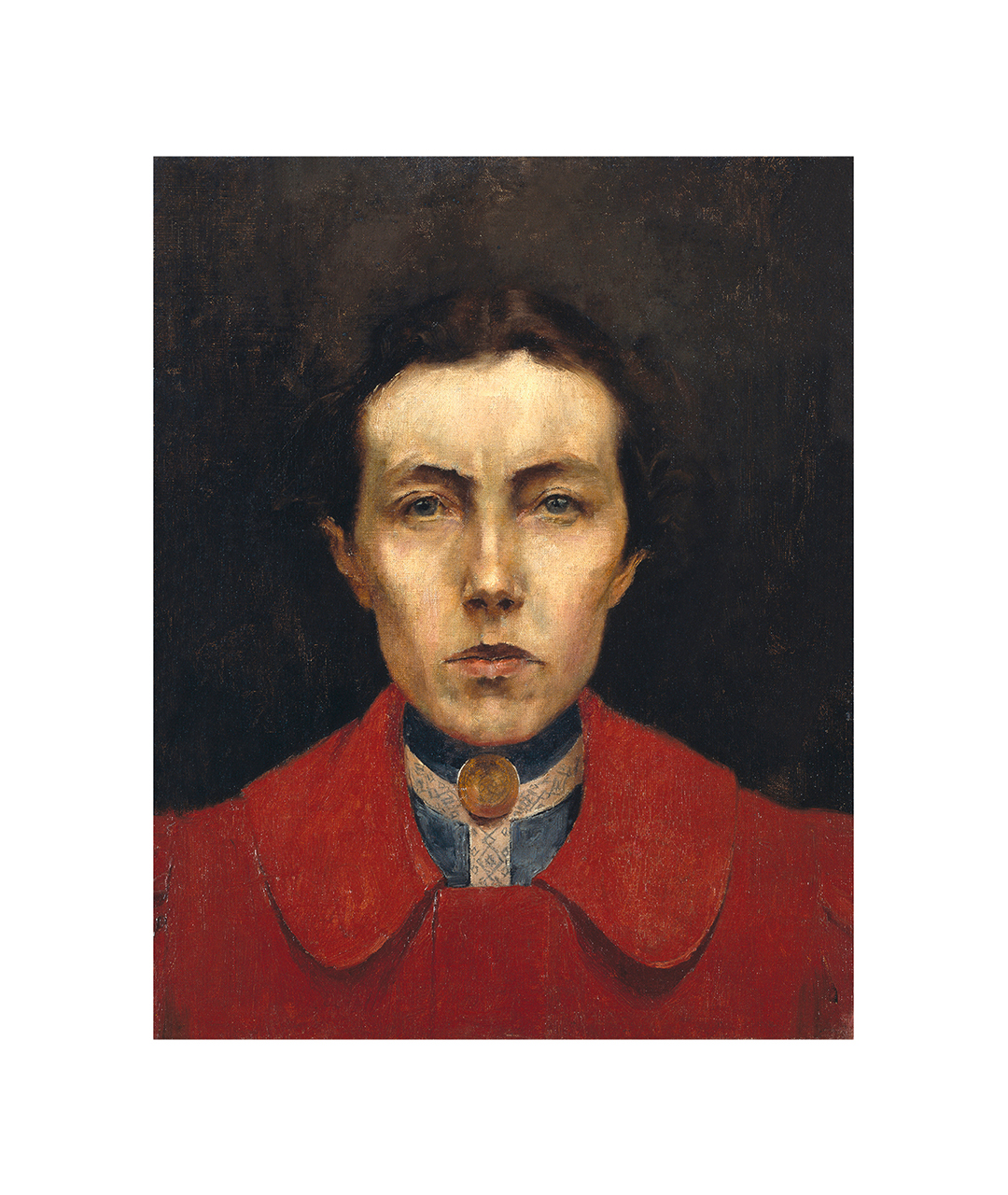 Aurélia de Souza (1866-1922) c. 1900 Oil on canvas In this self-portrait, one of the several she painted during her life, the artist presents herself in a manner as enigmatic as disturbing. A small canvas presumably done in Paris around 1900, its unique features distance it fr…
Self-Portrait of Aurélia de Souza
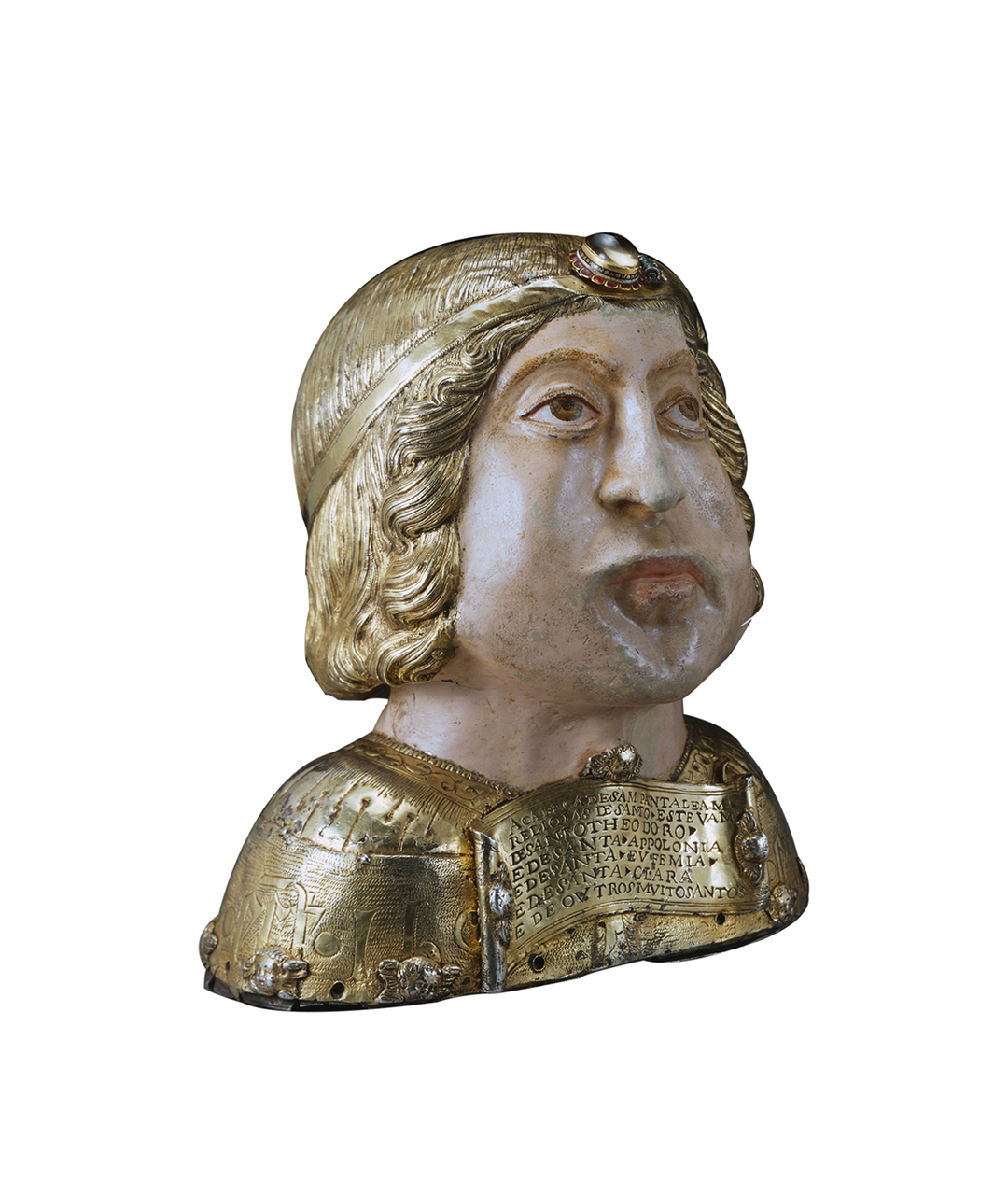 Unknown artist 15th and 16th century White, gilded and painted silver; enamels; gold, hyaline quartz The cult of St Pantaleon has a long tradition in the Catholic Church and the 3rd and 4th century martyr became one of Porto’s patron saints. The devotion to St Pantaleon, a doc…
Reliquary bust of St Pantaleon
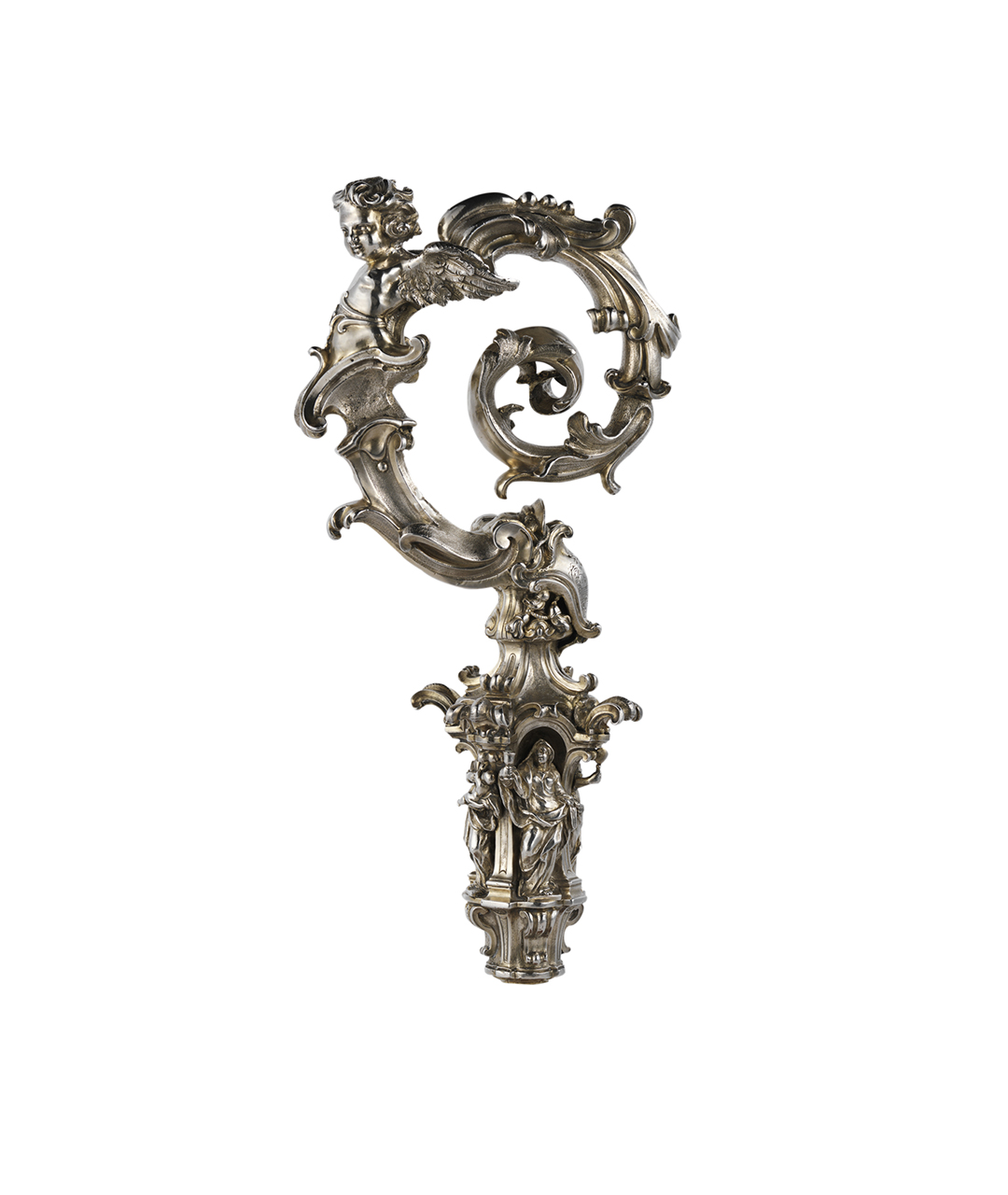 Antonio Arrighi (goldsmith) 1740 Cast silver, chiselled; gilded This crosier comes from a set of pieces belonging to Friar José Maria da Fonseca Évora (Bishop of Porto, 1741-1752). A payment record, dated 10 th January 1740, documents its execution in the workshop of the famou…
Episcopal Crosier
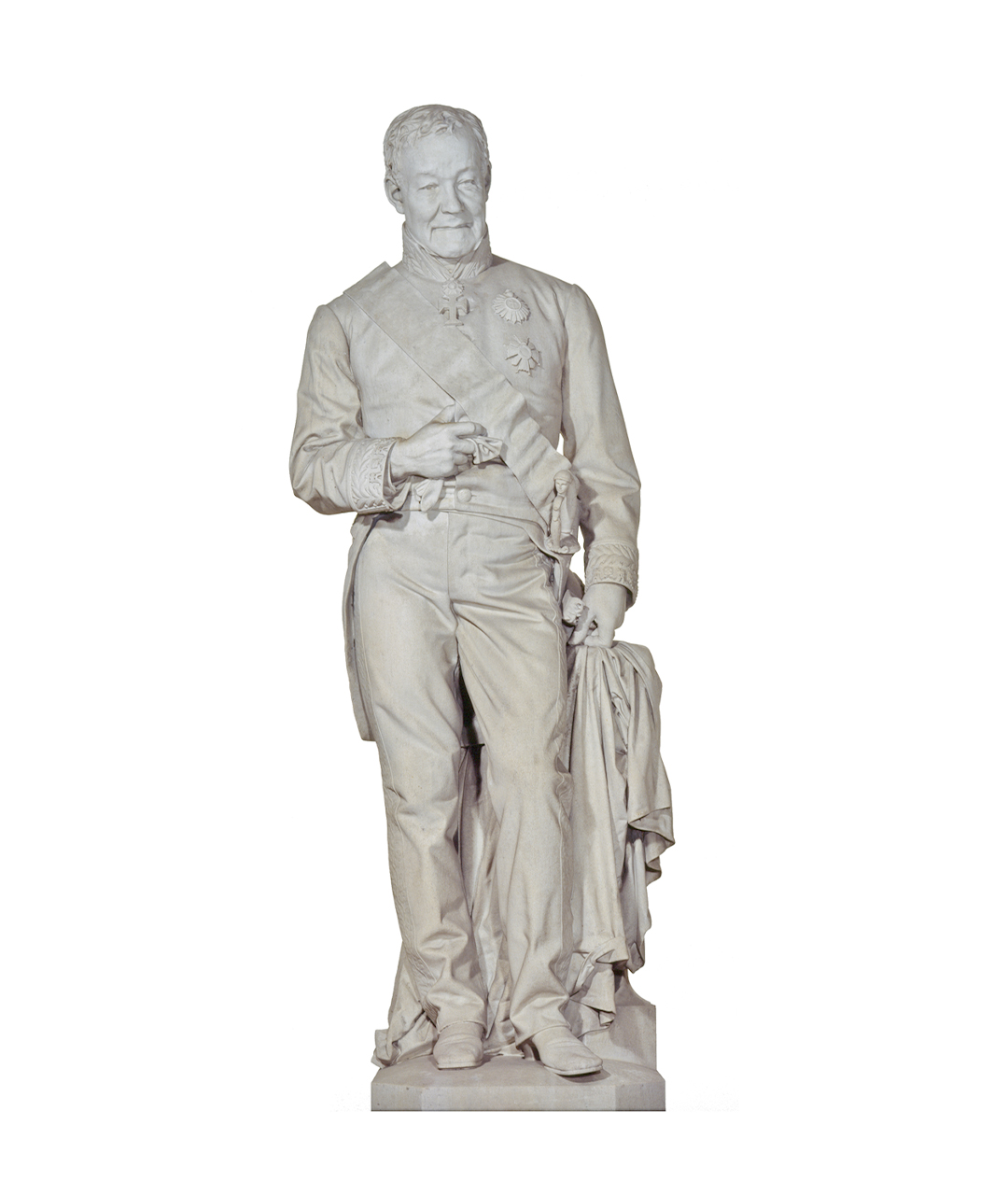 António Soares dos Reis (1847-1889) 1876 Original plaster Soares dos Reis portrays Joaquim Ferreira dos Santos, Count of Ferreira (1782-1866), wearing the uniform of a Peer of the Realm, including the symbols of the Portuguese coat-of-arms, sash and the Cross of Christ. The st…
Count of Ferreira
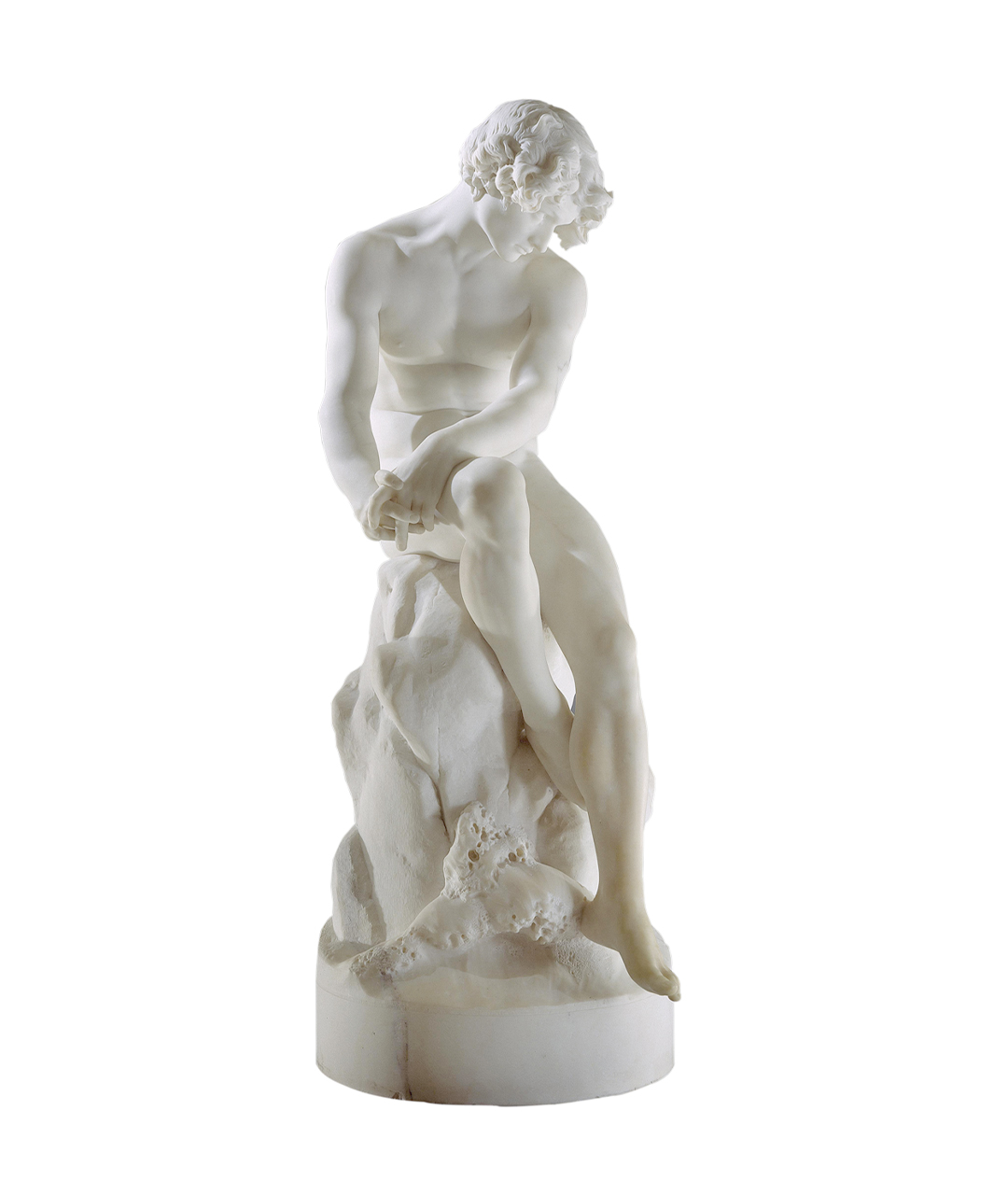 António Soares dos Reis (1847-1889) 1872 Carrara marble One of the most important works of 19th century Portuguese sculpture, O Desterrado (The Exiled) was inspired by Alexandre Herculano's poem, Tristezas do desterro (Sorrows of Exiled). It was Soares dos Reis’ final exam pie…
The Exiled
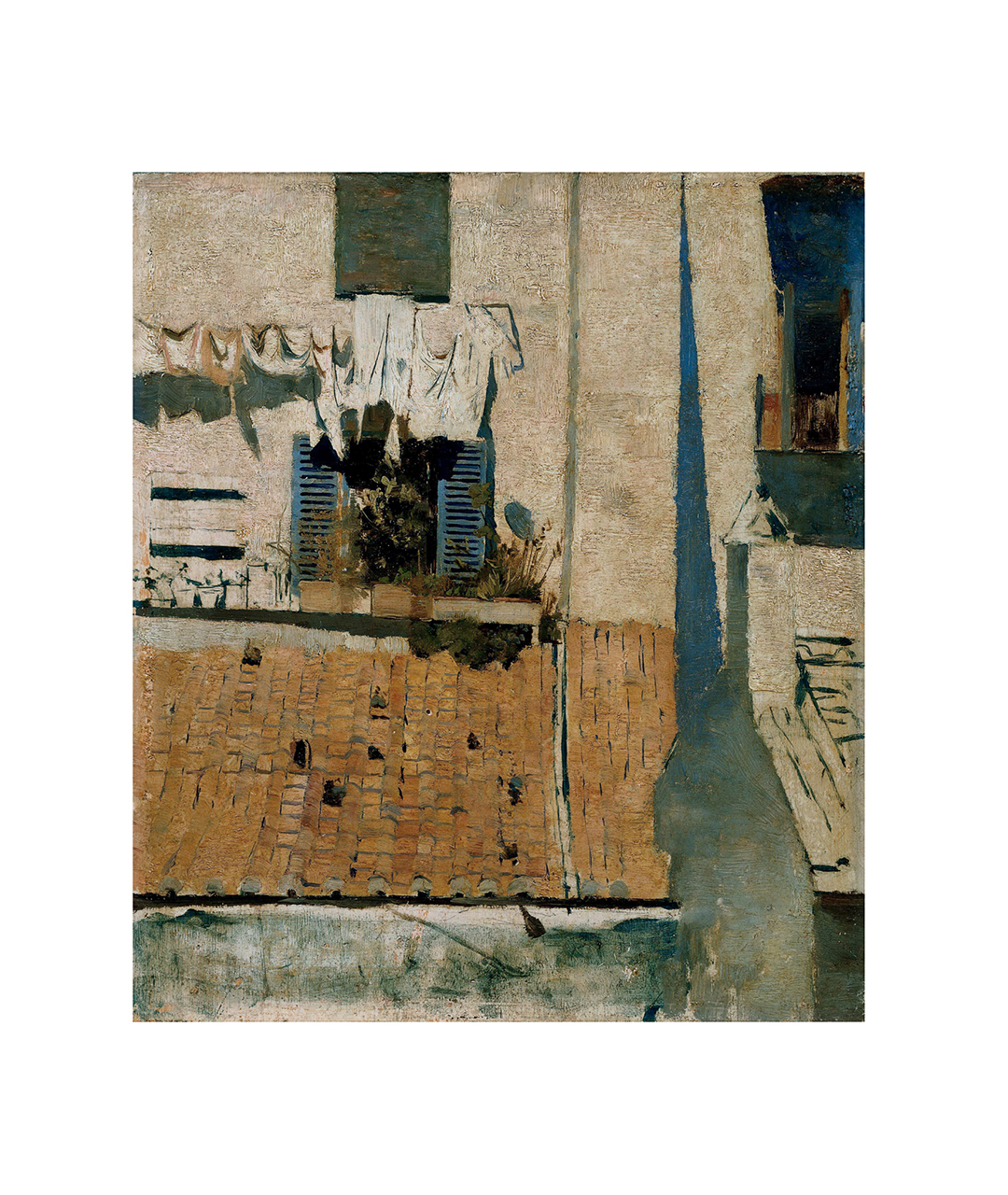 Henrique Pousão (1859-1884) 1882-1883 Oil on wood Painted during one of his stays on the island of Capri in the summers of 1882 and 1883, this small unfinished tablet is the culmination of Pousão’s research begun in works like As Casas Brancas de Capri (The White Houses of Cap…
Window with Blue Shutters
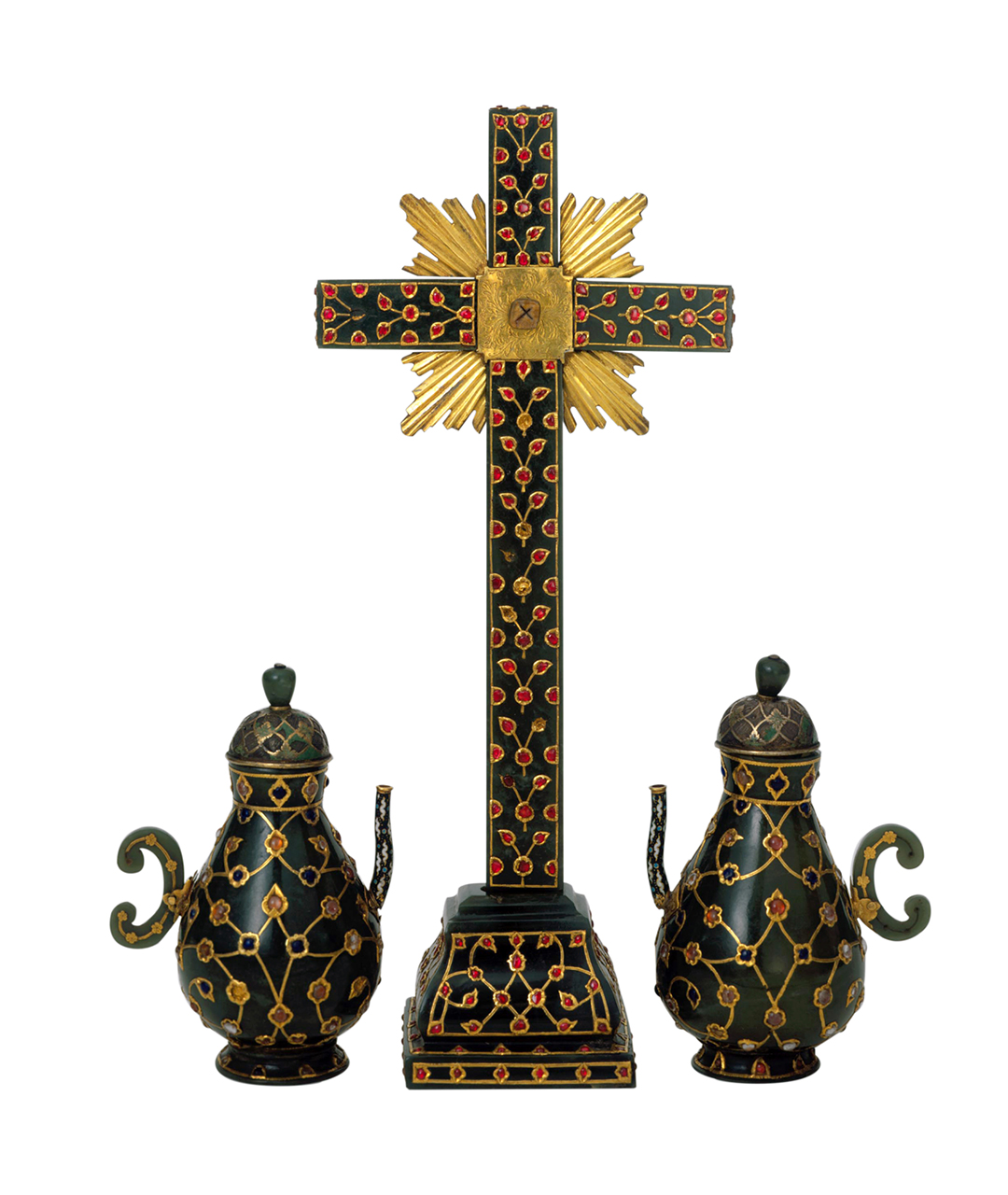 Holy Cross of Christ Reliquary and Eucharistic cruet set India Late 17 th / early 18 th century Nephrite jade, gold, gilt silver, rubies and colourless glass [cross] ; Nephrite jade, gold, gilt silver, blue glass, quartz, topaz (?) and colourless glass doublets, enamels [cruet…
Reliquary Cross and Cruet Set
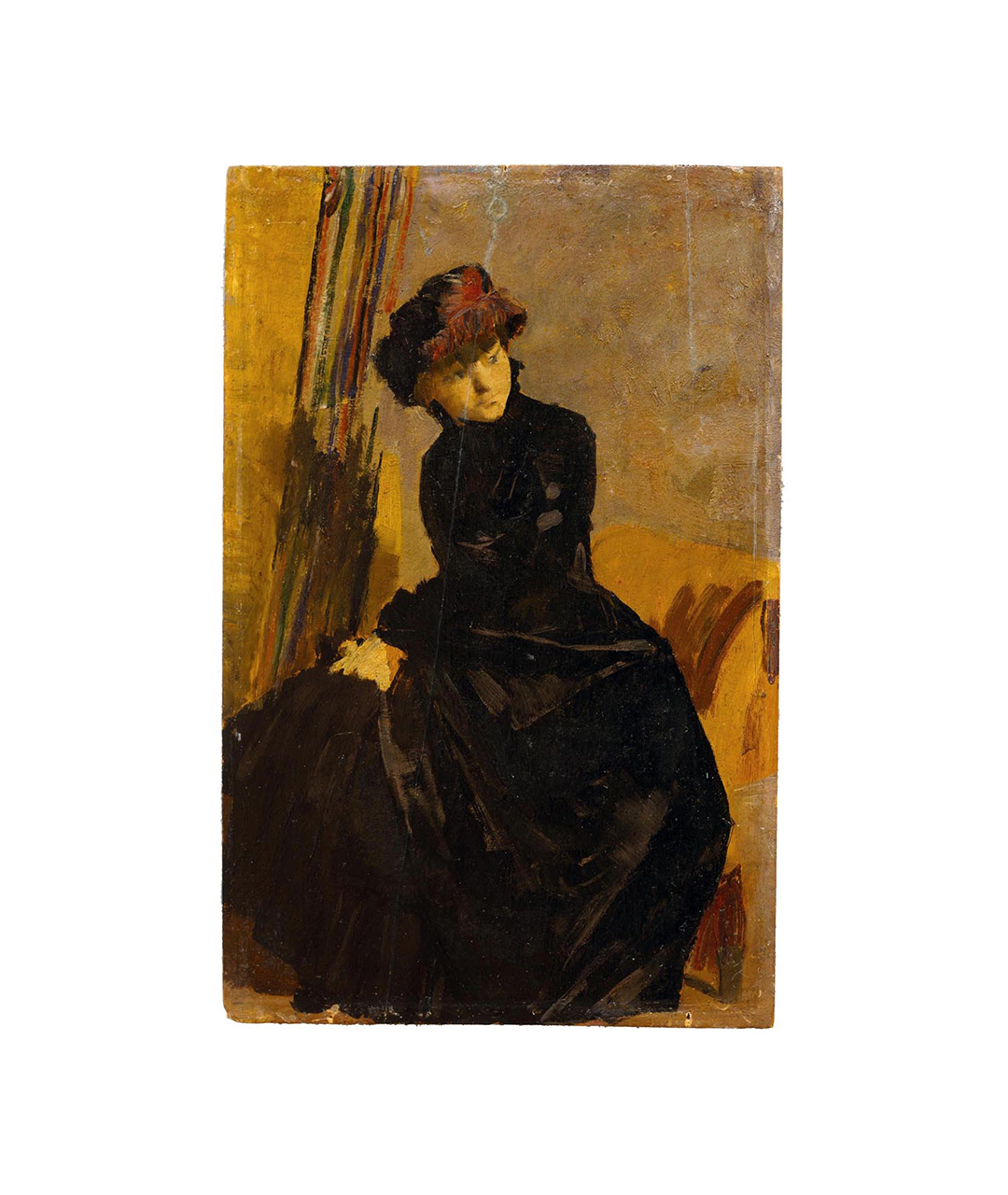 Henrique Pousão (1859-1884) 1882 Oil on wood Painted in Rome in 1882, Senhora Vestida de Preto (Lady in Black) is one of the numerous tablets on which Henrique Pousão would sketch a new project to express his best ideas on painting. Its expressive, cut out dense patches of col…
Lady in Black
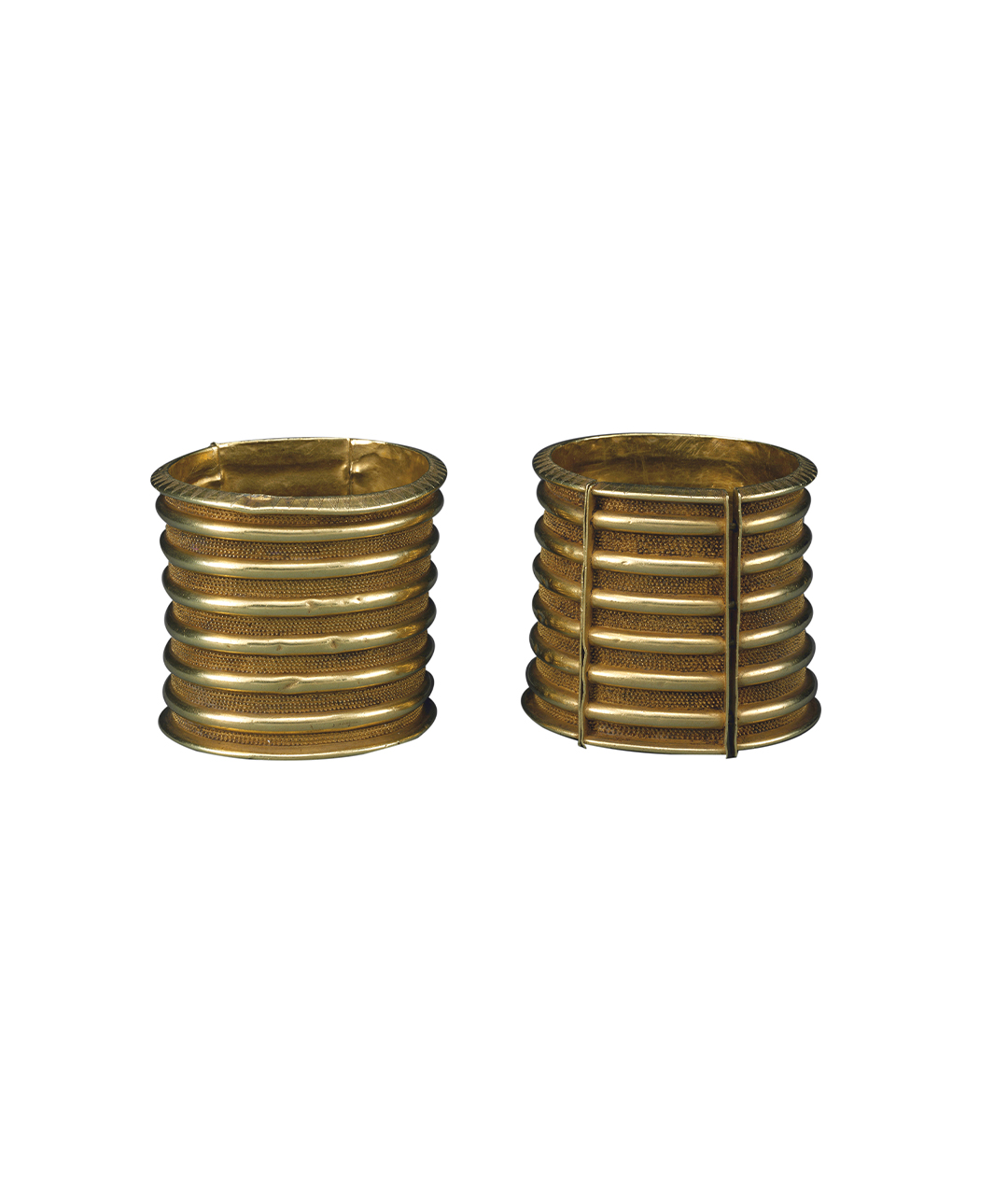 Late Atlantic Bronze / 1st Iron Age - 7th / 6th (end) centuries BC Randomly found at Rocio de São Sebastião, Castro Verde, Portugal Gold cast in lost-wax and rolled; incised decoration These archaeological pieces belonged to the personal collection of the King Consort of Portu…
Pair of Bracelets
Ceramics
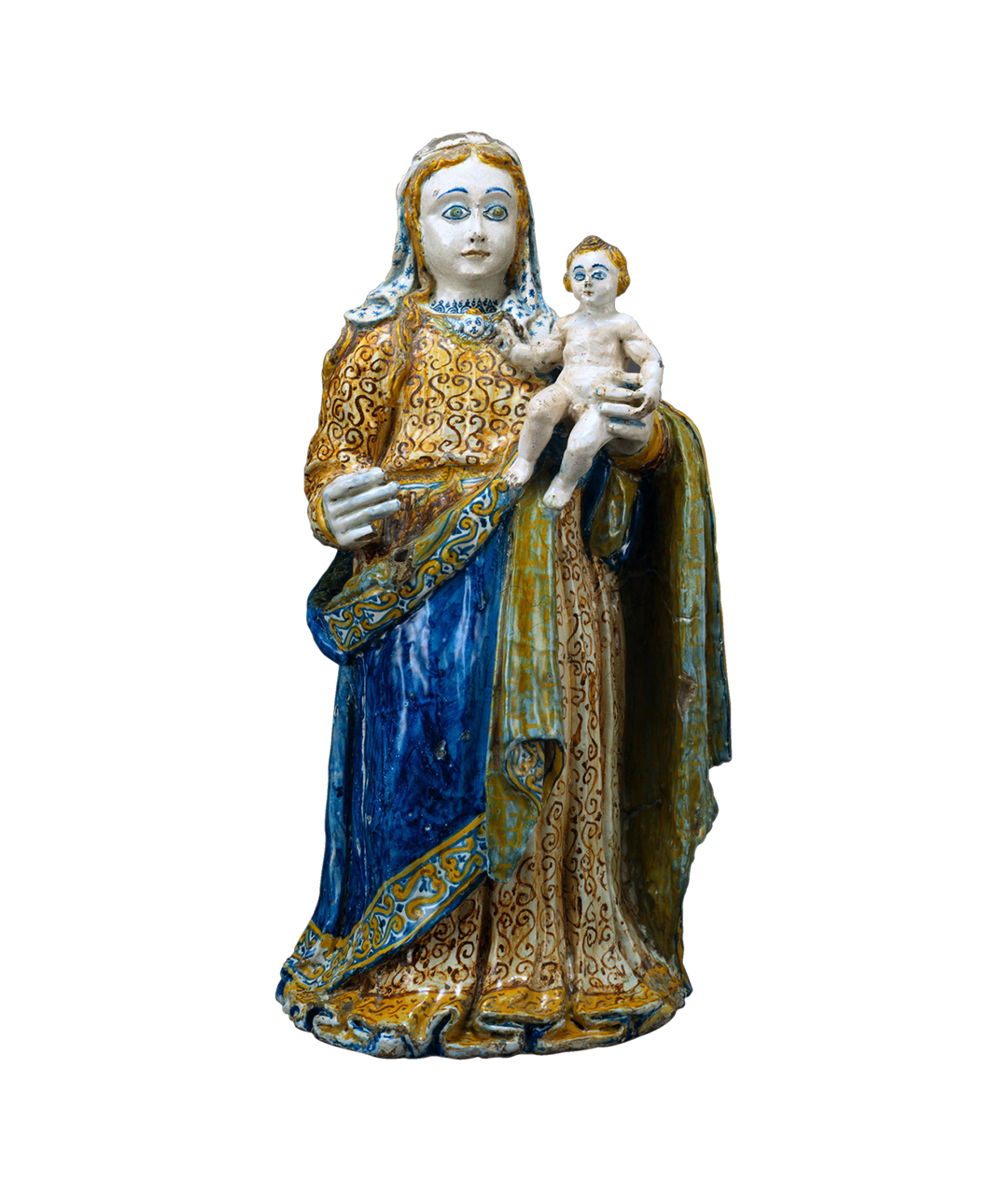 Portugal 1601 -1650 Earthenware Inventory sheet In the middle of the 16th century, the manufacture of faience began in Portugal with the settlement of Flemish potters in Lisbon. Modern Mannerist influences, coming from Flanders and Italy, were felt in these first productions,…
Virgin with boy
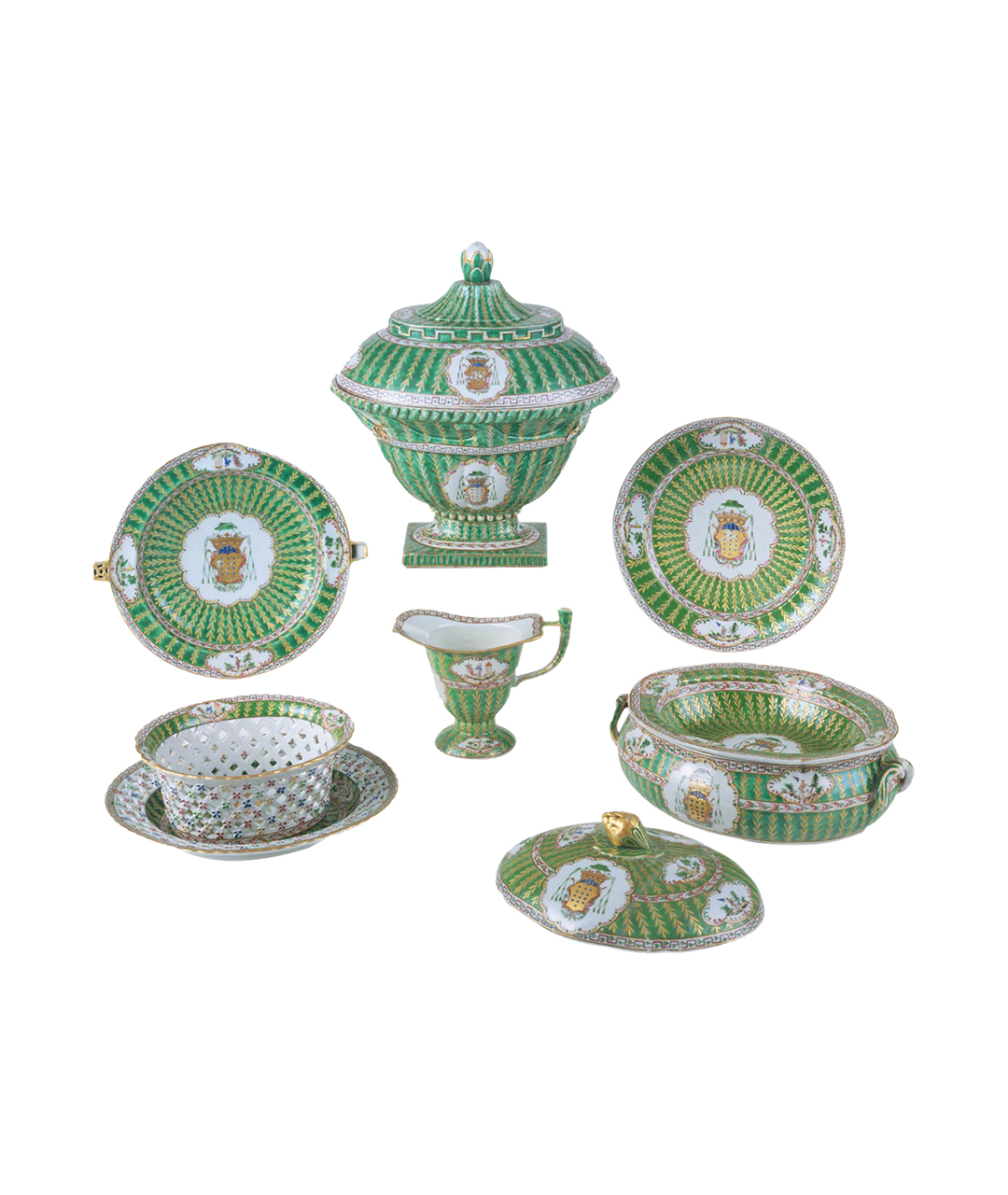 China Qing dynasty, Jiaqing period (1800 AD-1810) Porcelain Inventory sheet This exquisite table service in the European tradition is an interesting testimony to a time of cultural change, combining the rococo with the then modern neoclassical style. The rococo style is reflec…
Tableware Set (incomplete)
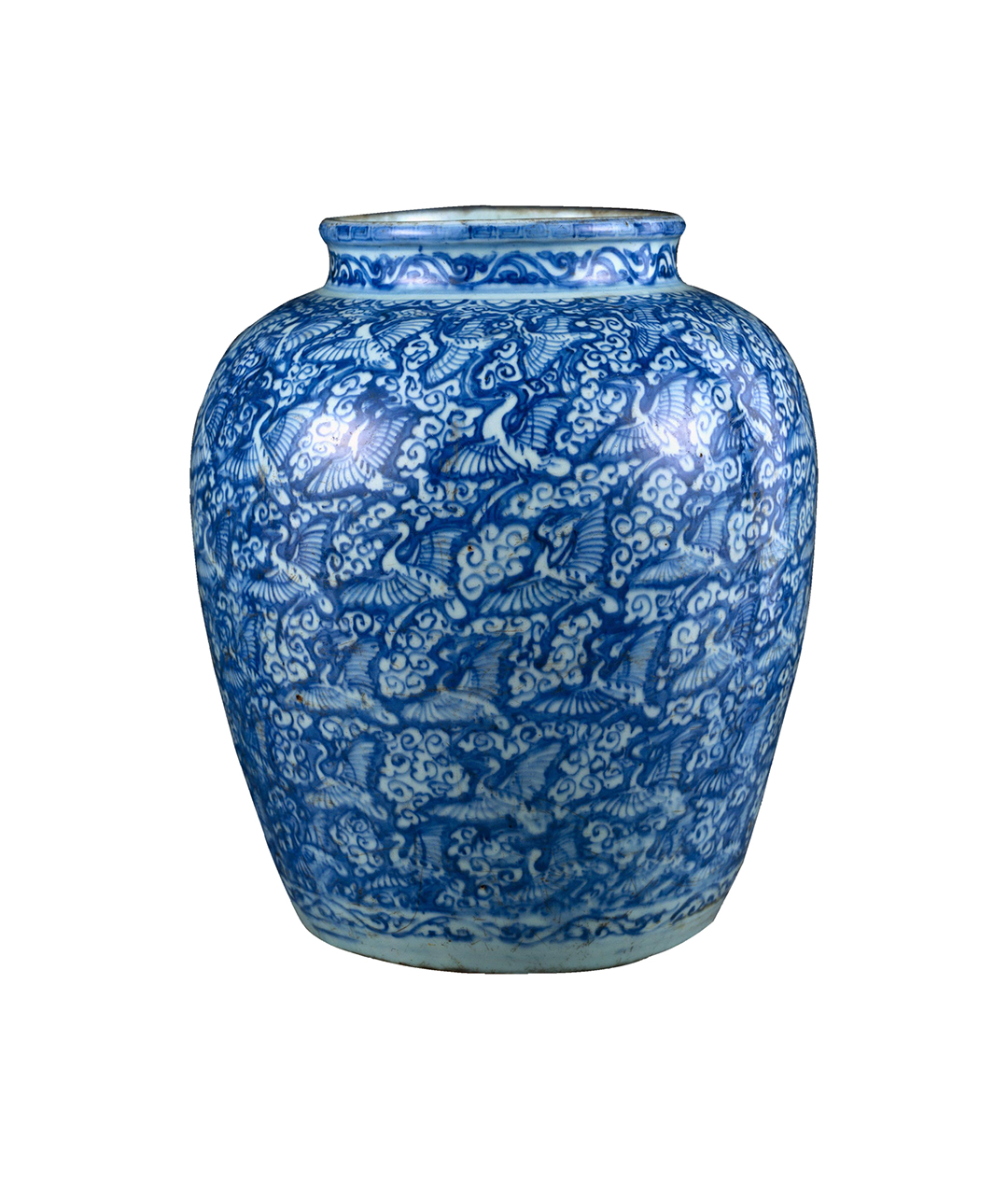 China Ming Dynasty, Jiajing period (1522-1567) Porcelain Inventory sheet This is one of two large Ming dynasty pots, from the Jiajing period (1522-1567), belonging to the large porcelain group, making up a third of the Soares dos Reis National Museum ceramics’ collection. Amon…
Pot
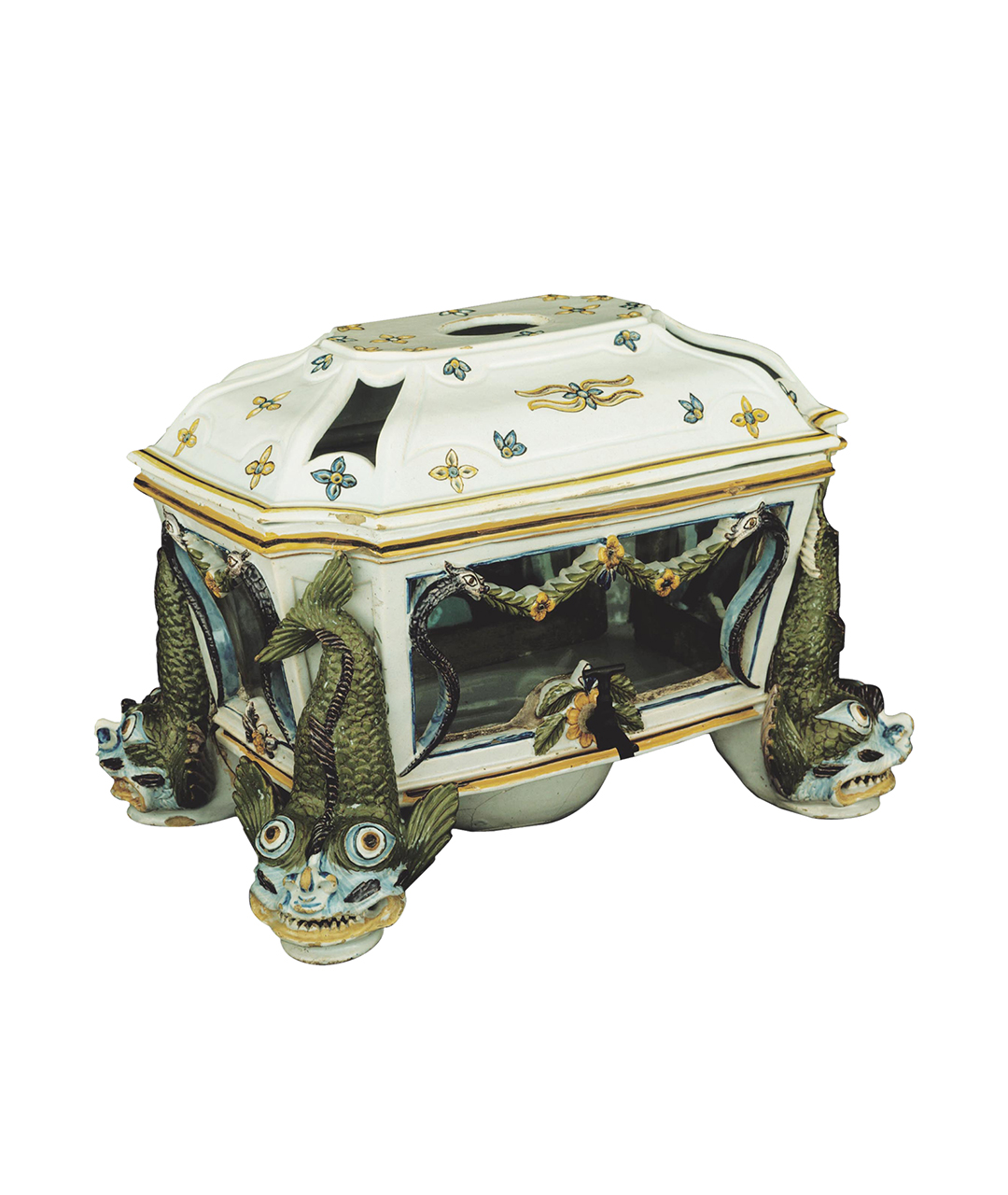 Portugal, Porto, Miragaia Factory 1775-1822 Tin-glazed Earthenware Inventory sheet Aquarium in the shape of an inverted pyramid supported by four dolphin-shaped feet and glass walls. This model was also produced in the Real Fábrica de Loiça ao Rato (Lisbon). However, there are…
Aquarium
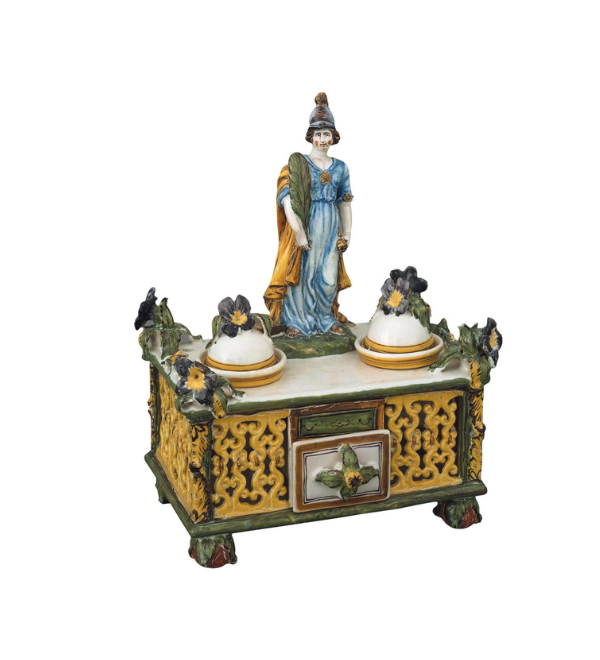 Portugal, Porto, Massarelos Factory (?) 19 th century Tin-glazed Earthenware Inventory sheet This inkstand has always merited great attention from ceramics’ researchers. On the top of the piece we can see Minerva, the Roman goddess of arts, commerce, wisdom and military strate…
Inkstand
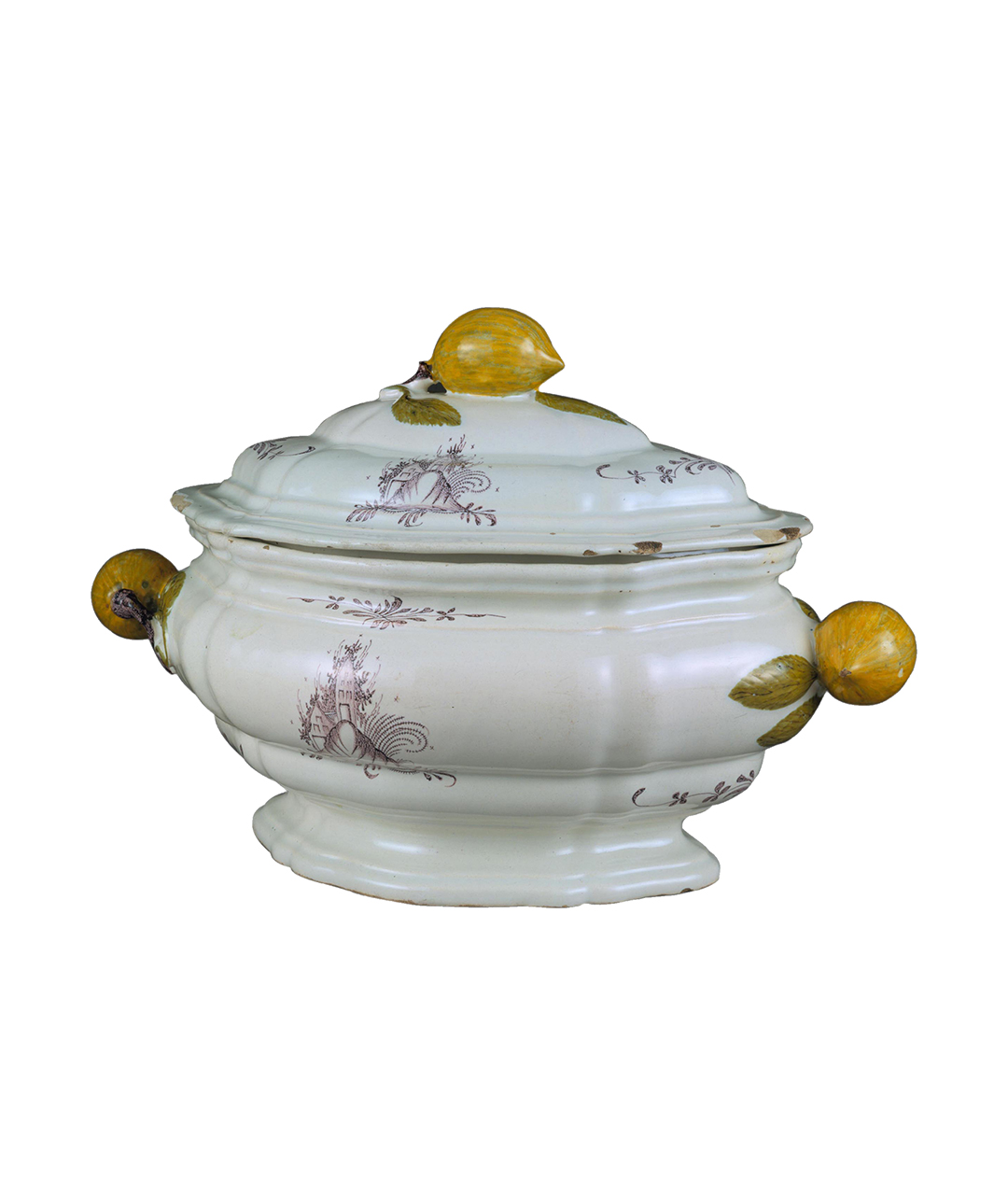 Portugal, Viana do Castelo Factory 1775-1820 Tin-glazed Earthenware Inventory sheet In shape and decoration, this tureen clearly shows late 18 th and early 19 th century Portuguese taste, marked by European aesthetic influences, particularly modern French and German porcelain.…
Tureen
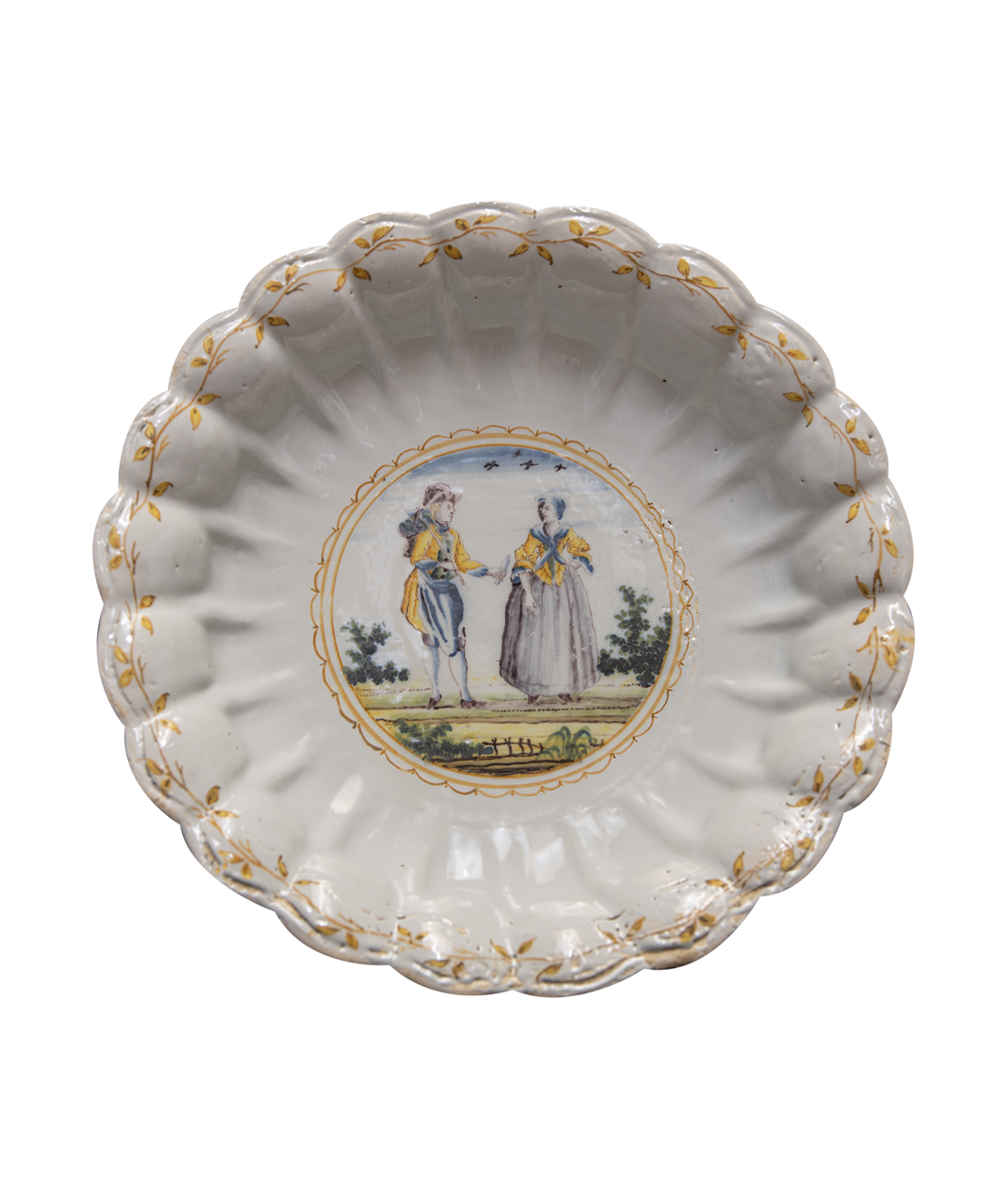 Portugal, Vila Nova de Gaia, Santo António do Vale de Piedade Factory (?) 18 th -19 th century Tin-glazed Earthenware Inventory sheet Although it is unmarked, this bowl or basin has the decoration and high quality glaze characteristic of the tin-glazed earthenware produced at…
Bowl
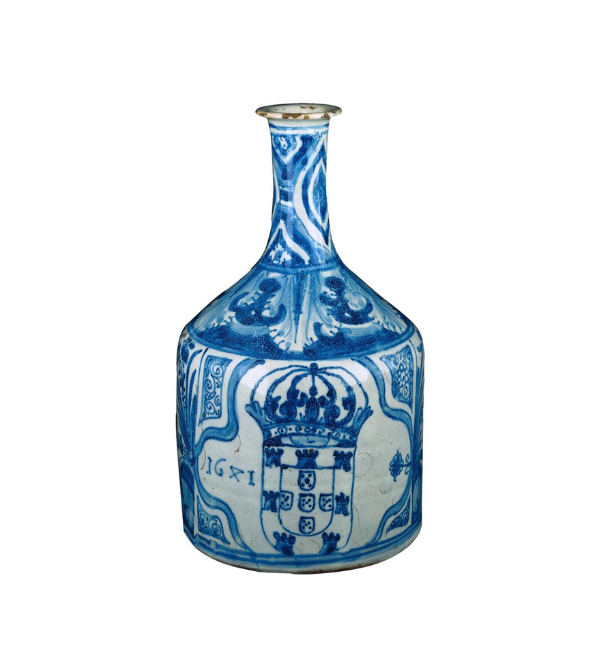 Portugal 1641 Tin-glazed Earthenware Inventory sheet This bottle is contemporary with the restoration of Portugal's independence (in 1640), and it bears the national coat of arms and a lady in court dress. The decoration is in the style of Ming period Chinese porcelain.
Bottle
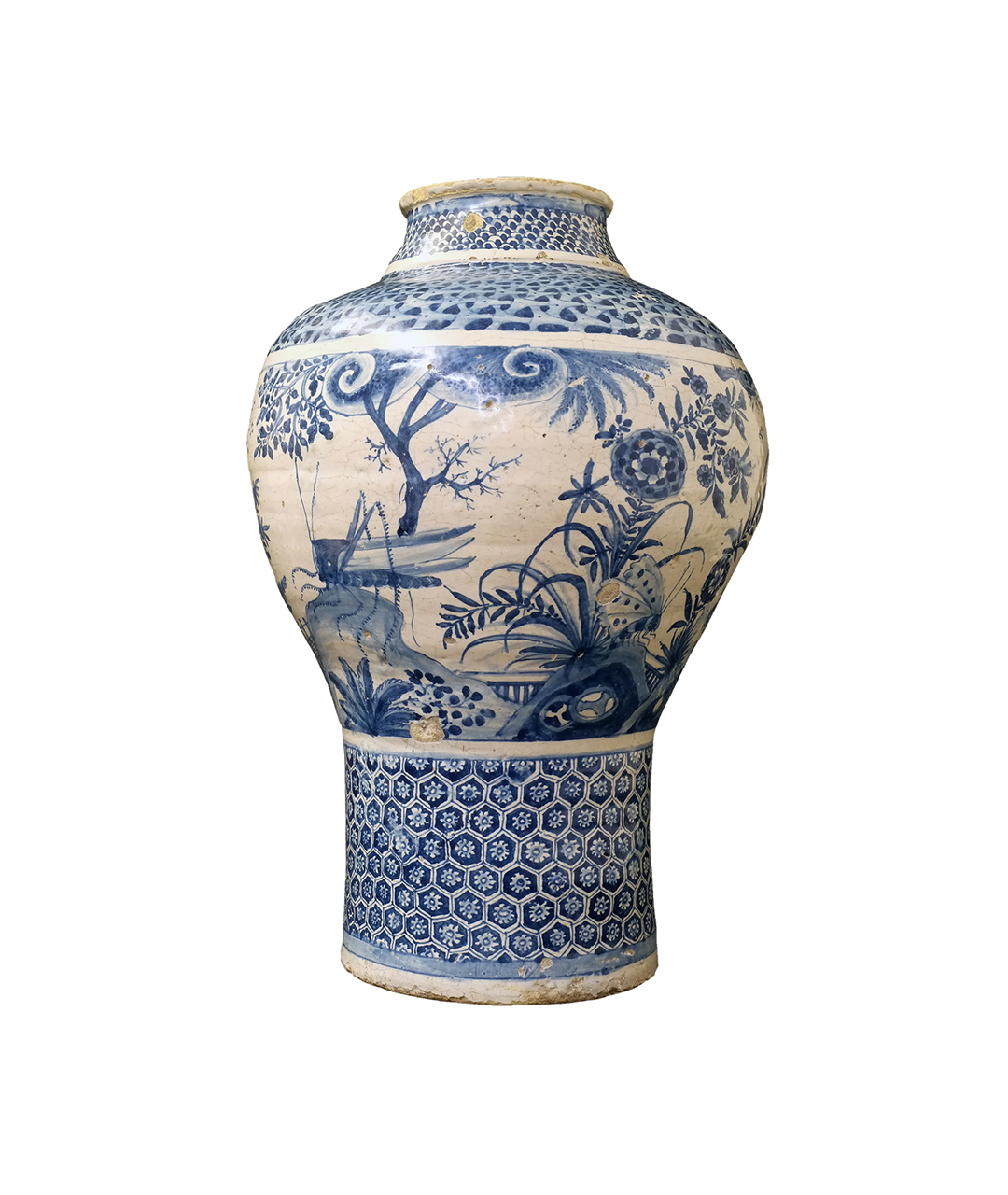 Portugal 1601 - 1650 Tin-glazed Earthenware Inventory sheet A meiping-shaped pot whose decoration testifies to the influence of Ming dynasty Chinese porcelain on 17th century Portuguese tin-glazed earthenware. Besides its oriental decorative motifs, it has an exotic landscape…
Pot
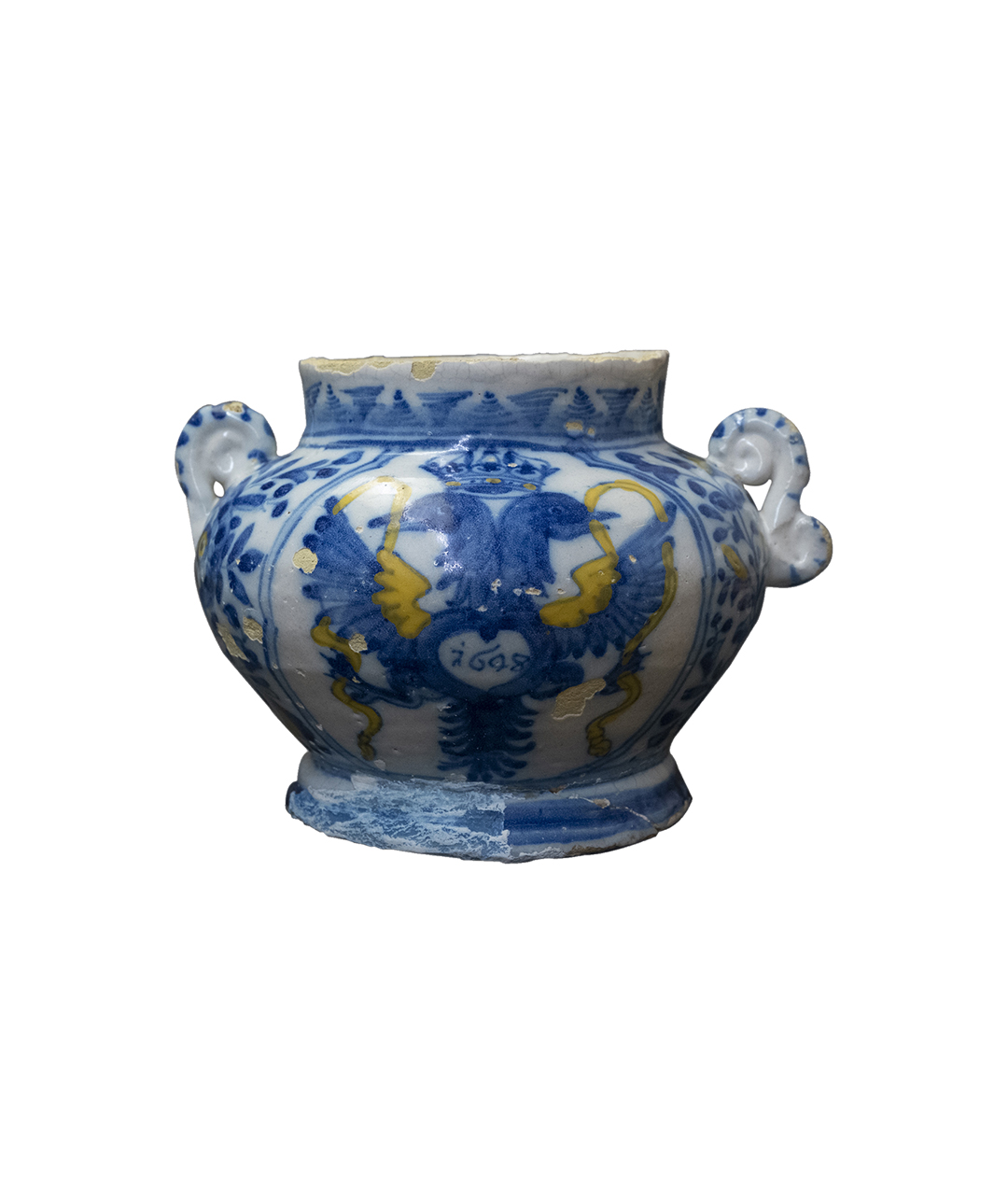 Portugal 1608 Tin-glazed Earthenware Inventory sheet The production of tin-glazed earthenware was started in Portugal in the mid-16th century by Flemish ceramicists based in Portugal. This vase bears the date 1608 and is the oldest known piece of Portuguese tin-glazed earthenw…
Pot with handles
Miscellaneous
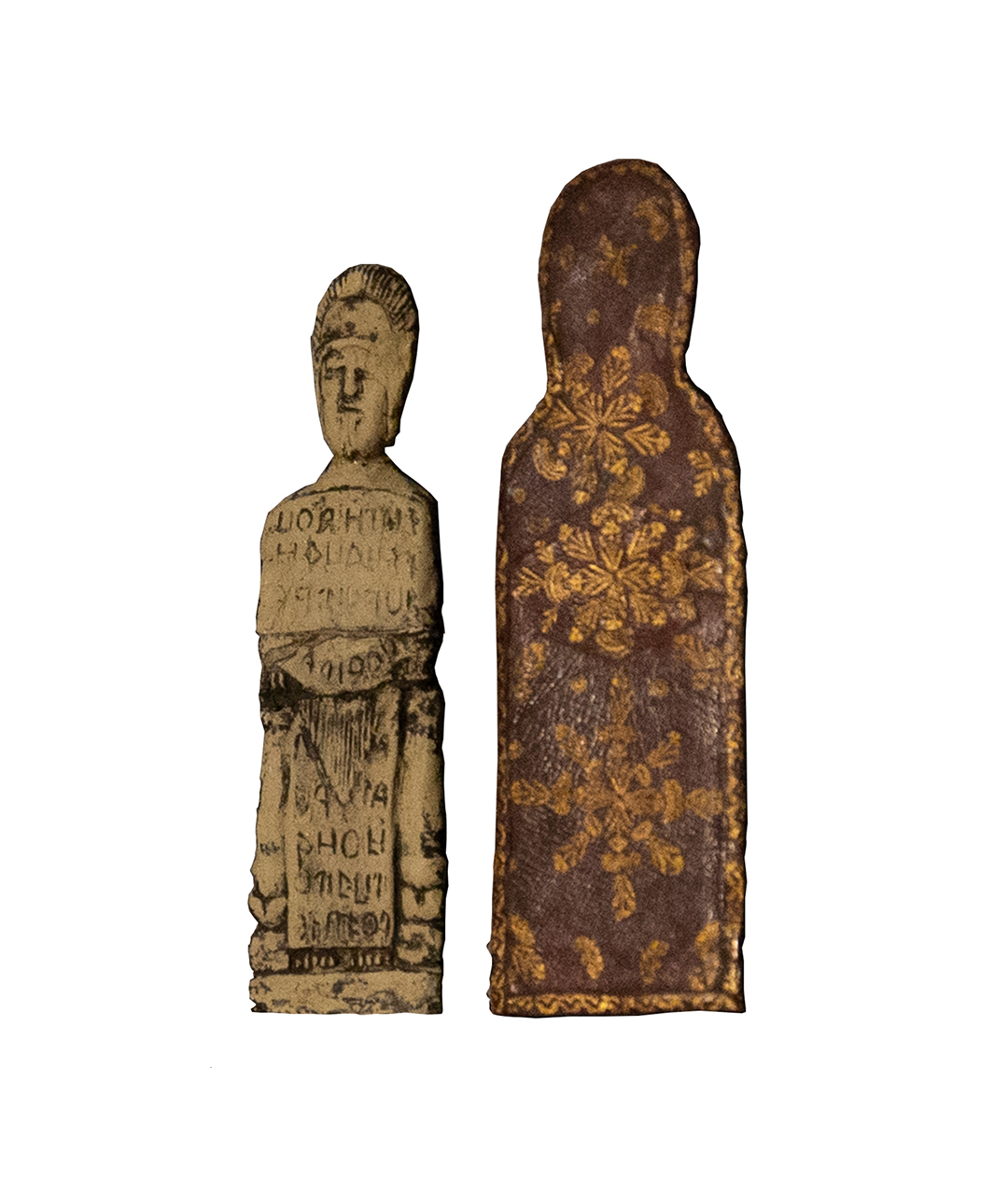 18th century (end) Clay Inventory sheet Long identified as the representation of a Celtiberian goddess, this figurine remained an enigma for more than 180 years. Its configuration and the intriguing inscription on the front, in unidentified characters (probably invented), are…
Figurine / Idol
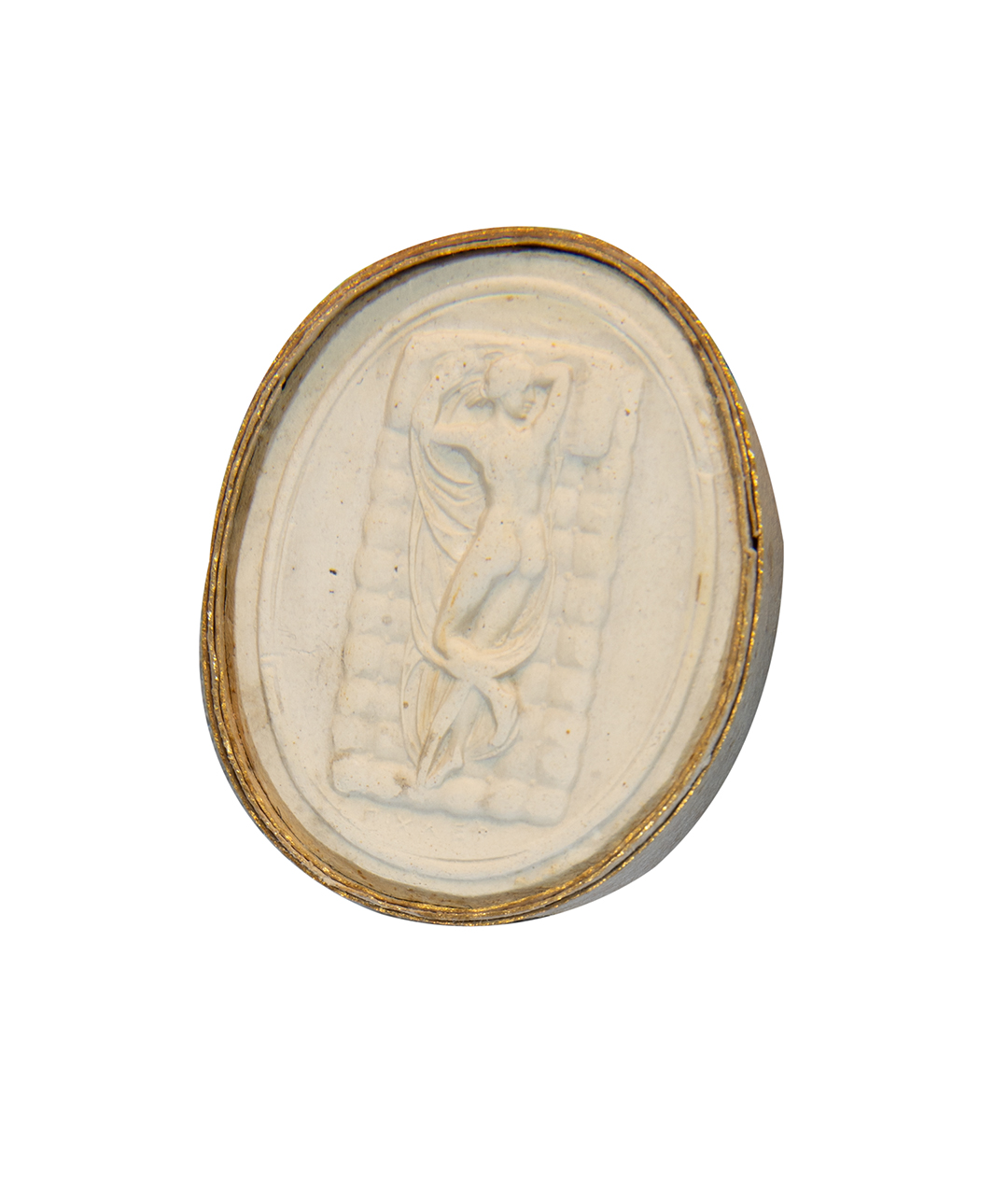 Italy 19th century (early) Plaster and cardboard Inventory sheet This plaster medal is one of approximately 700 acquired on the Grand Tour. This was a tradition in vogue, especially from the 17th to 19th century, of wealthy young Europeans undertaking an initiatory journey, wh…
Sleeping Hermaphrodite
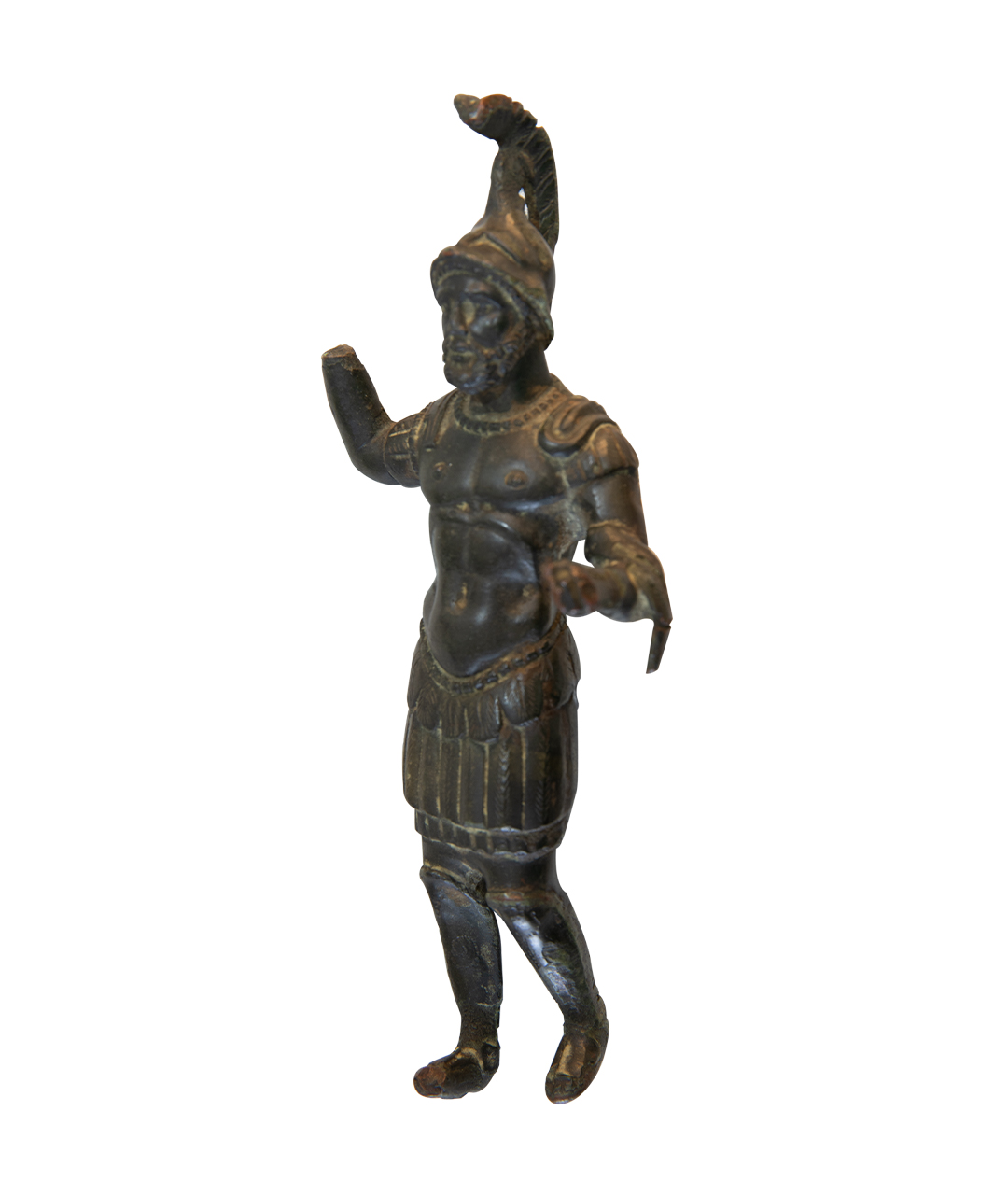 2nd -3rd Century Bronze Inventory sheet This small statuette represents the god Mars, god of war in Roman mythology corresponding to the Greek god, Ares. The figure is represented in Roman military dress with a Corinthian helmet and an anatomical breastplate over a tunic. It a…
Statuette of Mars the Soldier
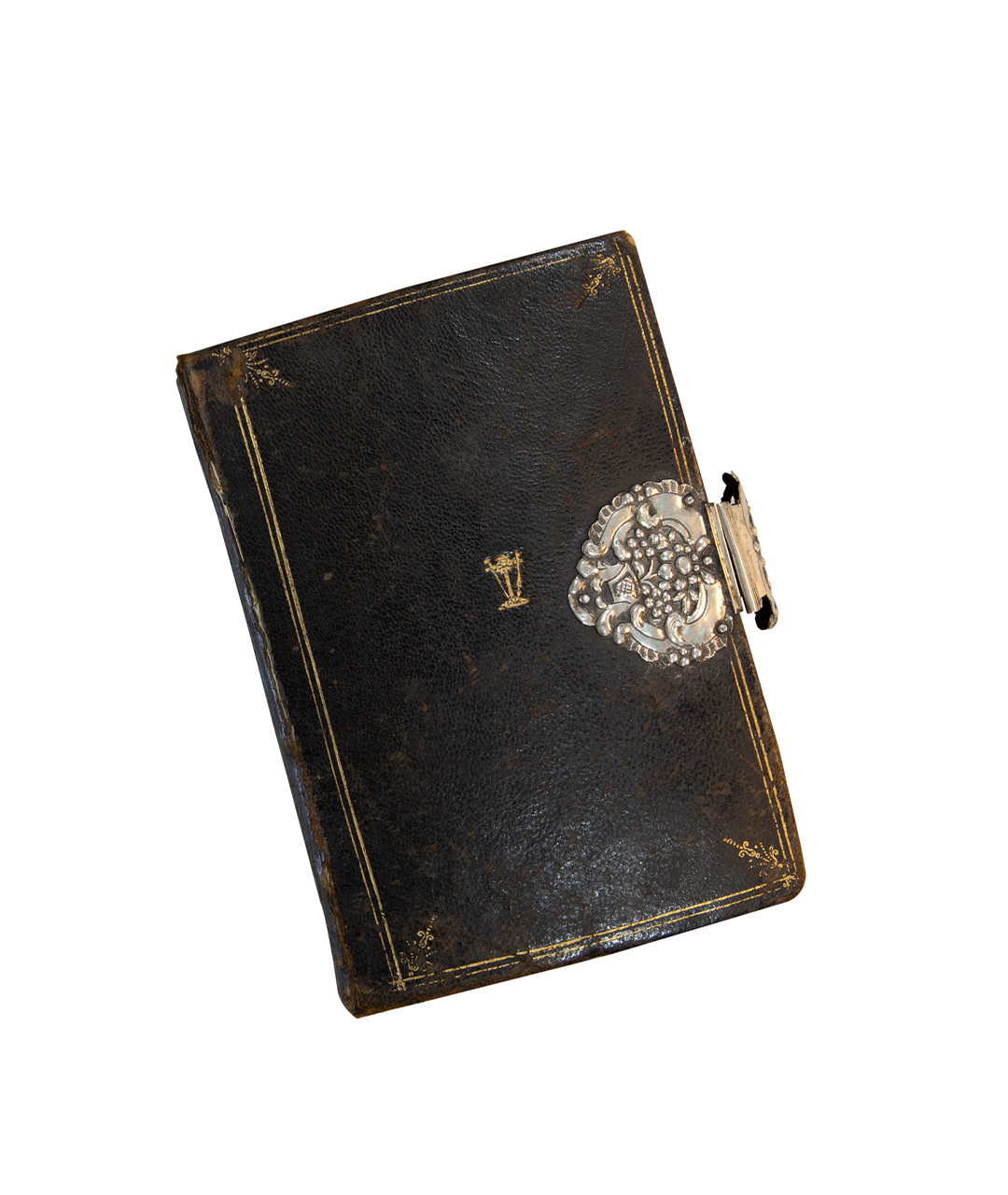 Utrecht, Netherlands 1450-1500 Inventory sheet Book of Hours with 214+2 folios on vellum (fine parchment made from animal foetal skin), illustrated with 11 illuminations. Written in Flemish, it was produced in the Utrecht region in the 15th century. It bears an ownership signa…
Book of Hours
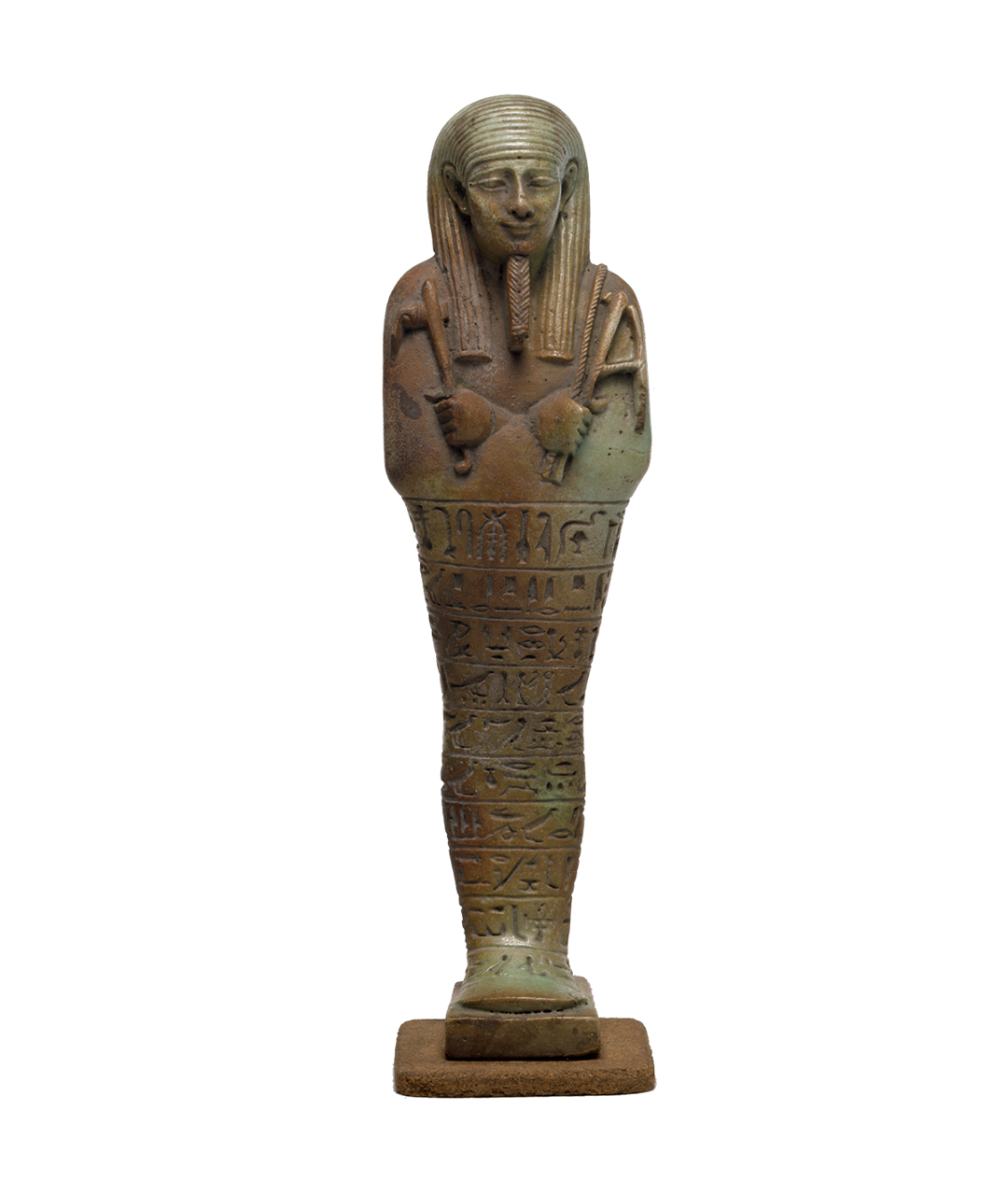 Egypt Late Period. 6th century BC, 16th dynasty Tin-glazed Earthenware Inventory sheet In Ancient Egypt, funerary statuettes were initially designed to provide an alternative support to the spiritual elements of the deceased: if the mummy deteriorated, these elements could sti…
Funerary statuette of Djedhor
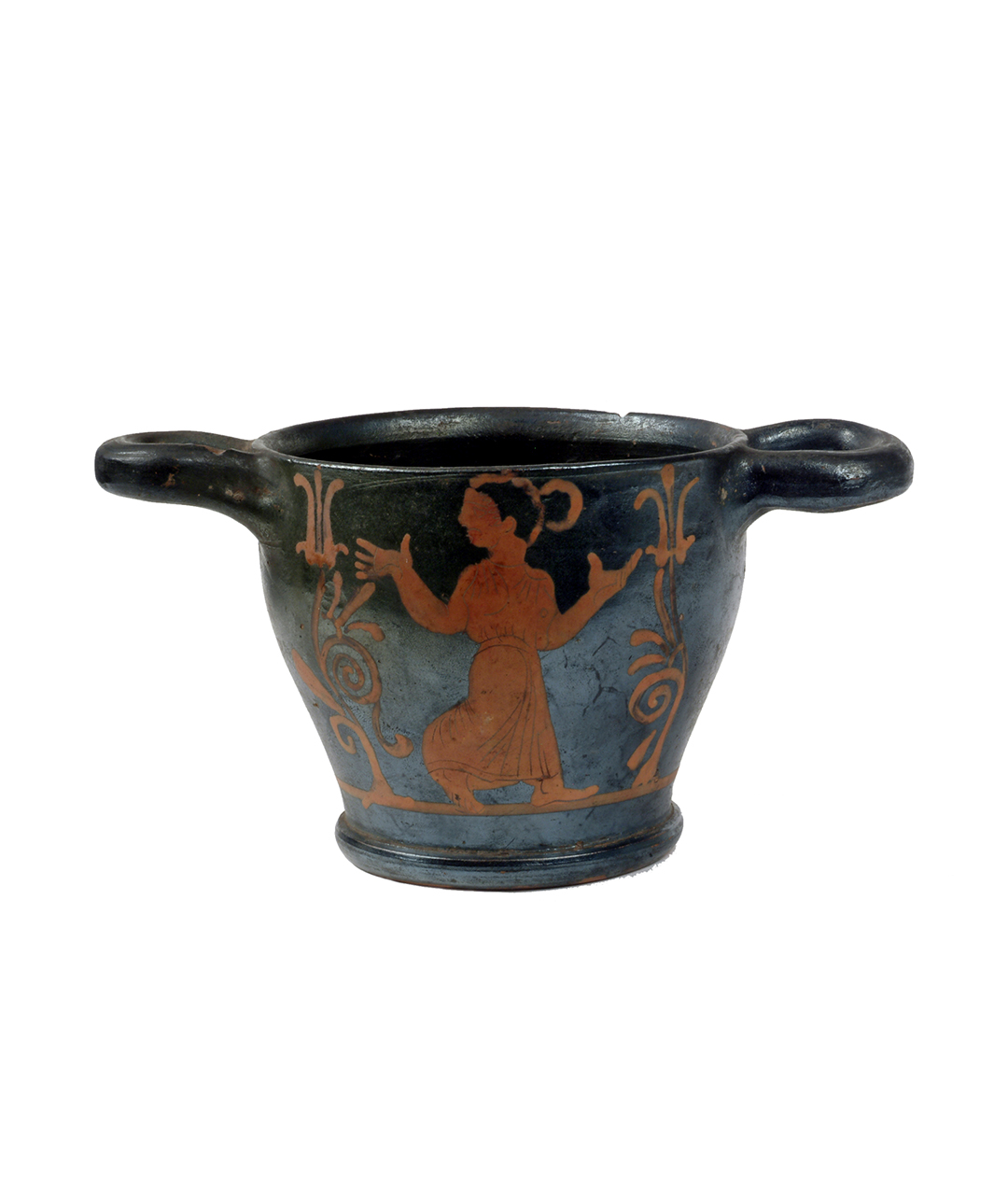 Skyphos “in the manner of the Sydney painter†Magna Graecia (Pestense) End of the 5th century B. C. C. Red ceramic figures Inventory sheet On his trip to Italy, between 1826 and 1827, the collector João Allen visited all the locations constituting a Grand Tour , acquiring…
Skyphos
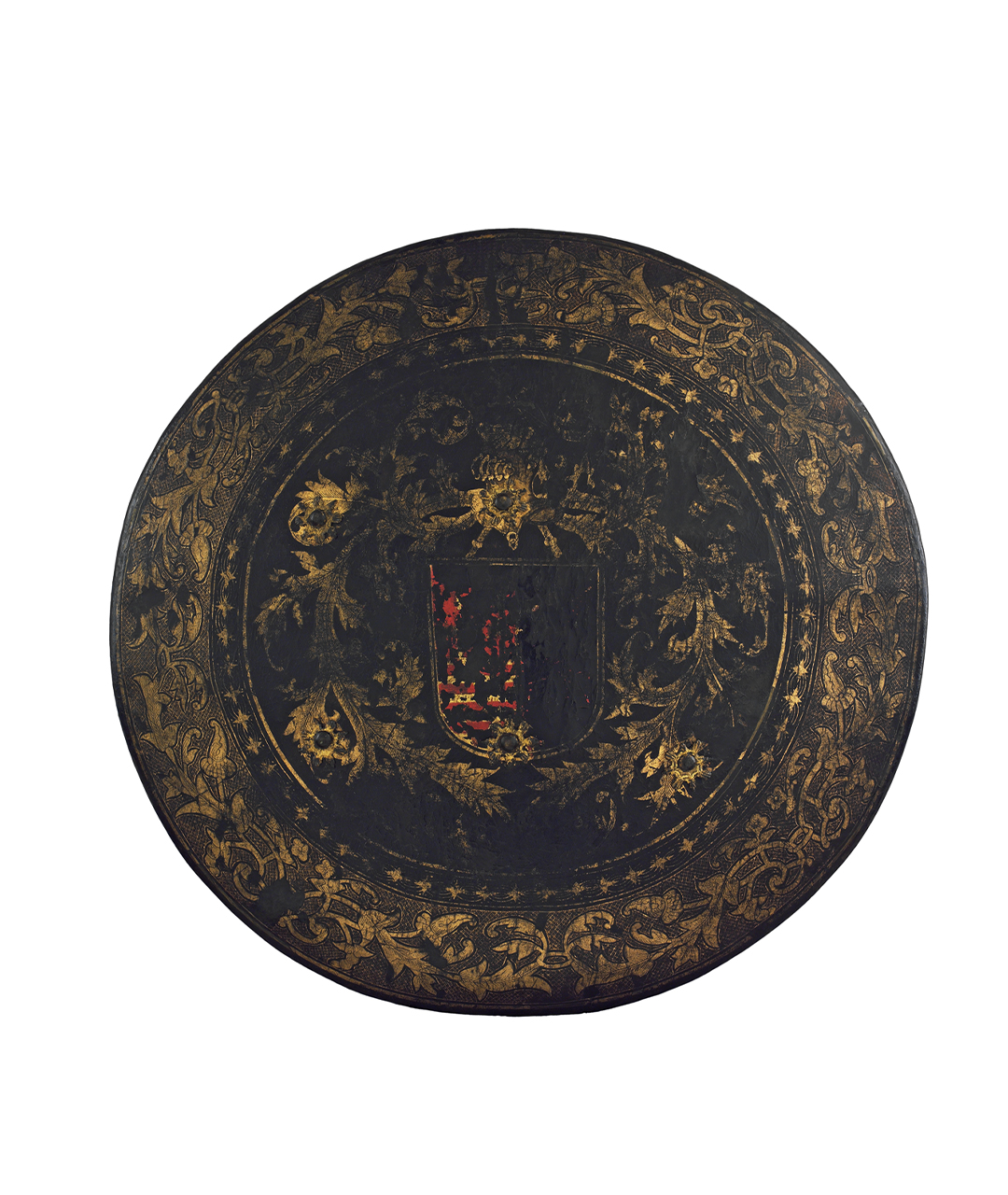 India, South China or Ryukyu Islands (present-day Japan) 16th century Wood, leather, oriental black lacquer, gilded and painted, velvet, cotton, metal nails. Traces of golden thread on the handles. Inventory sheet A ceremonial shield in leather-covered wood, lacquered in black…
Ceremonial shield
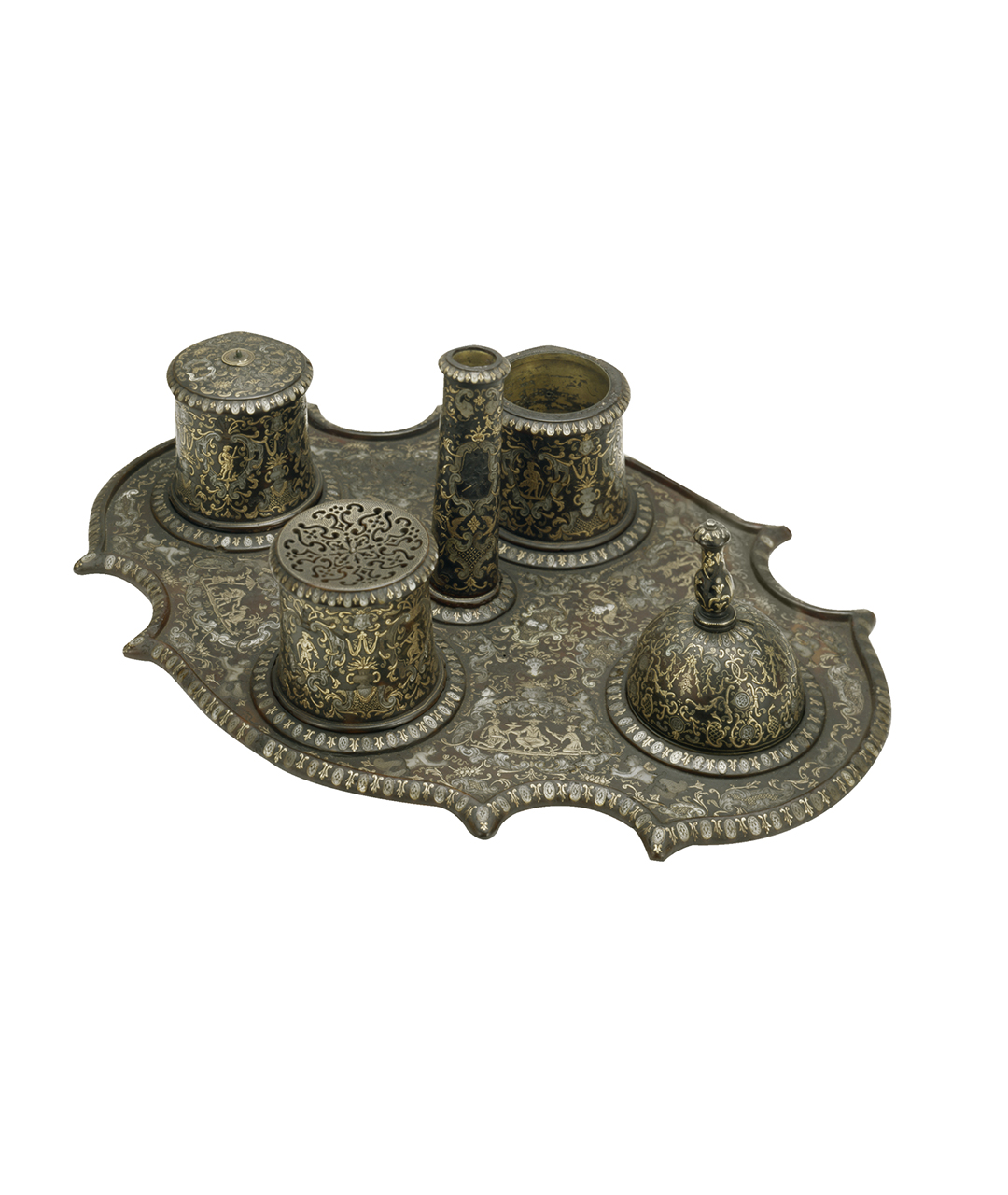 Attributed to Giuseppe Sarao Naples, Italy 1730 – 1735 Tortoise shell, mother-of-pearl, gold and copper alloy Inventory sheet Inkstand made of hot-worked tortoise shell, with gold and mother-of-pearl inlays in a technique called gold piqué . It comes from the Santa Cruz de Coi…
Inkstand
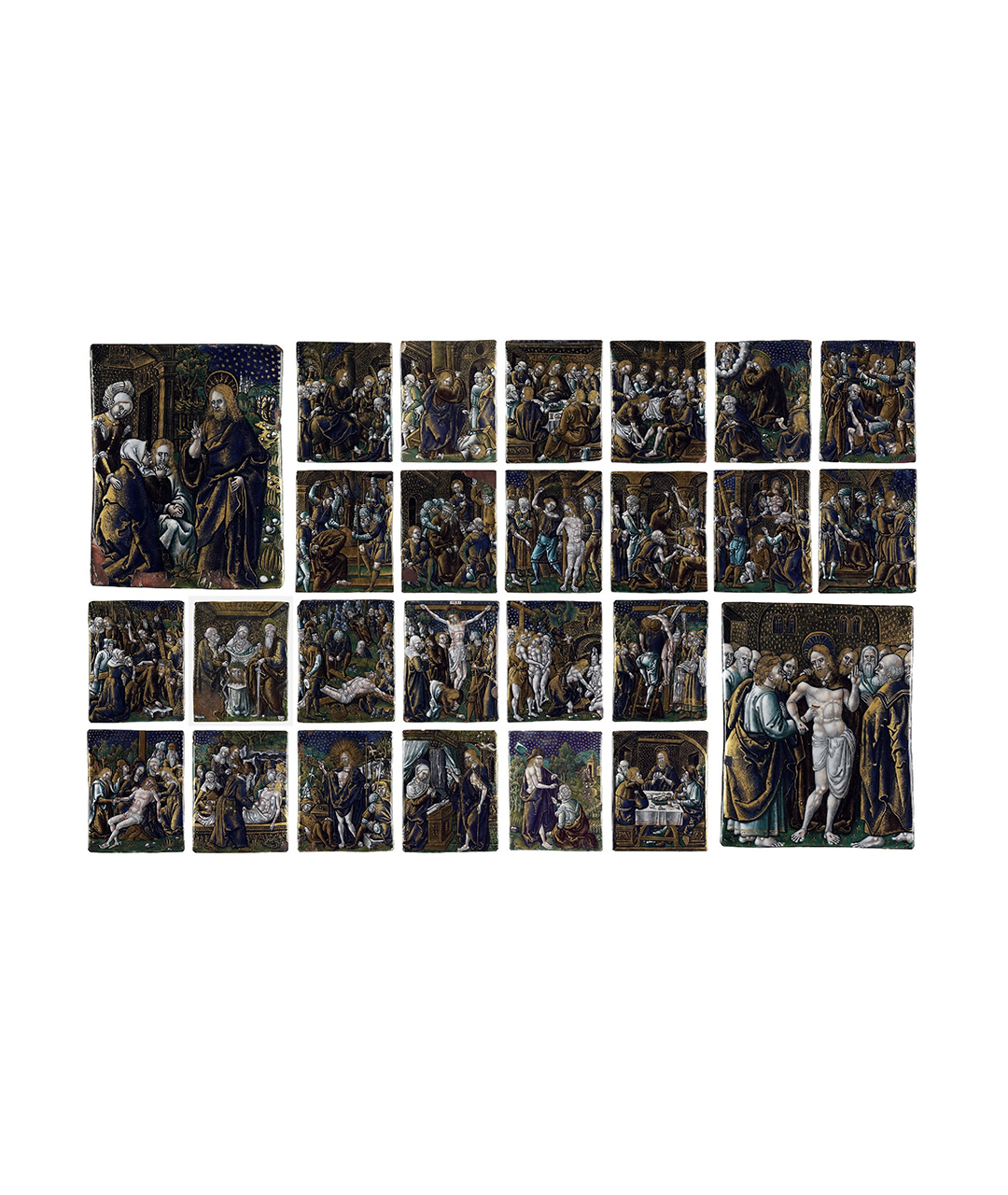 Anonymous. Attrib. “Master of the Little Passion of the Holy Cross of Coimbra” Limoges 1575-1600 Enamel painted on copper Inventory sheet This series of 26 enamel plaques painted on copper depicts scenes from Christ’s Passion, reproducing and recreating 24 of the 36 engravings…
Series of 26 enamel plaques with scenes from Christ’s Passion
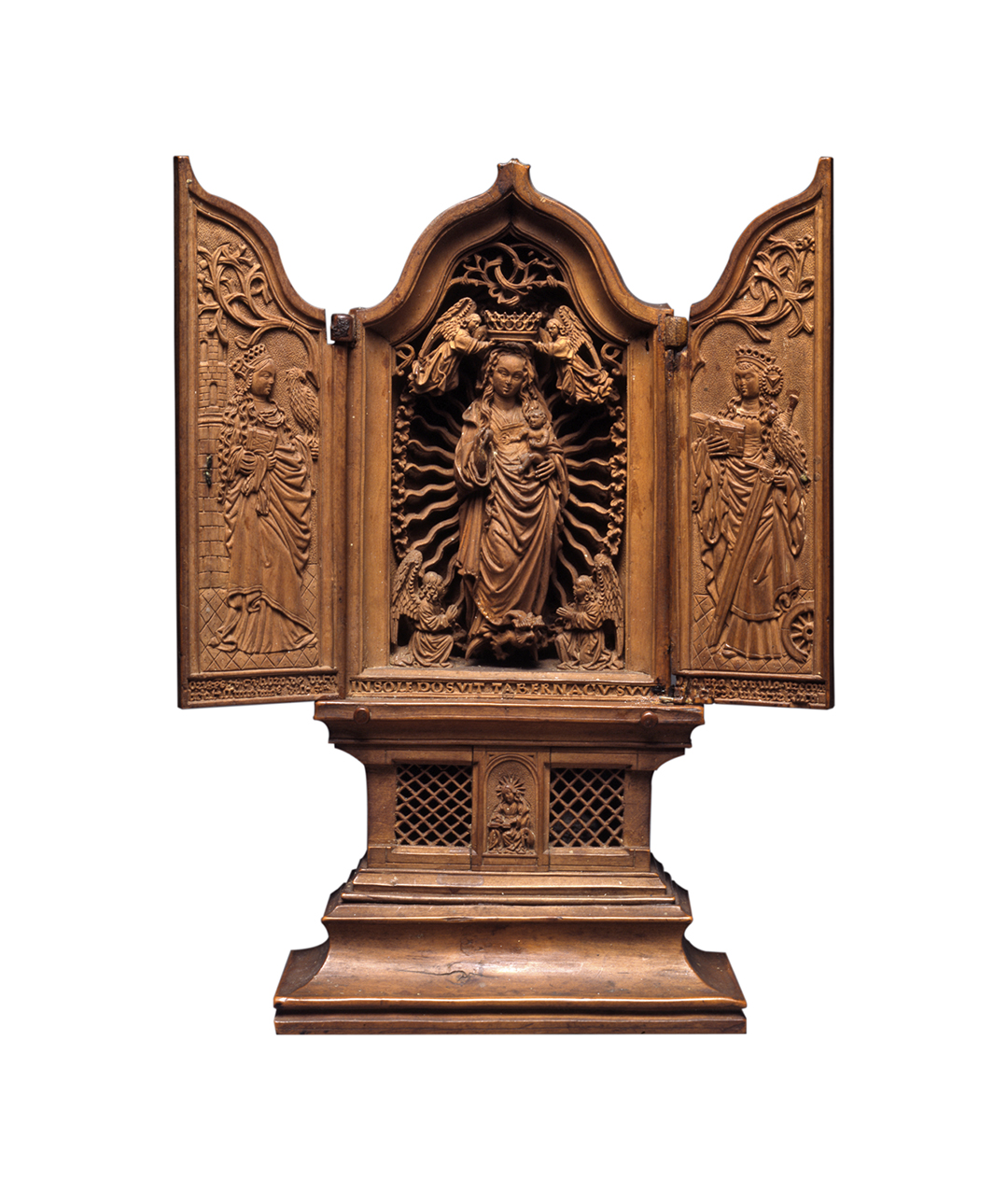 Oratory/Reliquary Triptych Unknown artist, Northern Netherlands (Delft?) 1500-1530 Boxwood Inventory sheet This miniature, temple-shaped oratory represents the coronation of the Virgin, flanked by St Barbara and St Catherine of Alexandria. It was produced in the north of the N…
Oratory/Reliquary Triptych
Sculpture
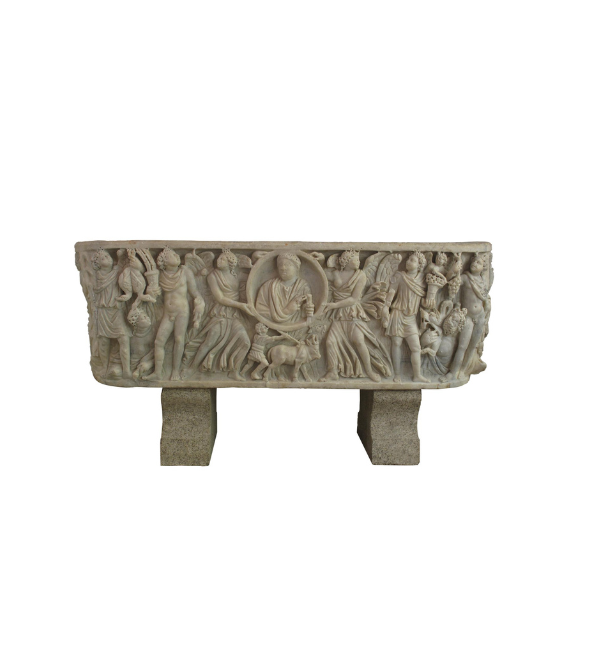 3rd – 4th century AD Marble carved in low-relief Inventory sheet This Roman sarcophagus was discovered in 1840 at Monte da Azinheira in Reguengos, in the region of Évora. Its iconography seems to have a religious meaning, related to the mystery of existence after death. In fac…
Sarcophagus alluding to the Four Seasons of the Year
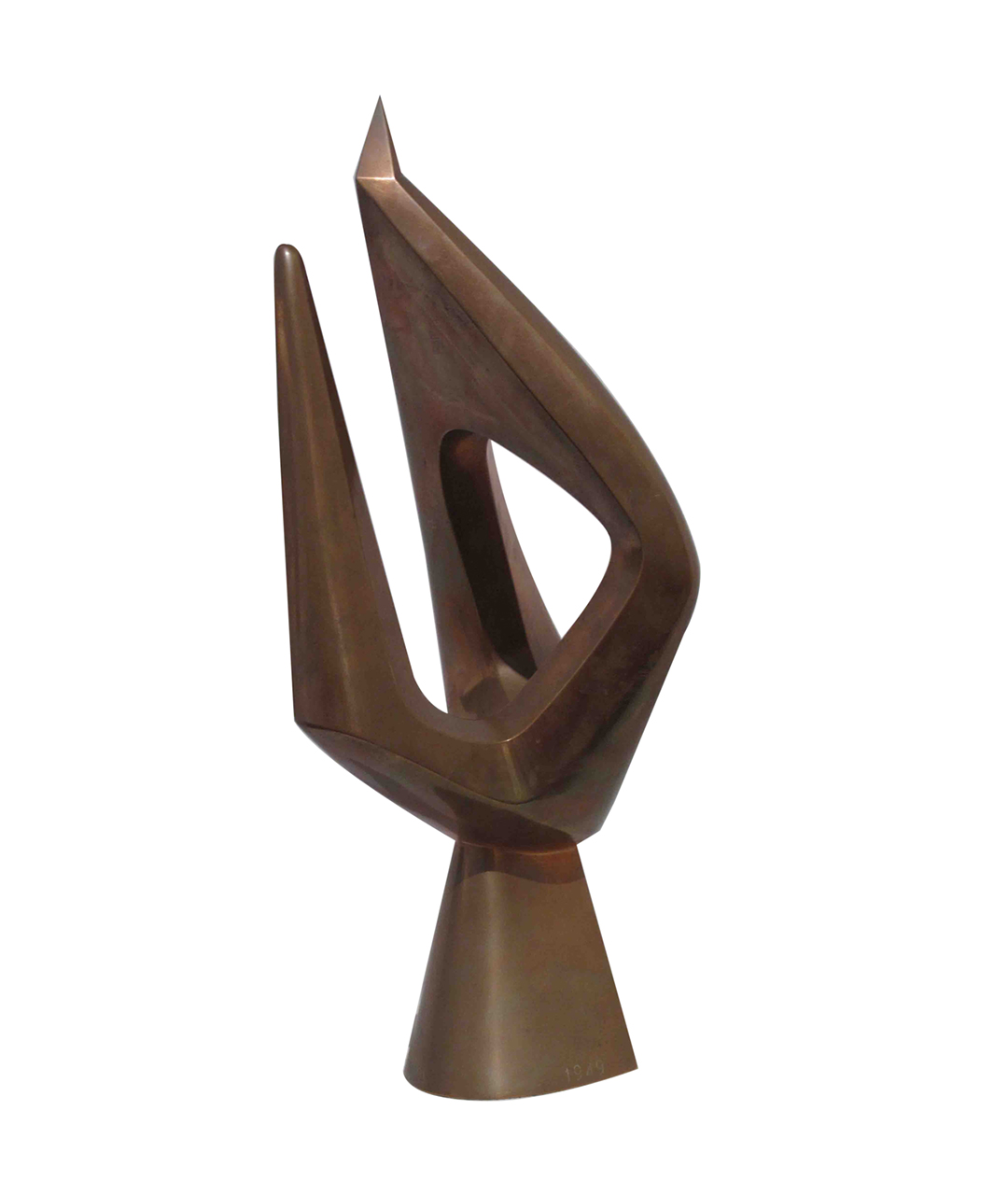 Arlindo Rocha (1921-1999) 1949 Bronze Inventory sheet Arlindo Rocha belongs to the generation born in the 1920s, which includes Gustavo Bastos and Irene Vilar, followers of Master Barata Feyo. But unlike these, Arlindo Rocha launched himself into Abstractionism with Abstração…
Abstraction I
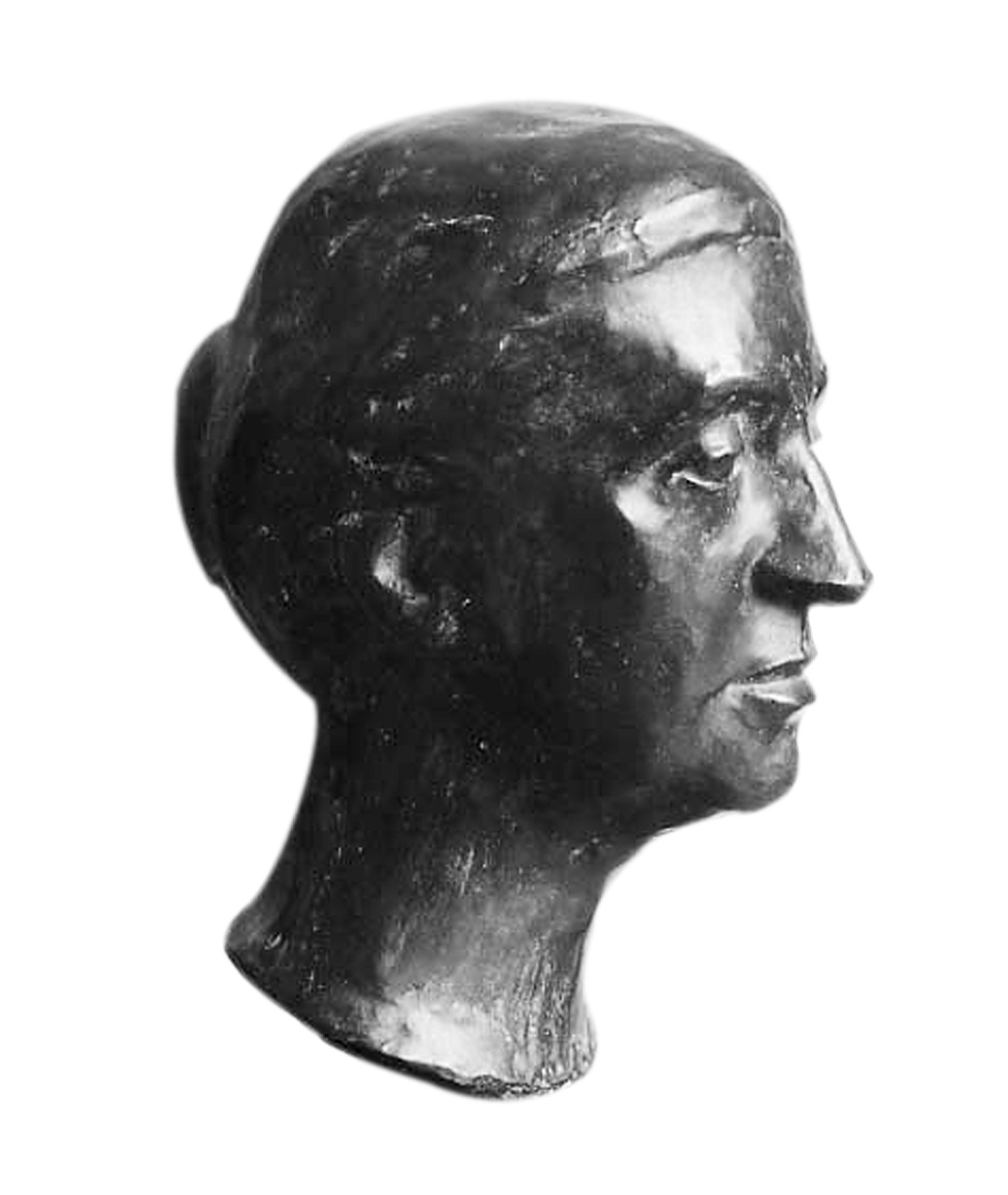 Irene Vilar (1930-2008) 1954 Bronze Inventory sheet This sculpture of the writer, Maria de Castro Henriques Oswald (Porto 1893-1988), reflects the connection that is often made between sculptors and intellectuals, an aspect that is highly evident in the Soares dos Reis Nationa…
Portrait of the Writer Maria Oswald
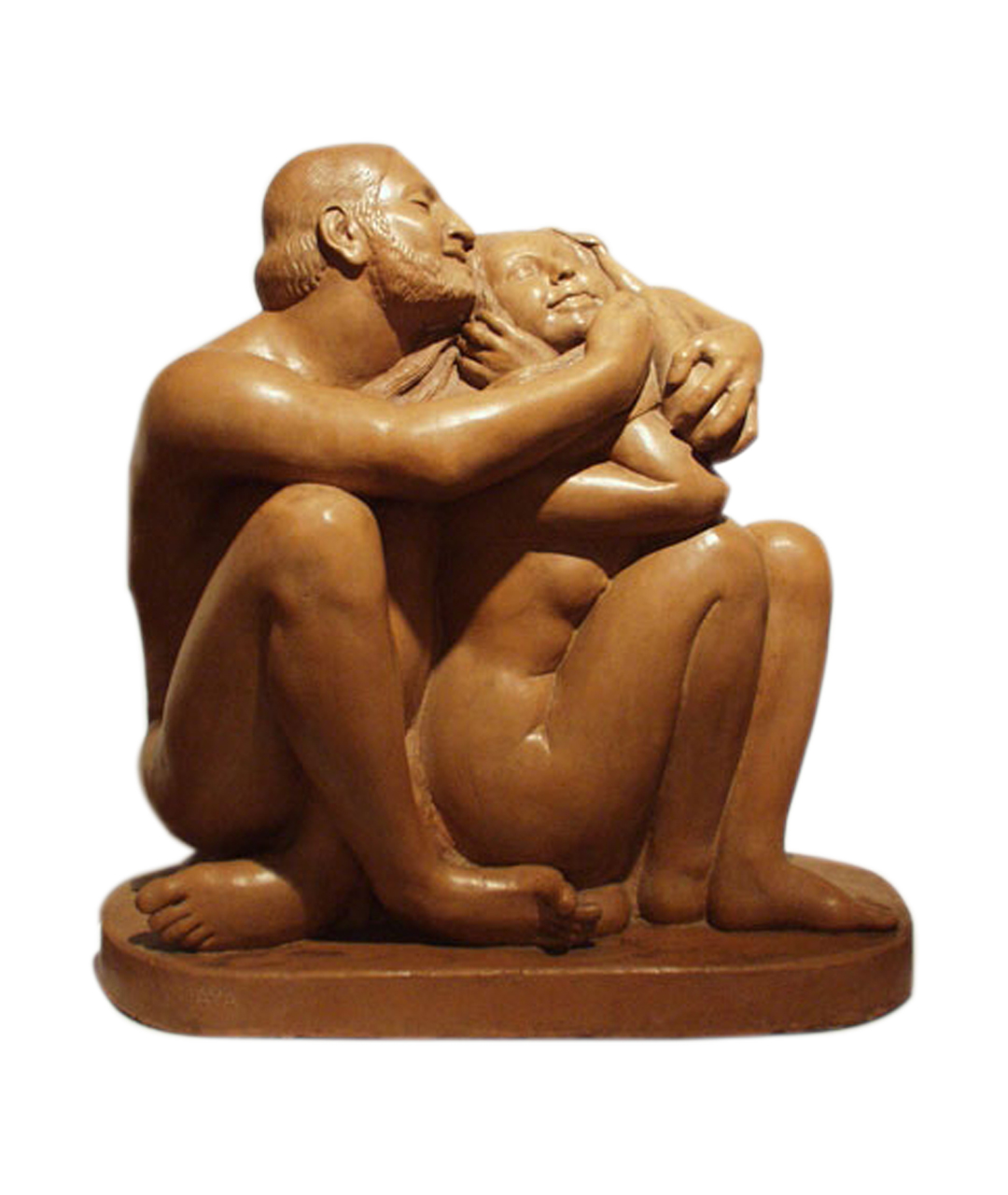 Ernesto Canto da Maya (1890-1981) 1934 Terracotta Inventory sheet Baiser (Kiss) is a modernist work in patinated clay, highlighting aspects of a figurative art that explores the ideal of a return to European roots, along the lines proposed by the sculptors Antoine Bourdelle an…
Baiser
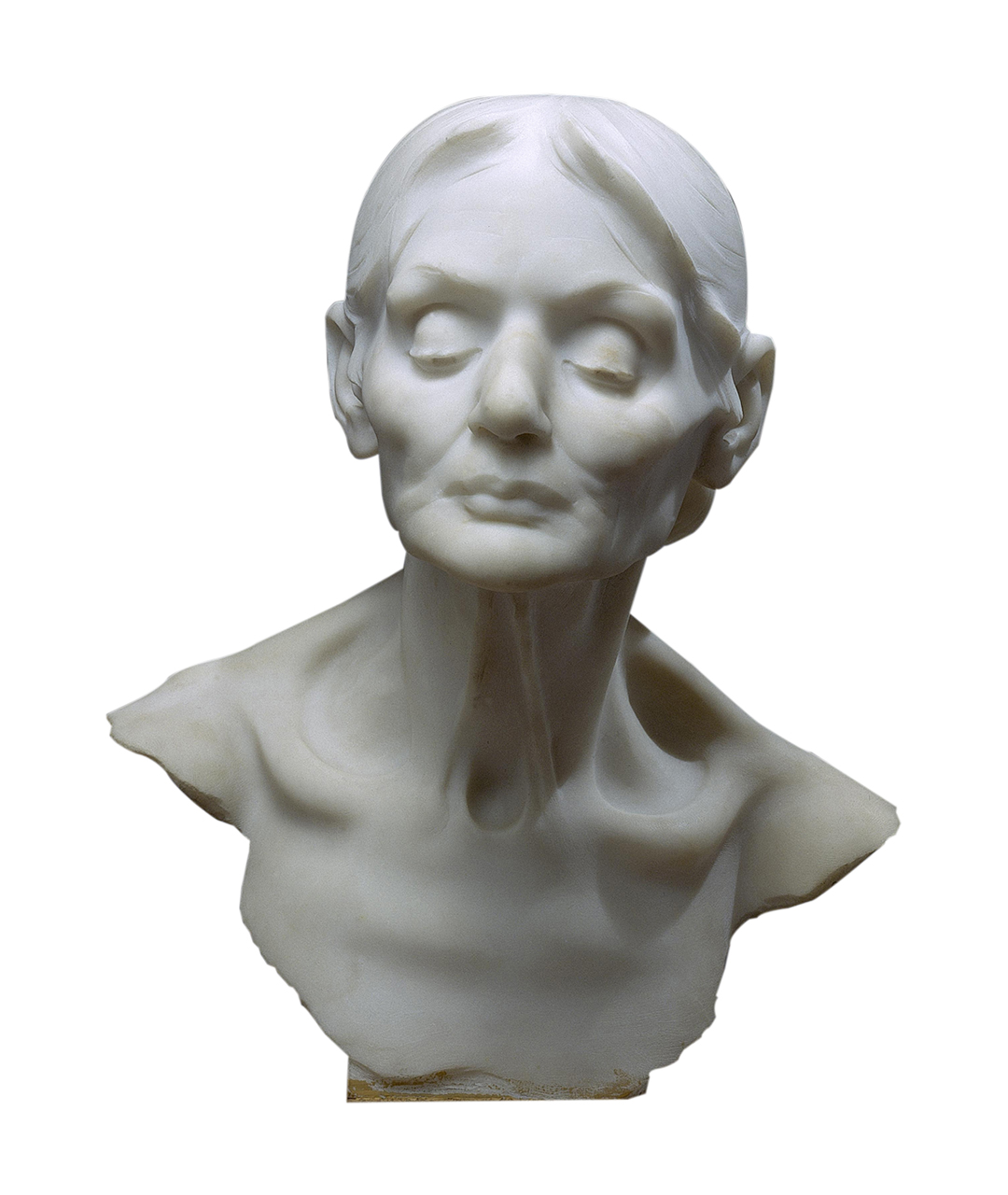 António Fernandes de Sá ( 1872-1959) 1901 Carrara marble Inventory sheet The marble is clearly to be seen in this irregularly contoured bust, from which emerges the figure of an old woman, with droopy eyelids and the protruding bones of a thin face. The naked torso similarly e…
Head of an Old Woman
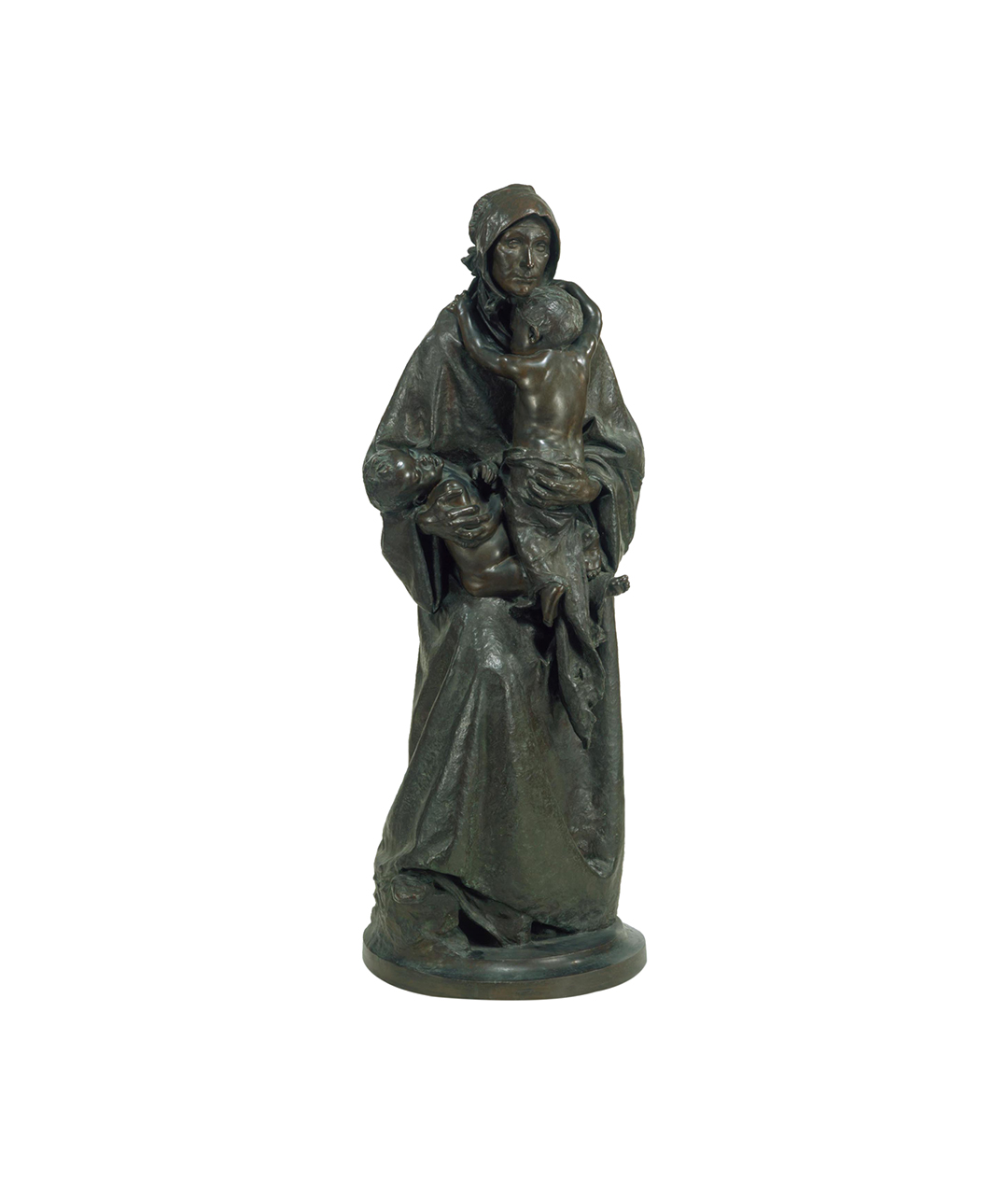 António Teixeira Lopes (1866-1942 ) 1899 Bronze Inventory sheet This bronze is faithful to the model for Caridade (Charity) belonging to the Teixeira Lopes House-Museum. The respective marble is at the tomb of A. Caetano de Carvalho in the Agramonte Cemetery in Porto. In his M…
Charity
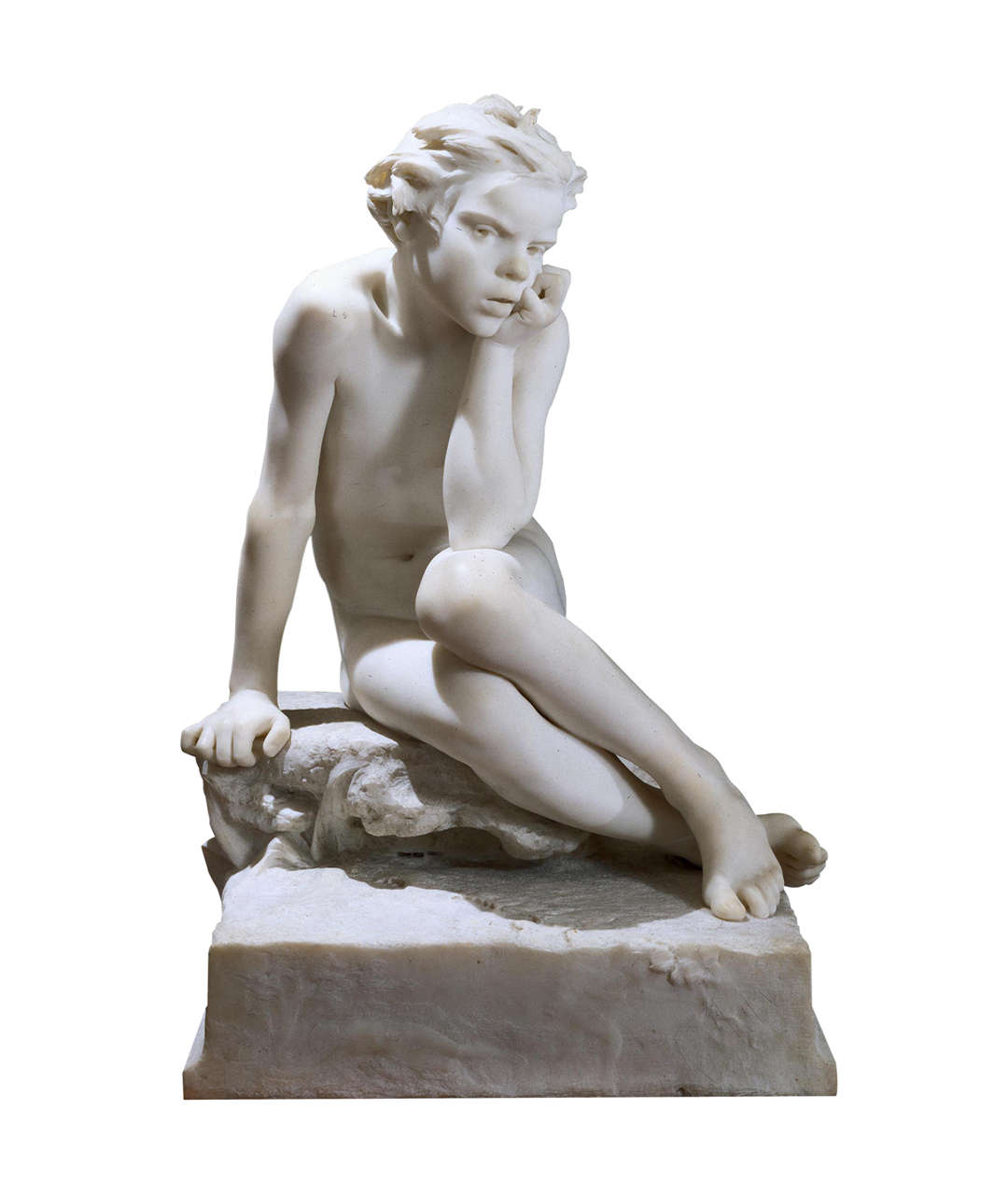 António Teixeira Lopes (1866-1942) 1890 Carrara marble Inventory sheet This is one of Teixeira Lopes’ major works, in that it marked his projection into the artistic world. The sculpture was acquired by the Porto City Hall in an individual exhibition held at the Palácio da Bo…
Cain's Childhood
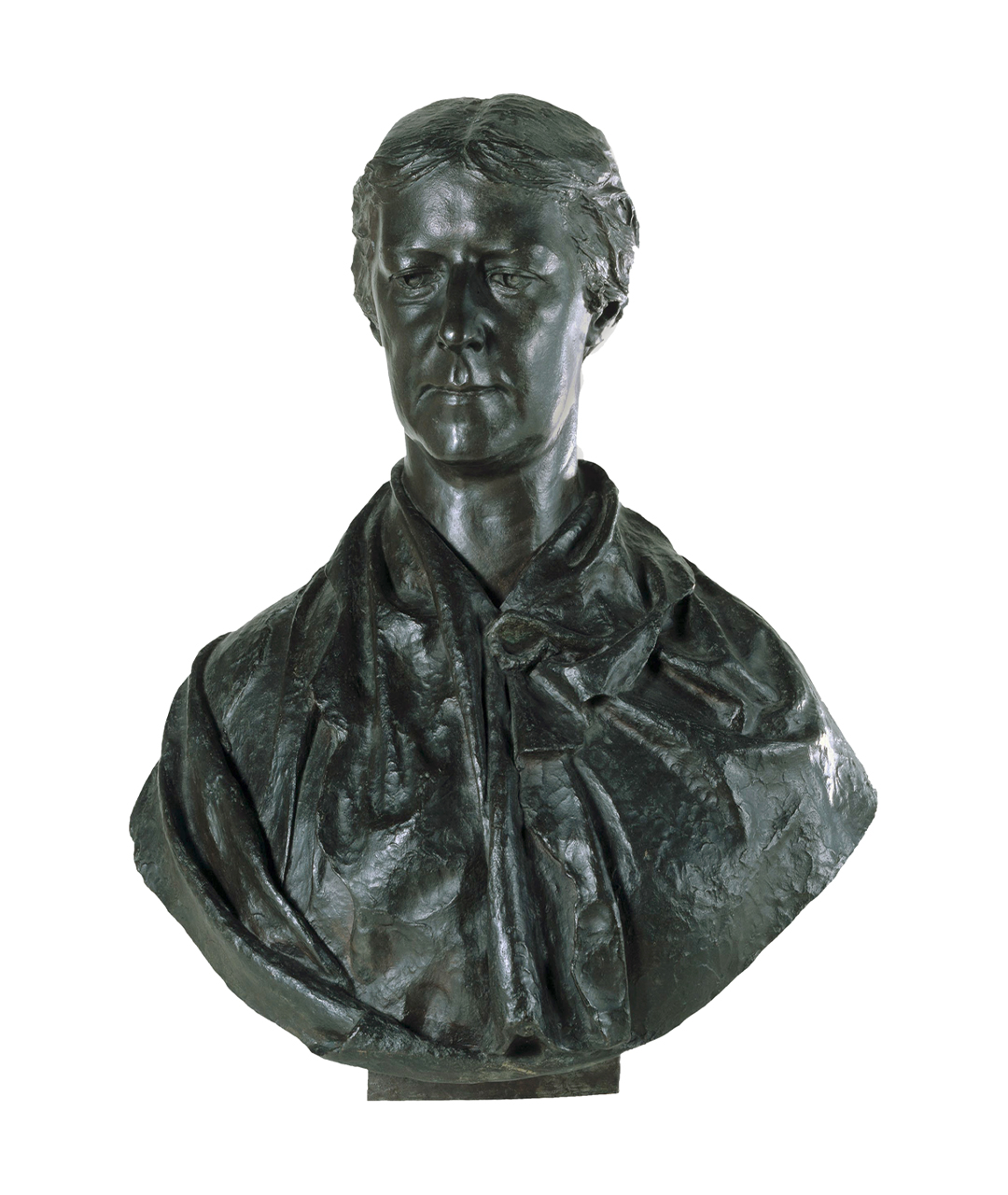 António Soares dos Reis (1847-1889) 1887 Bronze Inventory Sheet This bronze reproduces the plasterwork on display at the Teixeira Lopes House-Museum, which was completed in Lisbon in November 1887. The marble version was never signed, leading one to believe that it had been re…
Mrs. Leech – Bust of the Englishwoman
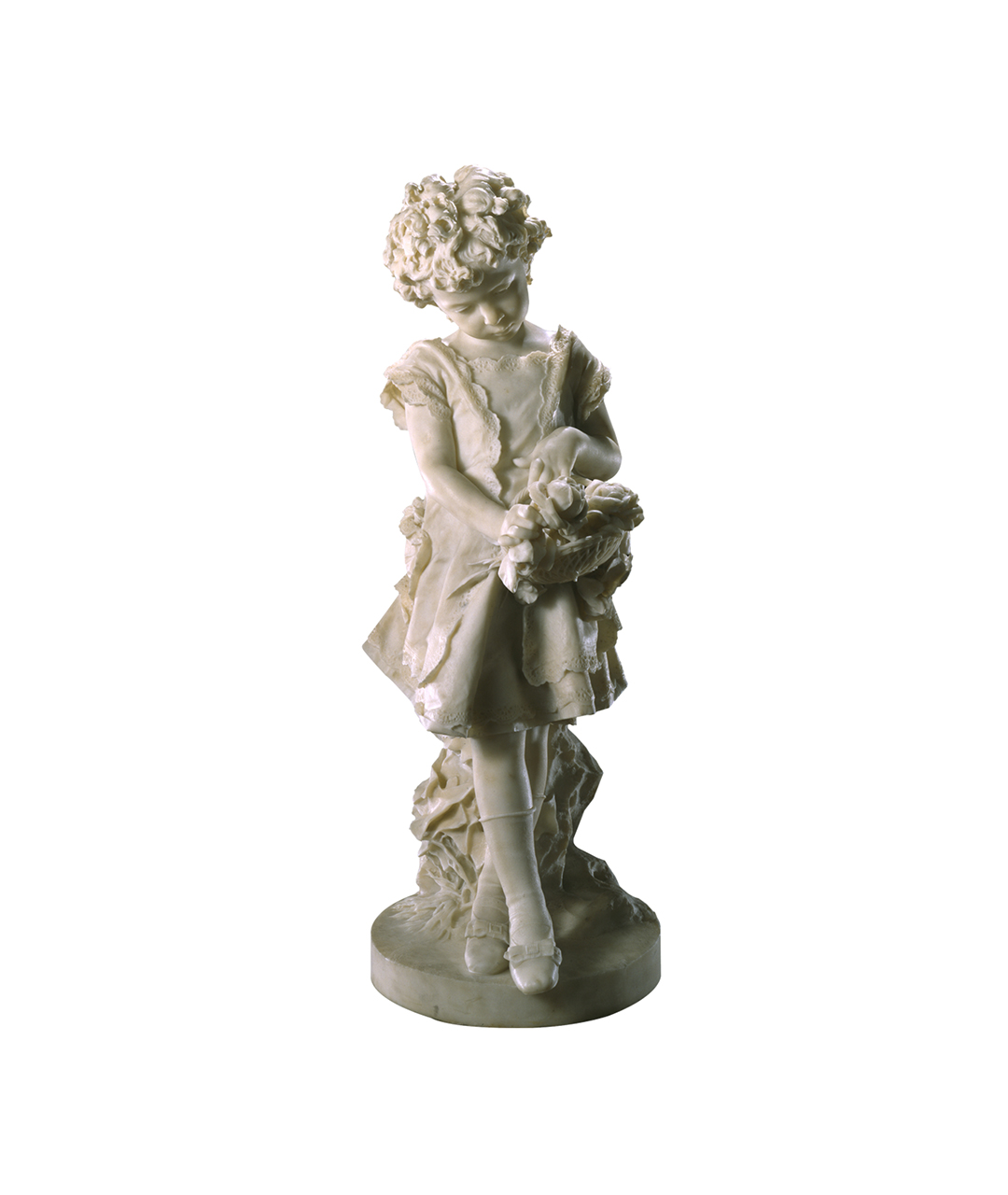 António Soares dos Reis (1847-1889) 1882 Carrara marble Inventory sheet Luísa Guimarães Guedes was the daughter of Delfim Guedes, Count of Almedina, inspector of the Academia Real de Belas Artes de Lisboa and a prominent figure in the artistic world. The artist’s development…
The Counts of Almedina’s Daughter
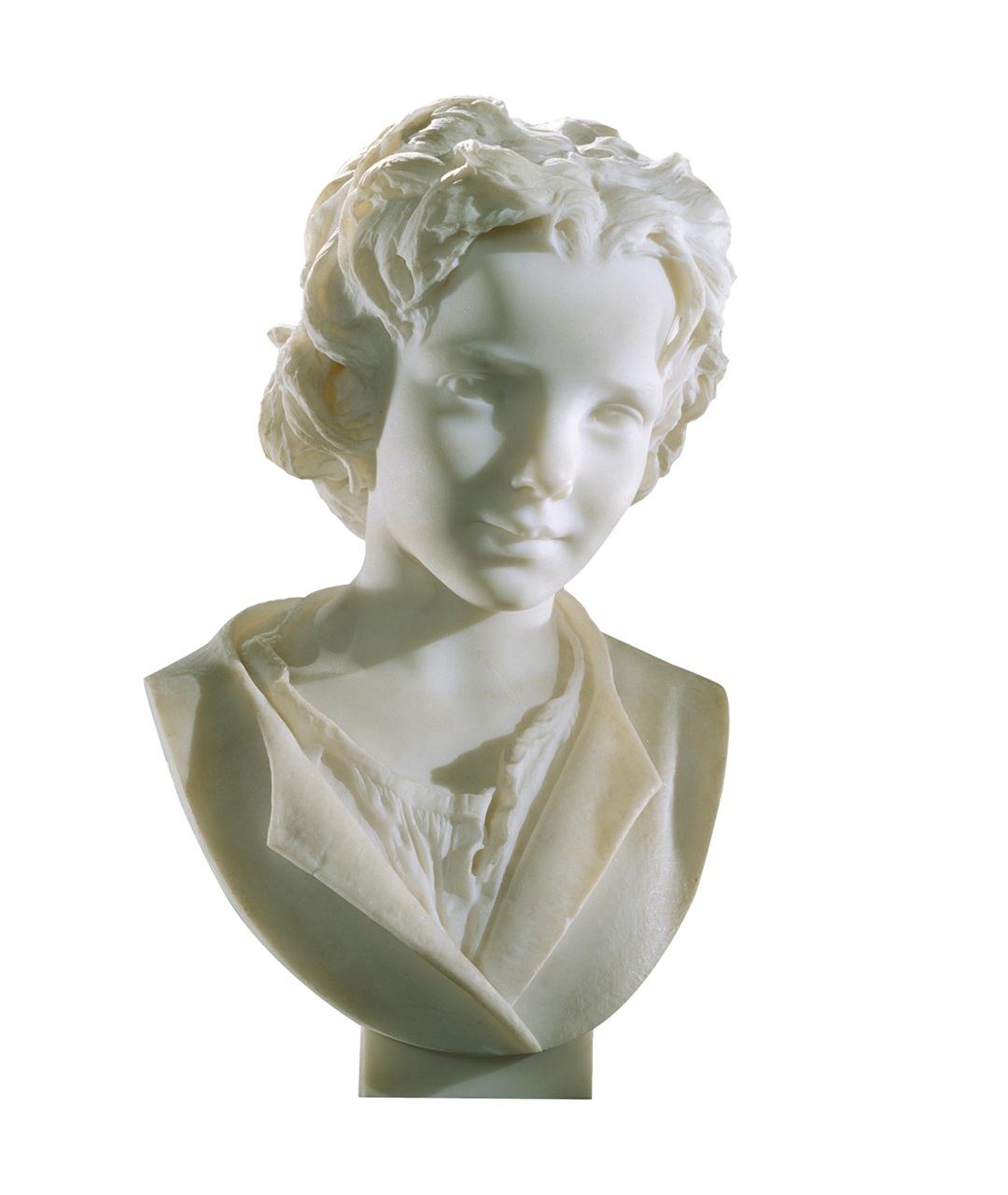 António Soares dos Reis (1847-1889) 1881 Carrara marble Inventory sheet I t is assumed that the Flor Agreste (Wild Flower) model was the daughter of a charcoal burner that passed by Soares dos Reis’ studio. The piece was done in 1878, when Soares dos Reis was waiting for his w…
Wild Flower
Engraving
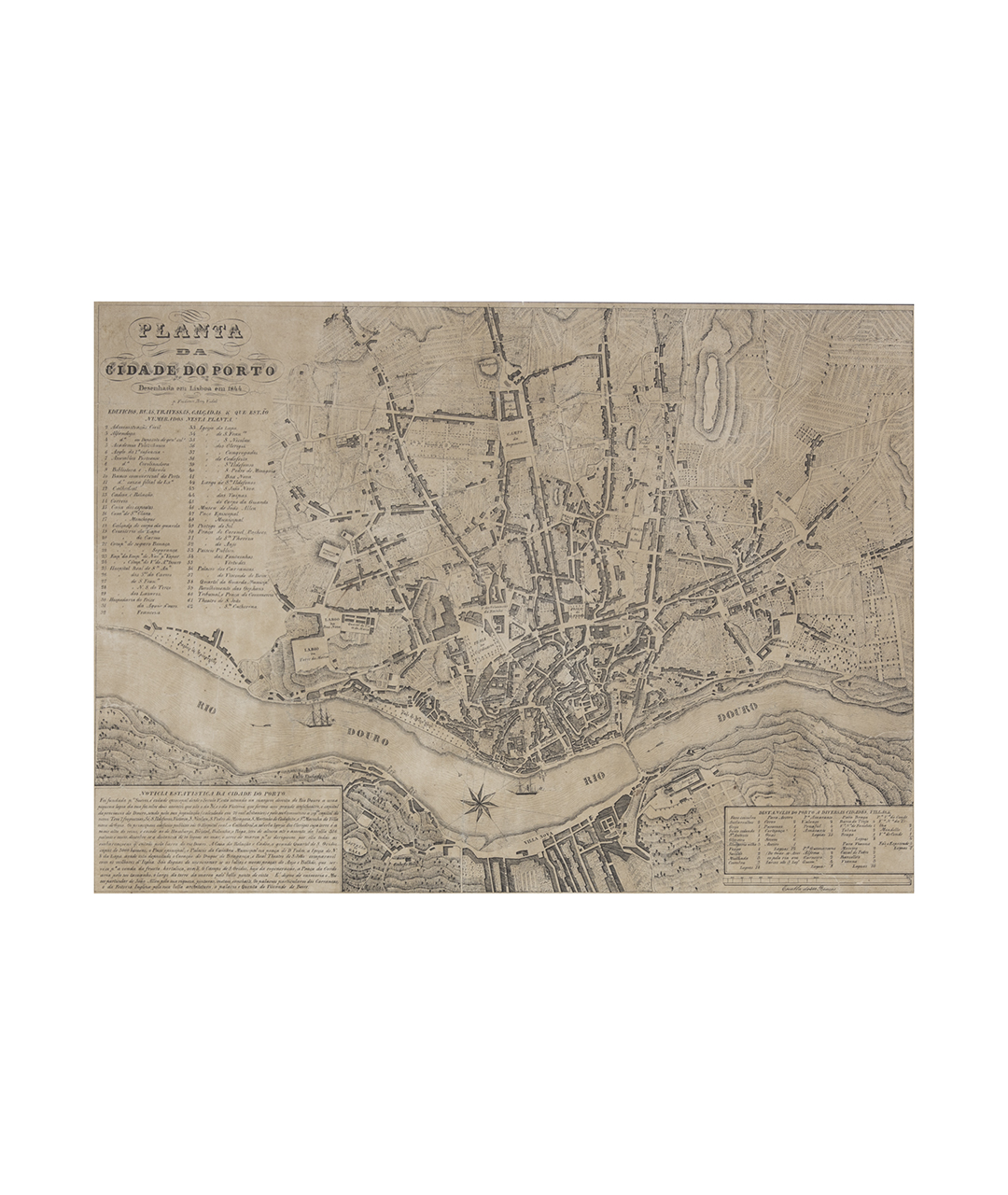 Frederico Perry Vidal Lisbon, 1844 Lithography, black ink Inventory sheet This map shows the Suspension Bridge, inaugurated a year before in 1843, for the first time. It is the only printed map from the first half of the 19th century that shows it. Perry Vidal's map points out…
Map of Porto
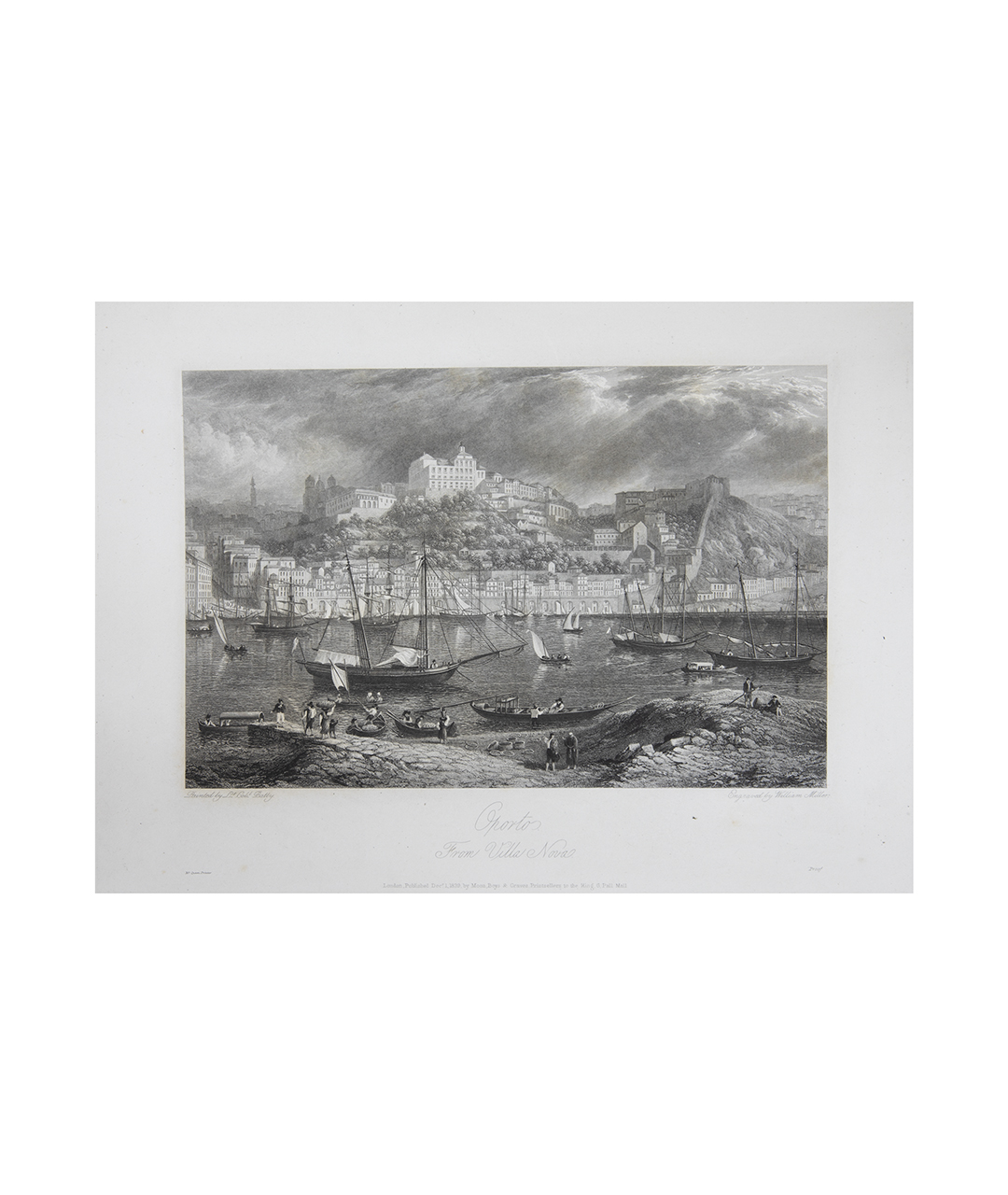 Robert Batty London, 1830 Steel engraving Inventory sheet This engraving is part of the album, Batty's Views of the Principal Cities in Europe. The artist was Lieutenant-Colonel Robert Batty of the British army, and the album includes six panoramic views of Porto done by Batty…
Porto from Vila Nova
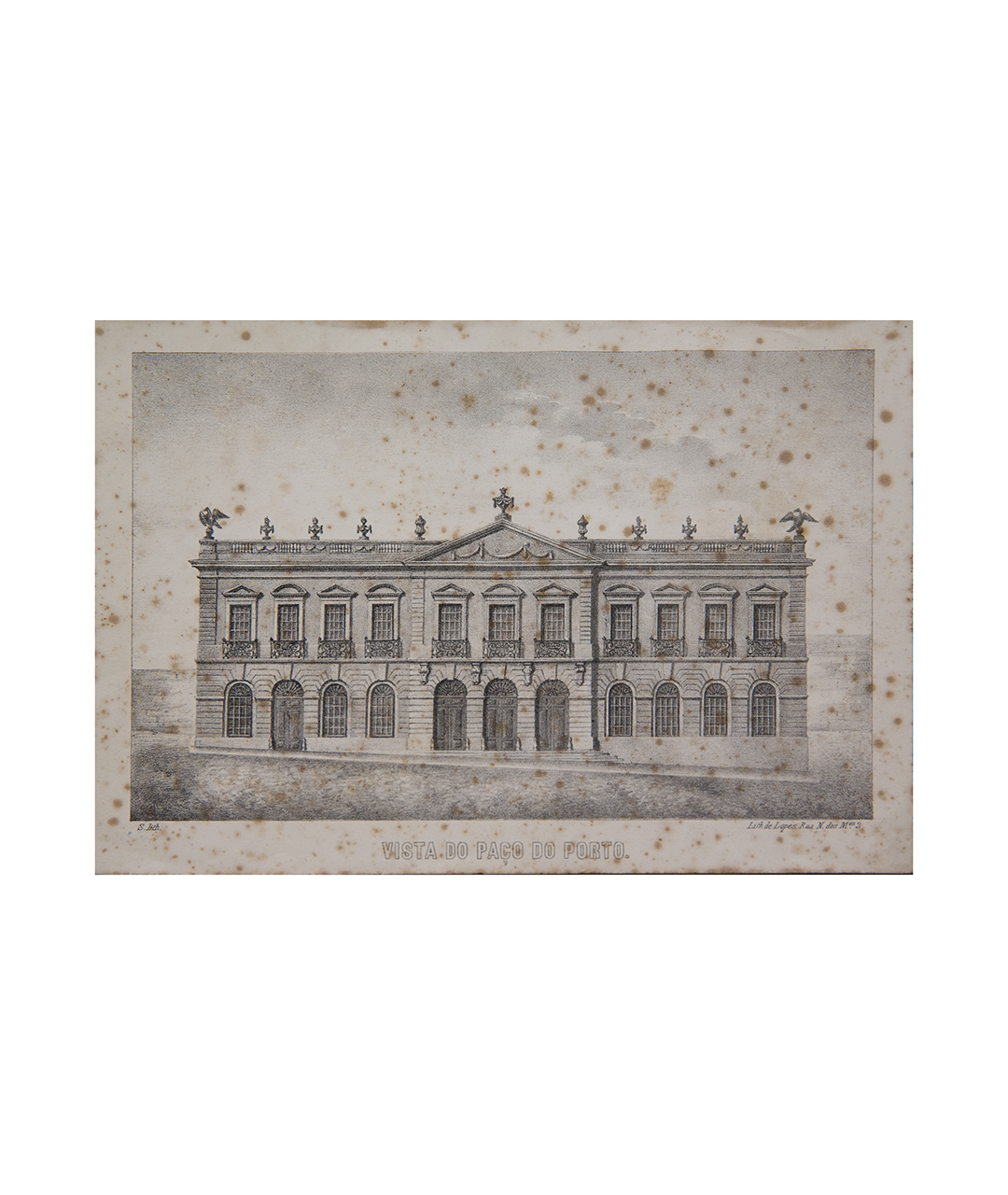 Unkown Author Lithograph Inventory sheet View of Carrancas Palace as temporary residence of the Portuguese royal family after its acquisition in 1862. The lithograph was published in Elogio Histórico do Senhor Rei D. Pedro V by the Marquis of Resende, published in Lisbon in 18…
View from the Royal Palace in Porto
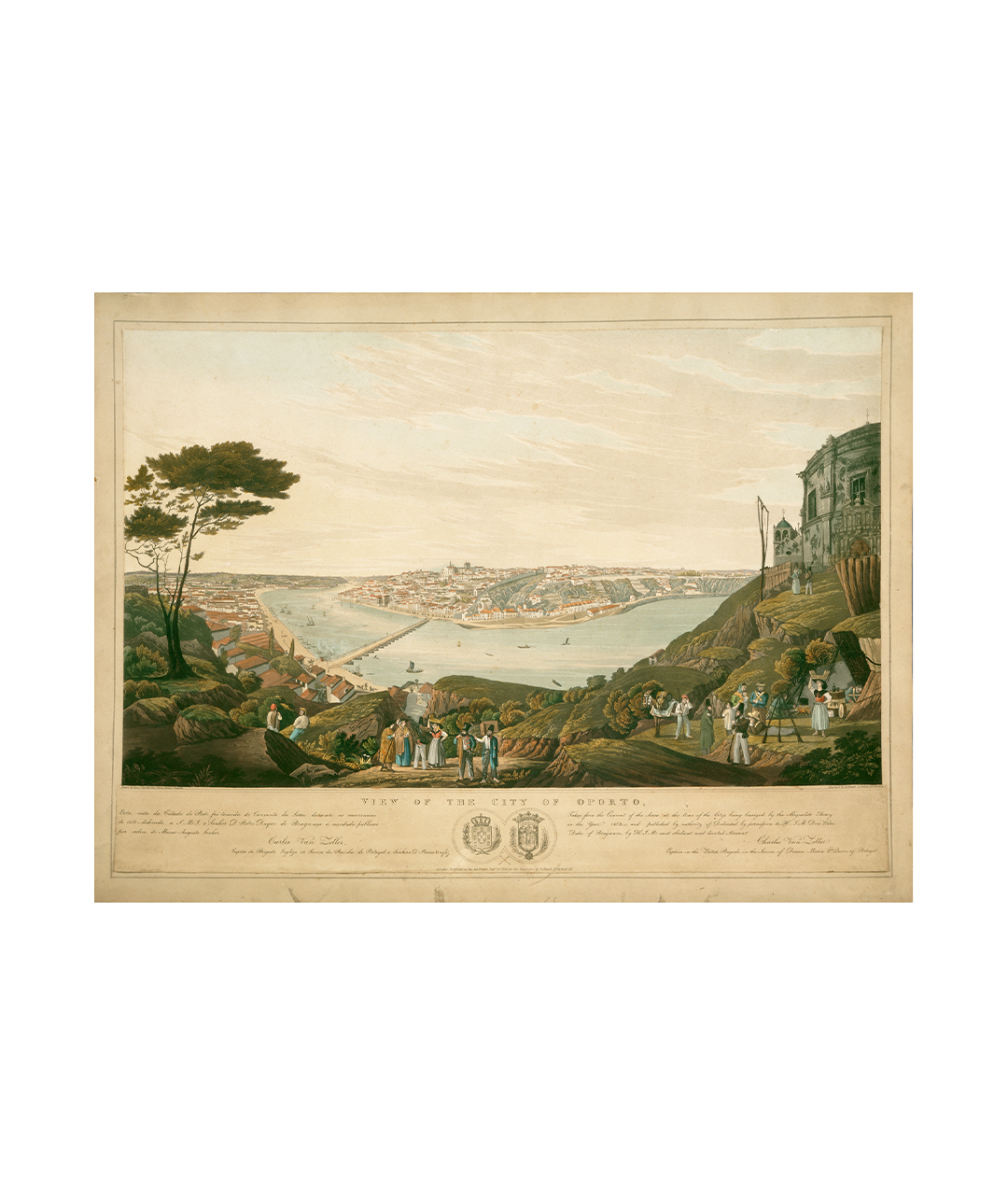 R. Havell (engraving)/ Carlos Van Zeller (drawing) London, 1833 Coloured Aquatint Inventory sheet This rare view of Porto was drawn by Carlos Van Zeller, captain of the British Brigade in the service of Queen Maria II during the Siege of Porto in 1832-33. Produced during the m…
View of Porto
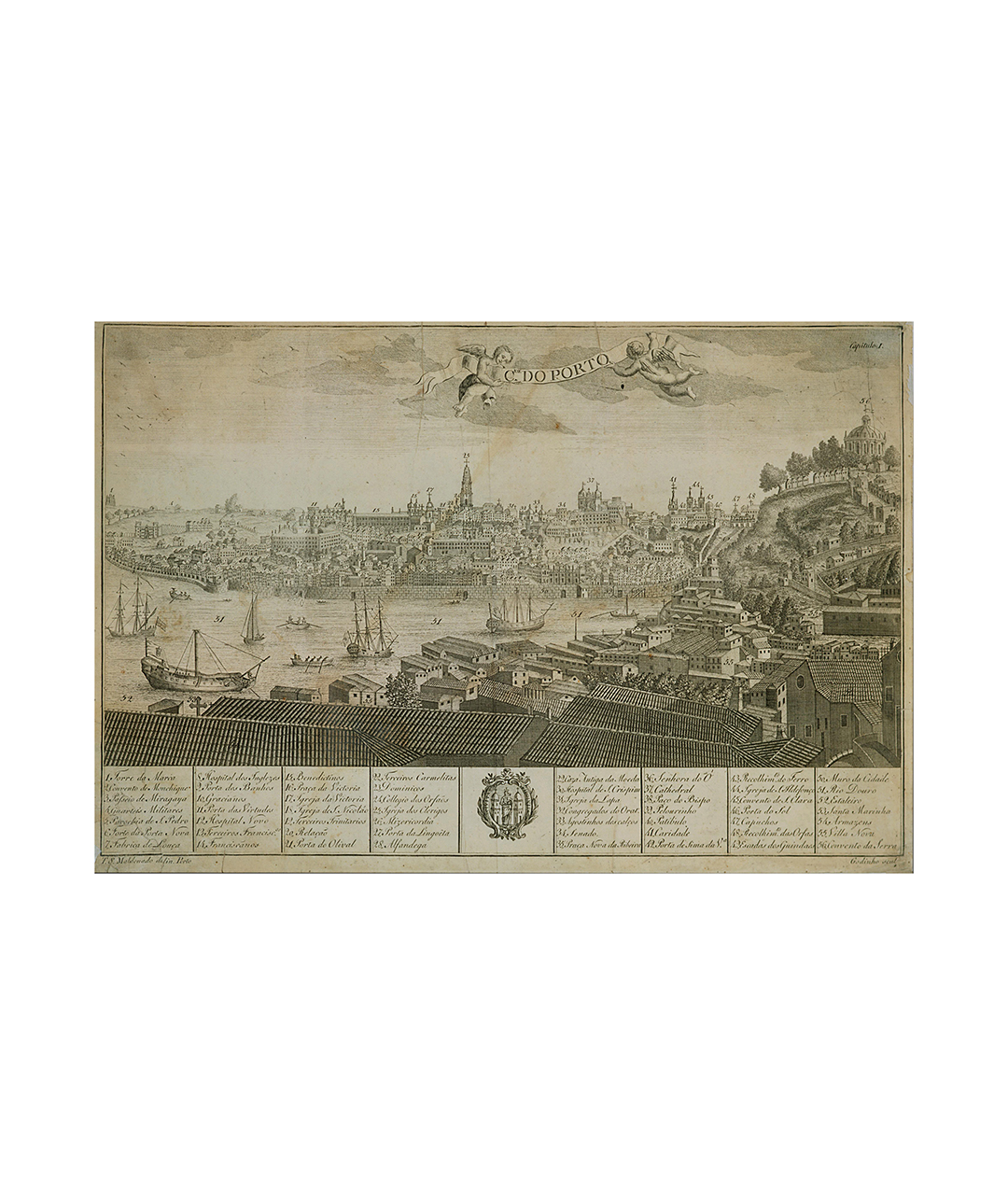 Manuel da Silva Godinho (engraving); Teodoro de Sousa Maldonado (drawing) Porto 1789 Copper engraving, black ink Inventory sheet Inserted in chapter I of Descripção Topographica e Histórica da Cidade do Porto, published in 1789, this is the first Portuguese engraving depicting…
City of Porto
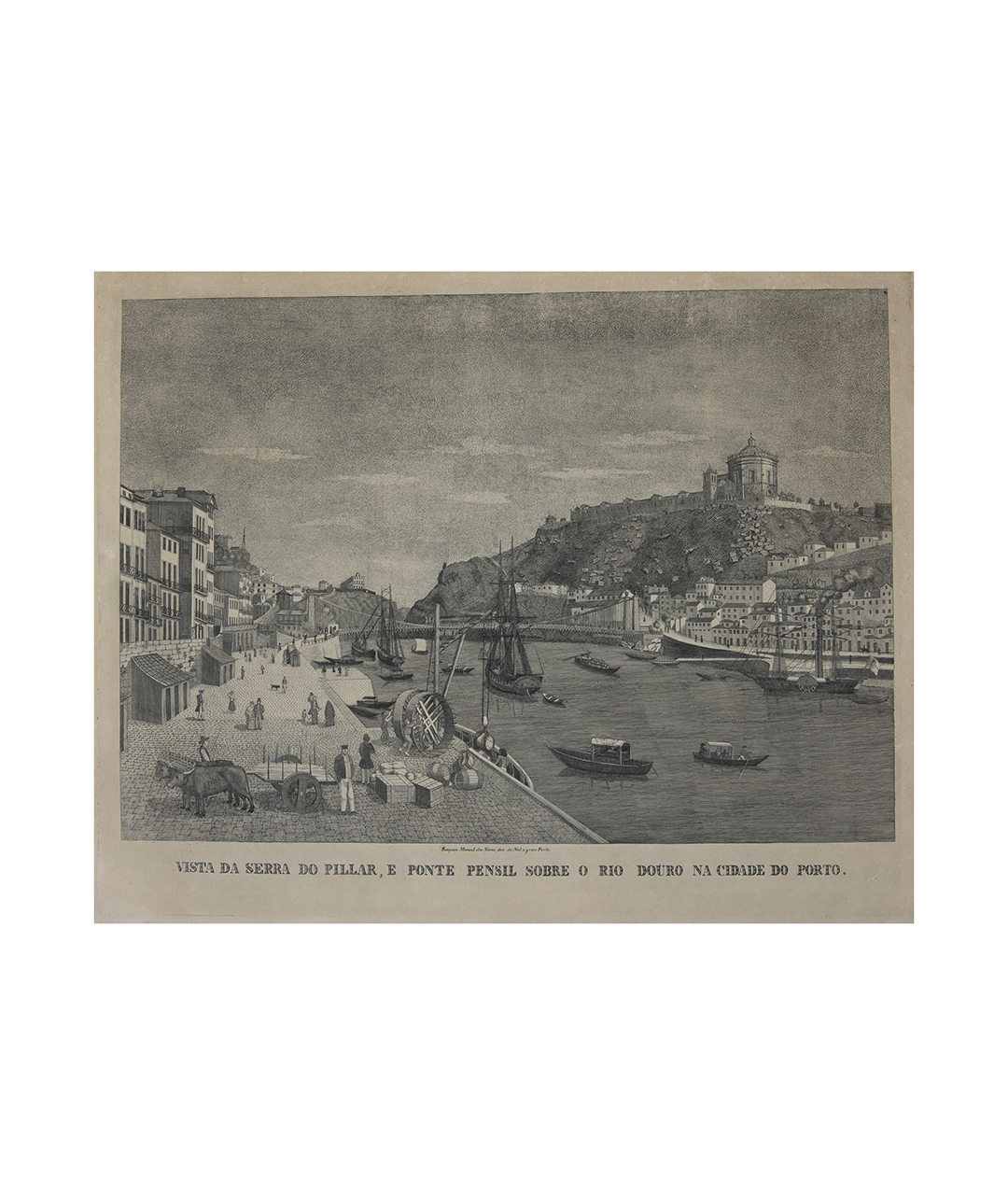 Joaquim Manuel das Neves Black ink and chisel engraving Inventory sheet Spontaneous recording of the customs activity of the old fluvial port located on the Ribeira. On the quay, the barrels are hoisted from a vessel by means of cranes and the ox cart awaits its loading. On th…
View of the Serra do Pilar and the Suspension Bridge
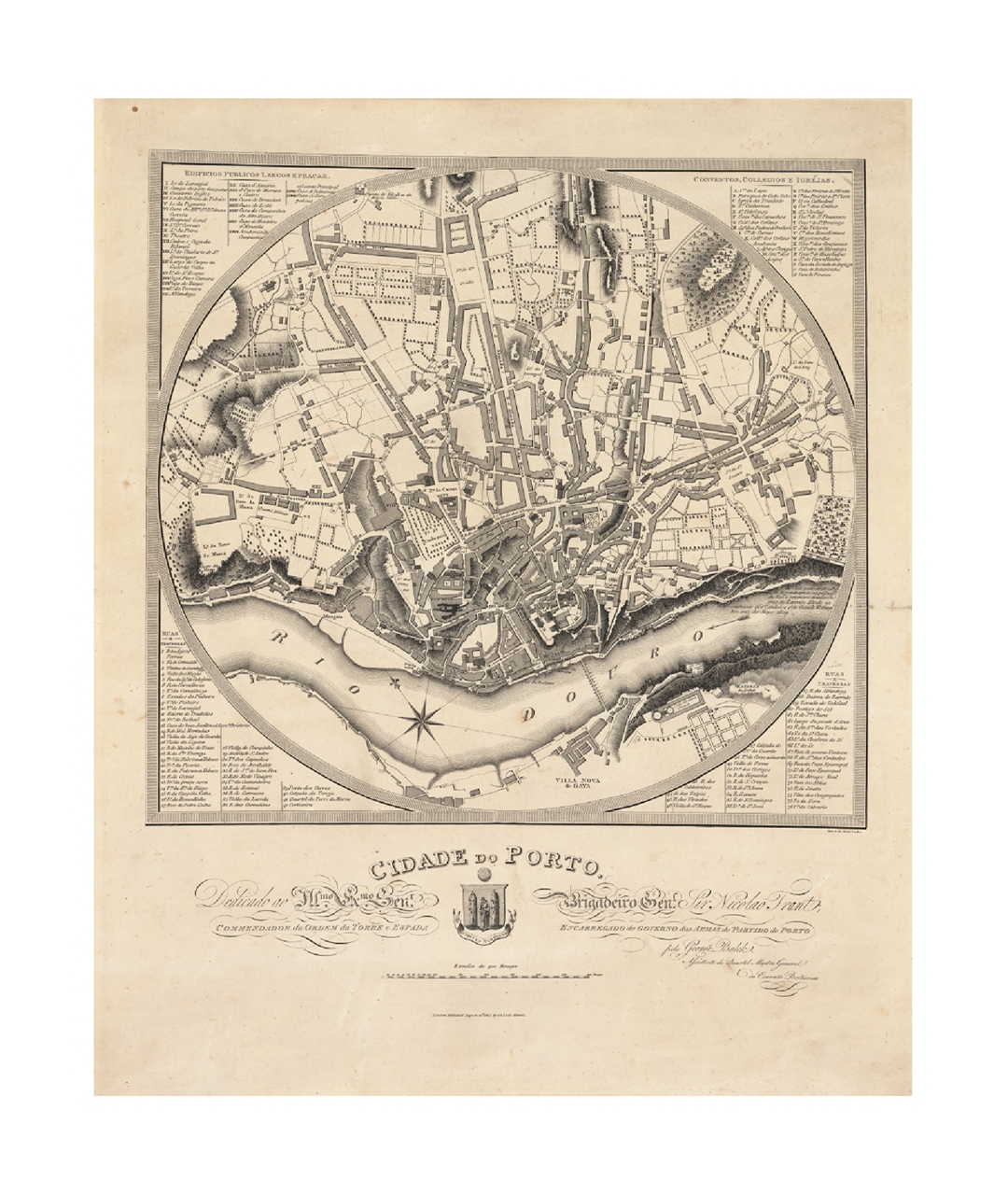 Samuel John Neele London, 1813 Paper and black ink Inventory sheet Known as the round map, this is the oldest map of Porto’s urban centre. Its survey was carried out during the Peninsular War with the British army still present in the country. Its survey was carried out during…
Porto
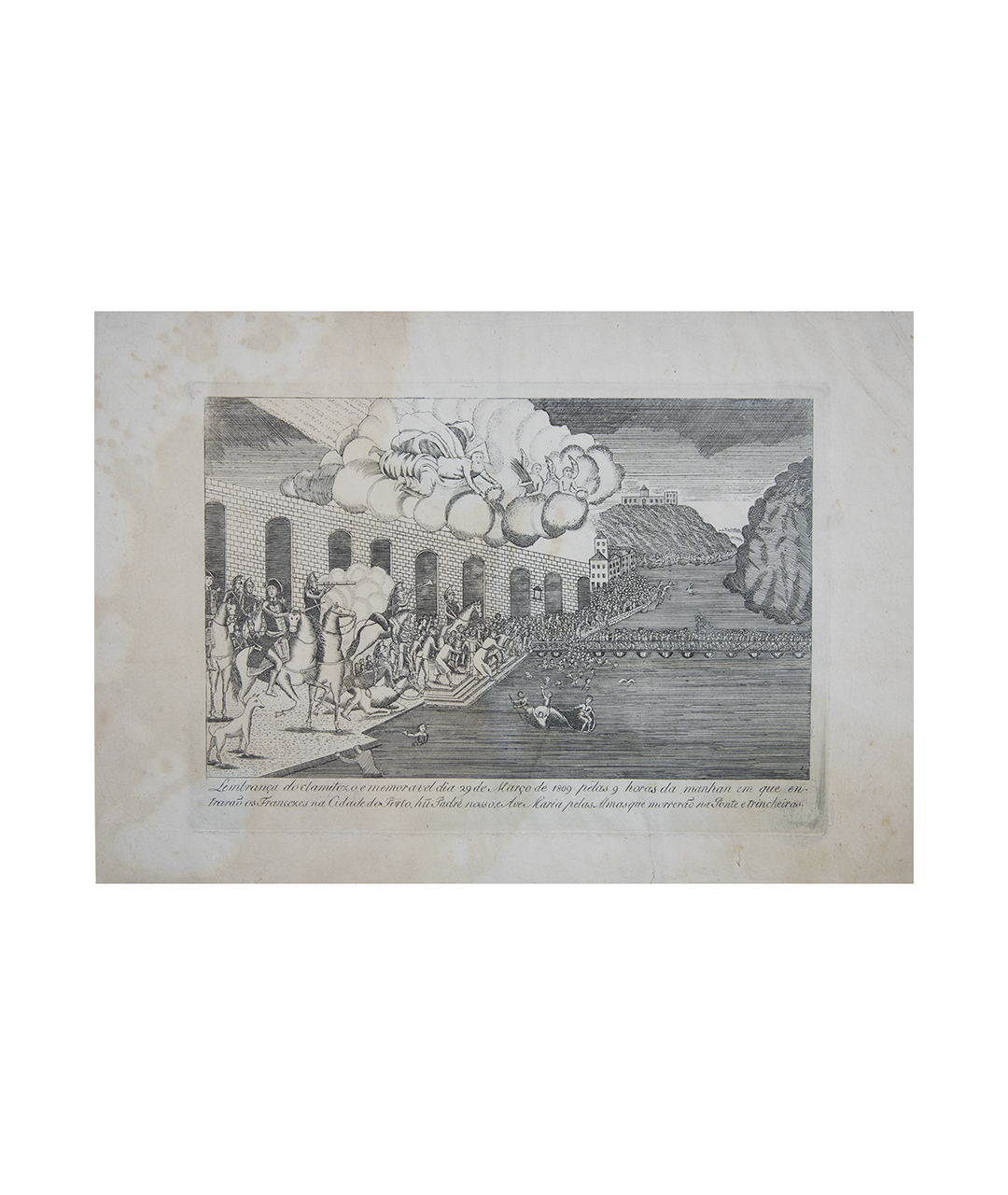 Unknown artist Etching Inventory sheet This engraving represents the tragic episode of the ‘Ponte das Barcas’ disaster on 29th March 1809, which occurred during the Peninsular War. Popular in character, probably by a local artist, it is one of the most faithful depictions of t…
The characters’ clothes and activities are also meticulously presented.
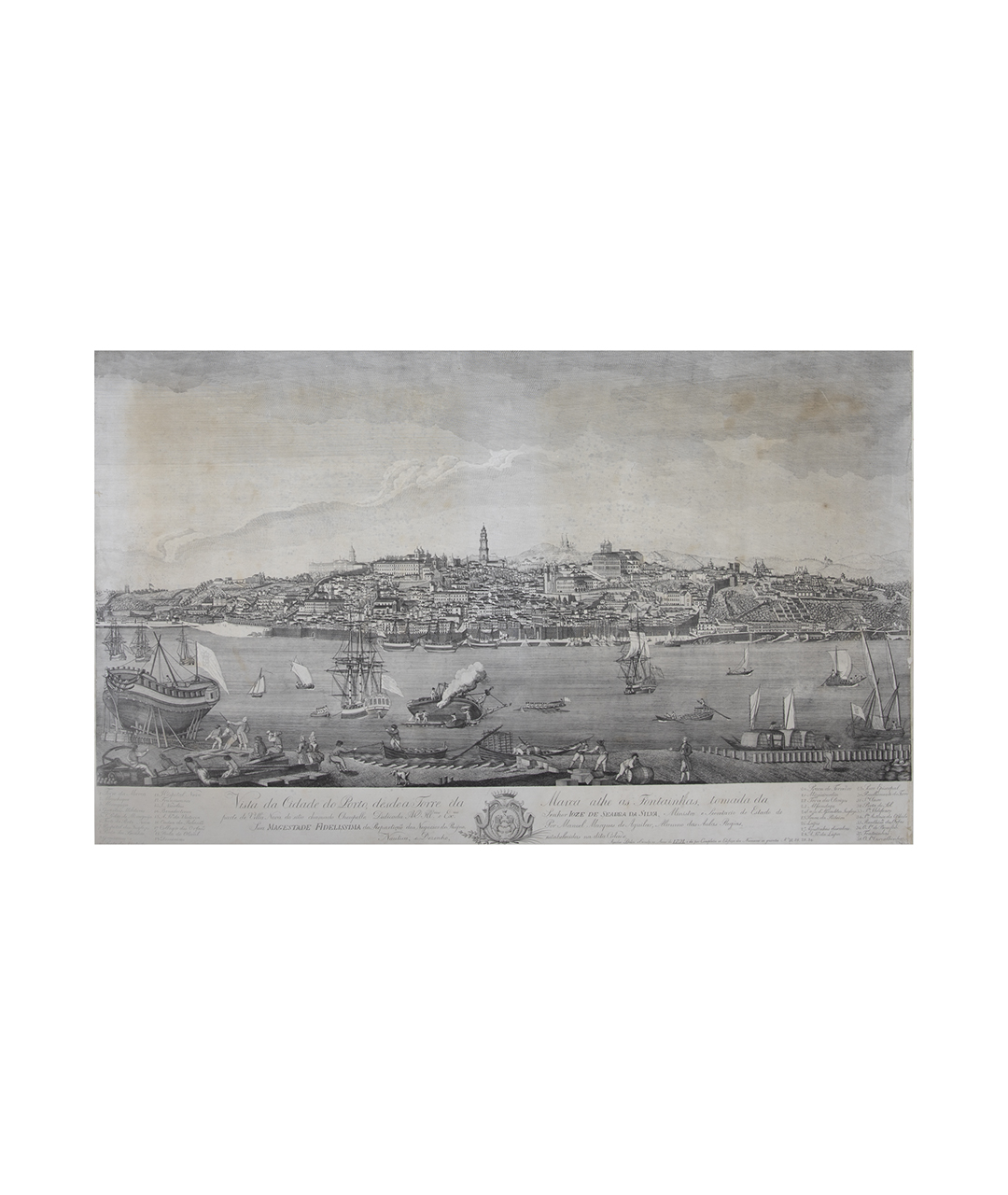 Manuel Marques de Aguillar 1791 Etching and chisel Inventory sheet This is one of the most important late 18th century depictions of Porto. It records the city encircled by the old wall built in the 14th century for the town’s defence, whose perimeter went from the Forte da Po…
View of Porto from Torre da Marca to Fontainhas
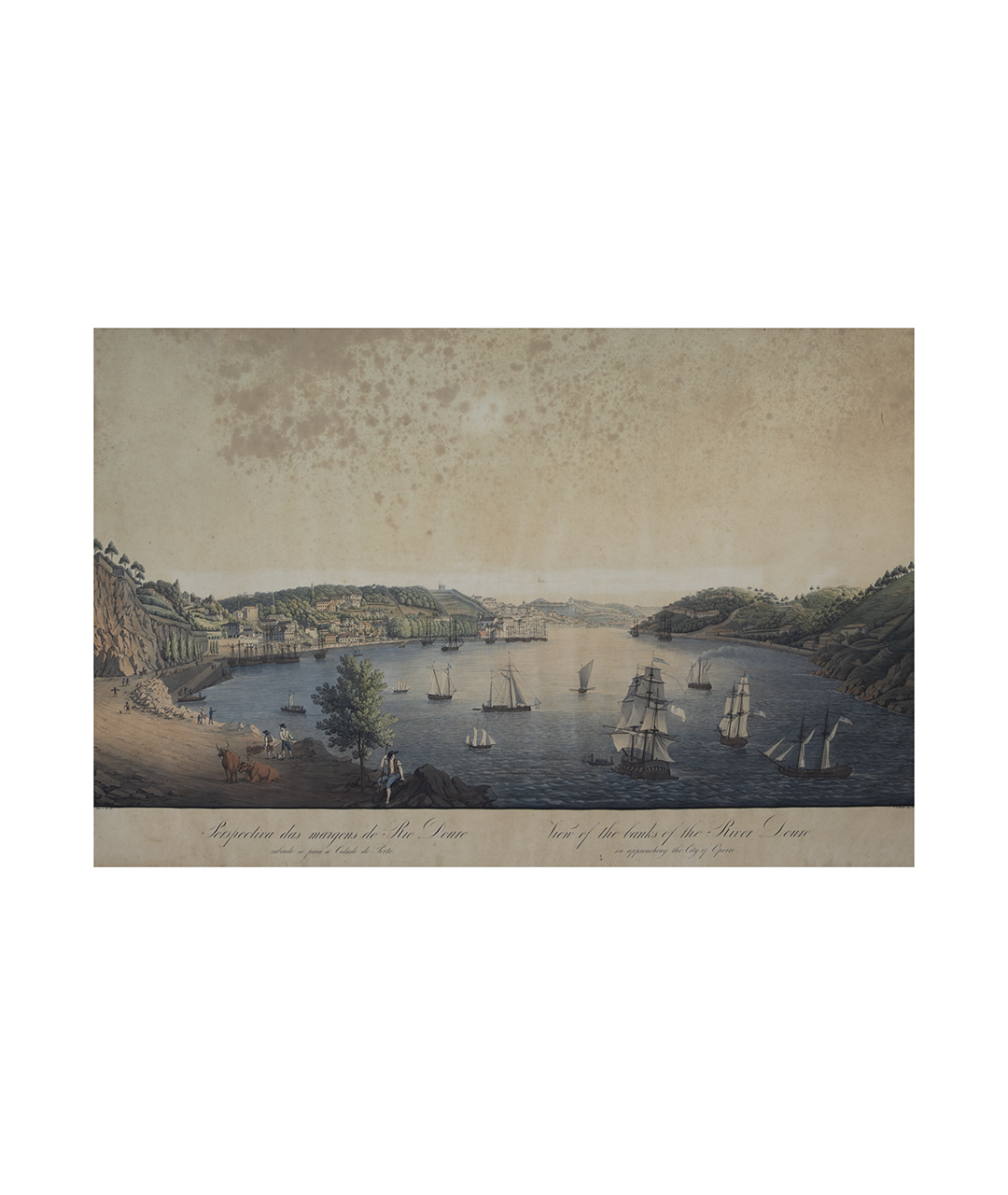 Guilherme (?) Kopke (drawing) / Christian Gottlob Hammer (engraving) Dresden, 1827 Coloured mezzotint Inventory sheet The panoramic view is of an area close to the Arrábida mountain range, with the city in the background. The river is, as would have been usual, crowded with bo…
View of the banks of the River Douro rising to Porto
Lapidary
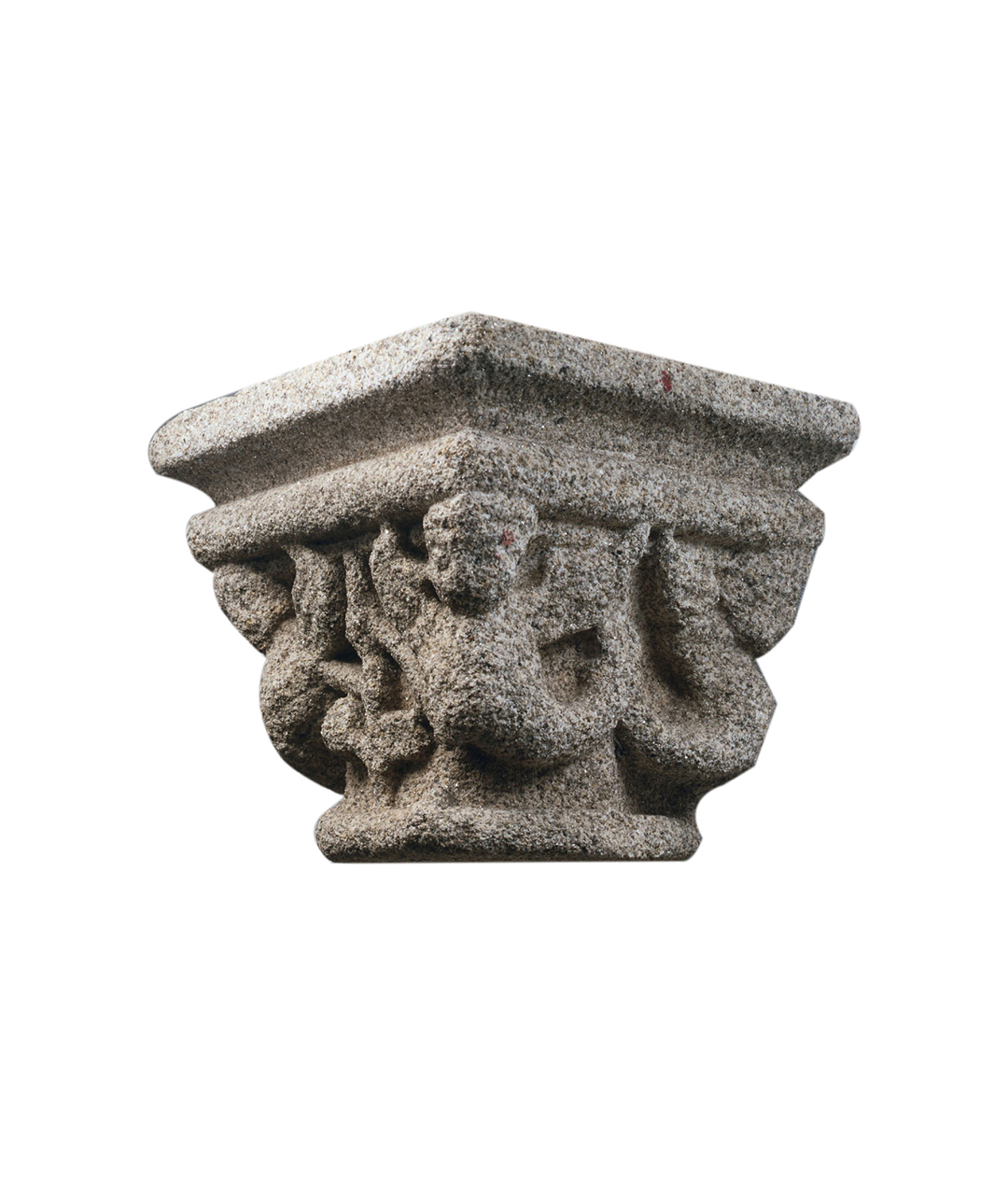 16th century Medium/low-relief Inventory sheet This is one of the six capitals from the arcade of the original cloister of the Convent of S. Bento de Avé-Maria, in Porto, ordered built by Manuel I, in 1518. It was built on the site formerly known as Hortas do Bispo e Cividade,…
Capital
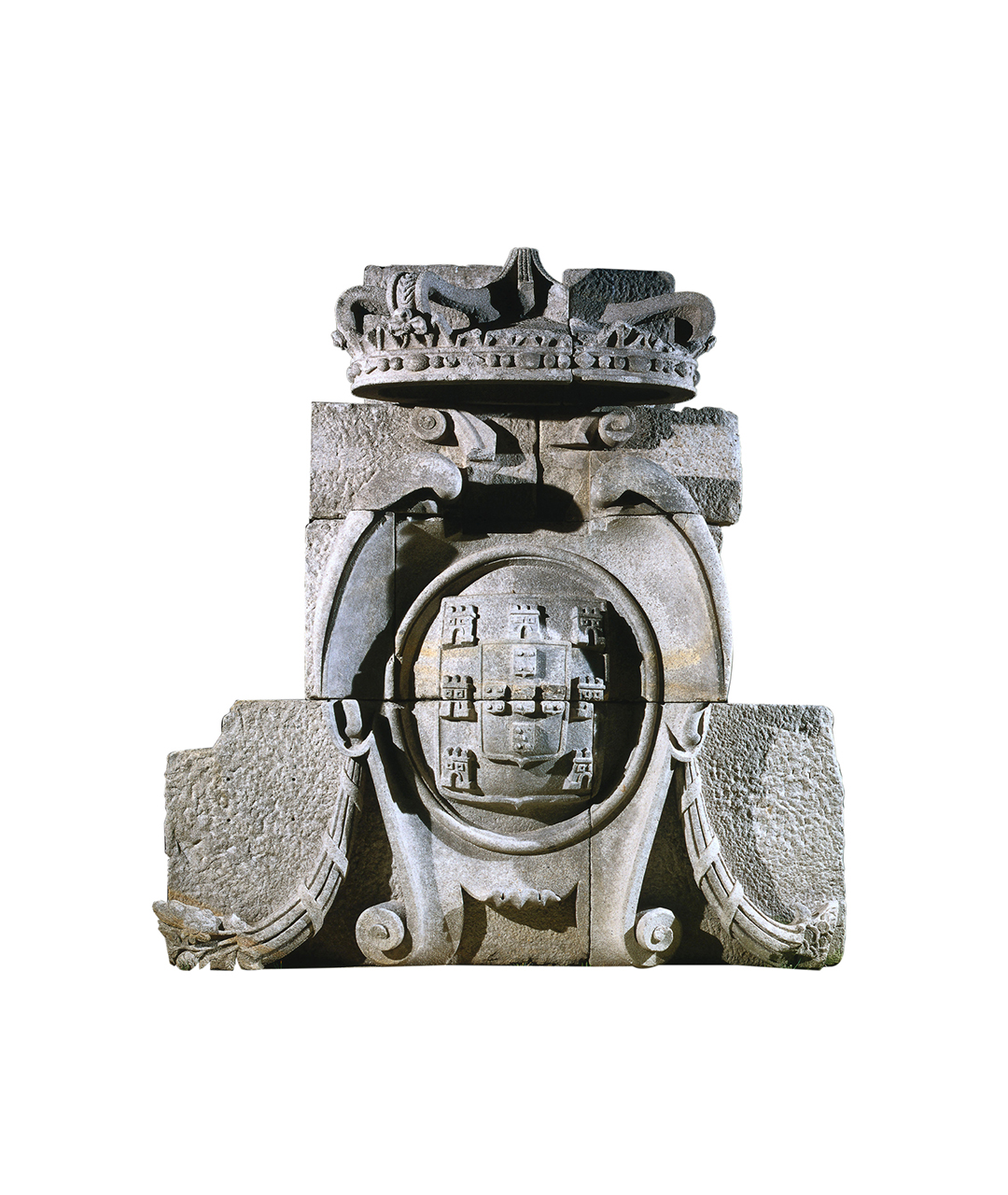 18th century Medium/ high-relief Inventory sheet This coat of arms is from the façade of the former Real Teatro de S. João, in Porto, designed by Vicente Mazzoneschi, Italian architect and painter, who was in Portugal working at the Teatro de S. Carlos in Lisbon as a set desig…
Coat of Arms of the Kingdom
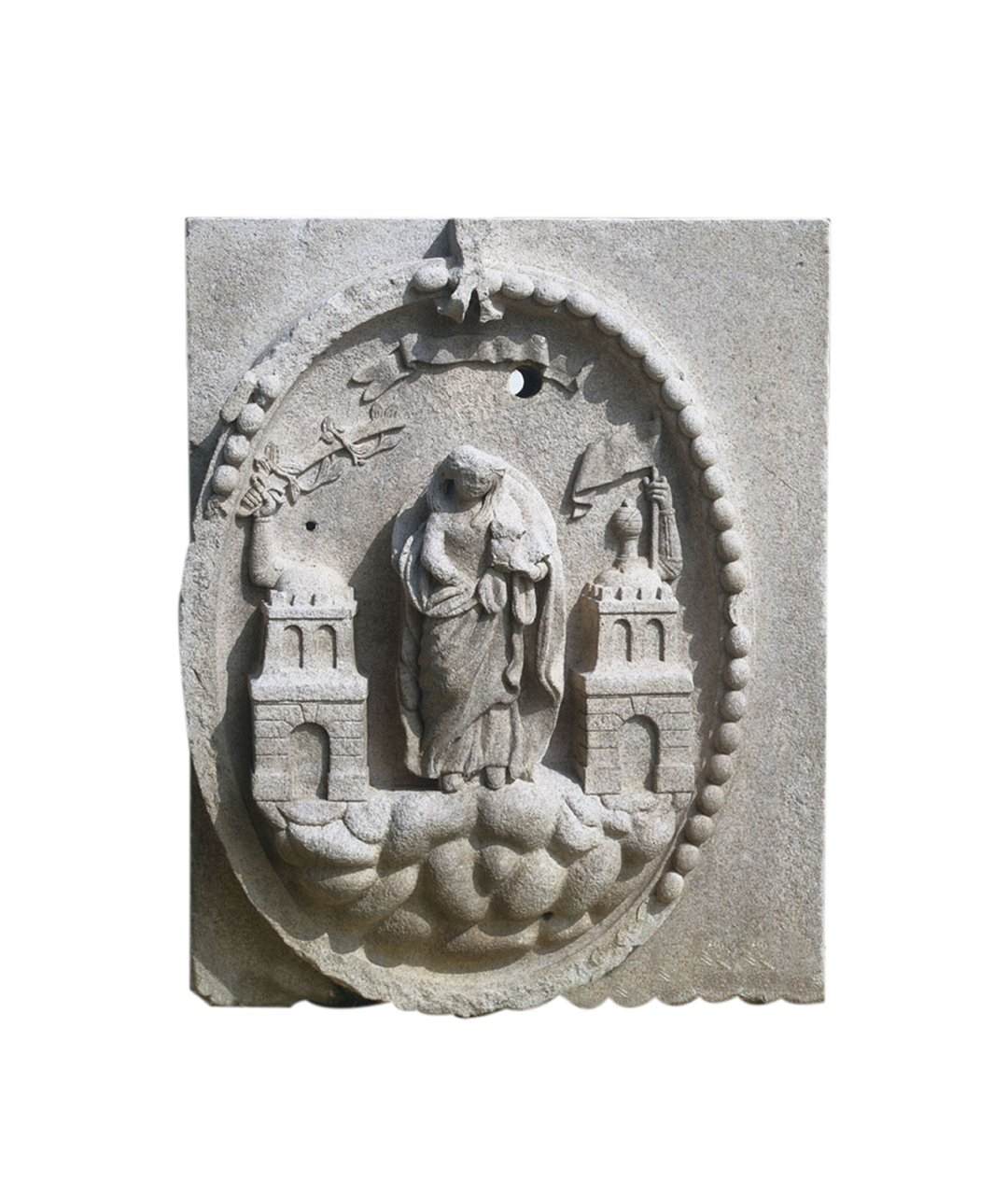 19th century Medium/ high-relief Inventory File This coat of arms comes from Fonte da Batalha, in Porto, built around 1830 and demolished in the late 19th century. It depicts the city’s former arms with the Virgin and the Infant Christ on her lap, flanked by two towers. A Roya…
Porto City Coat of Arms
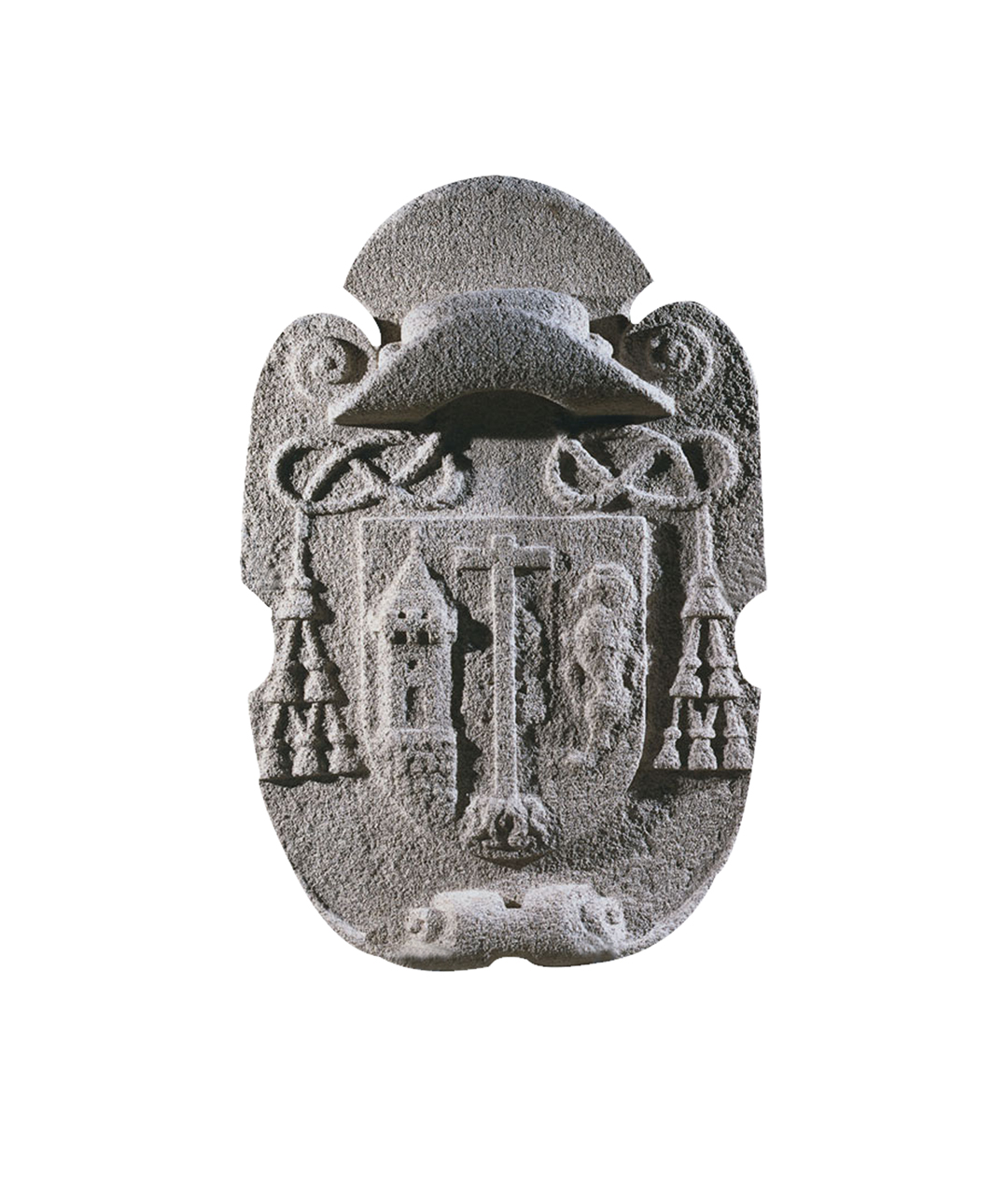 17th century Medium relief Inventory sheet (link ) This coat of arms was probably part of the portal in the wall that existed in the former Largo da Sé (Cathedral) do Porto and that was demolished in the early 20th century to make way for the present Terreiro da Sé. The arms a…
Coat of Arms of Dom Gonçalo de Morais
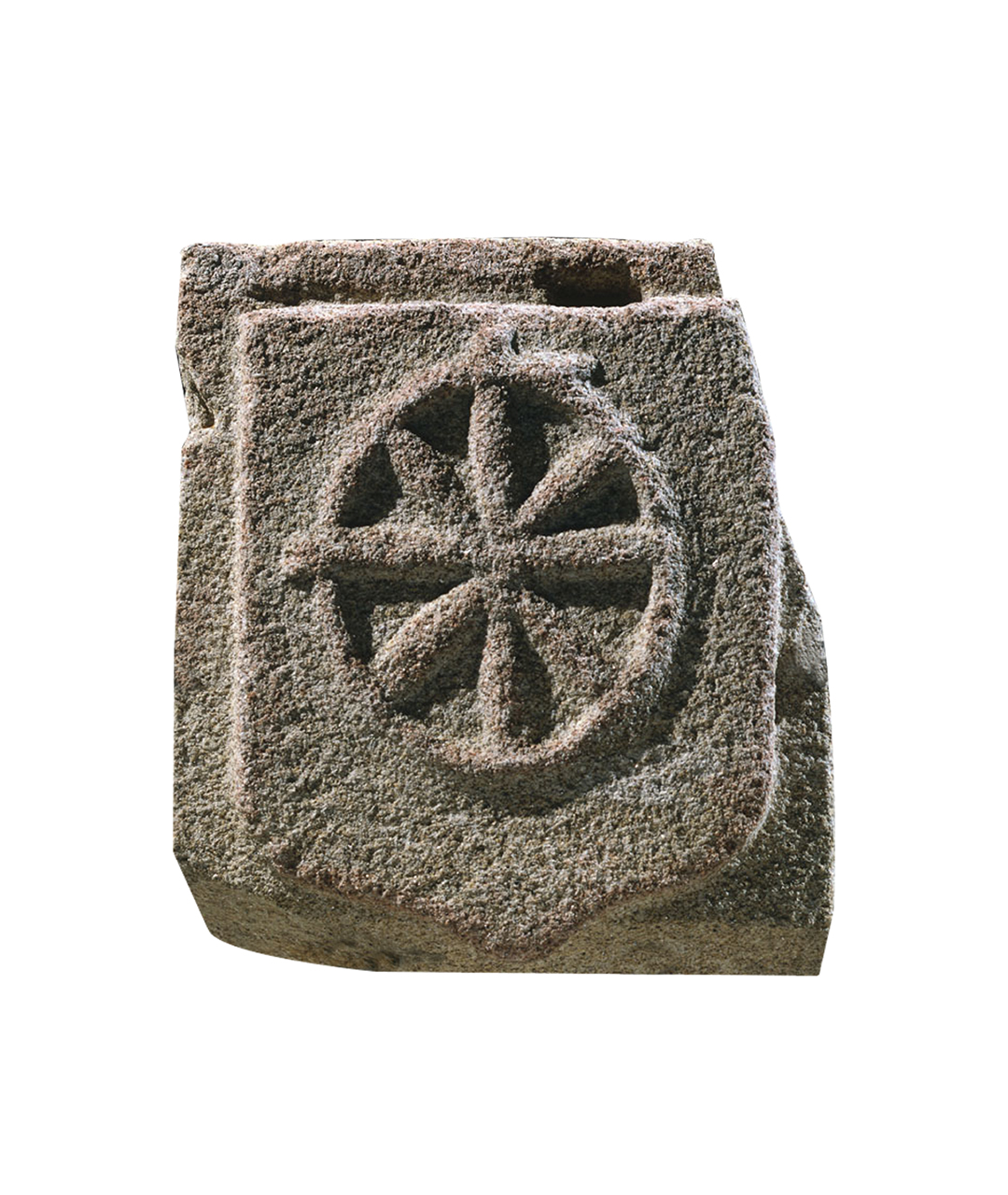 16th century Medium relief Inventory Sheet These are the coat of arms of Pedro da Costa (Bishop of Porto between 1507 and 1535) from a house located in Rua das Flores in Porto, which adopted the wheel with razors as its heraldic symbol, one of the attributes of the martyrdom o…
Coat of Arms of Dom Pedro da Costa
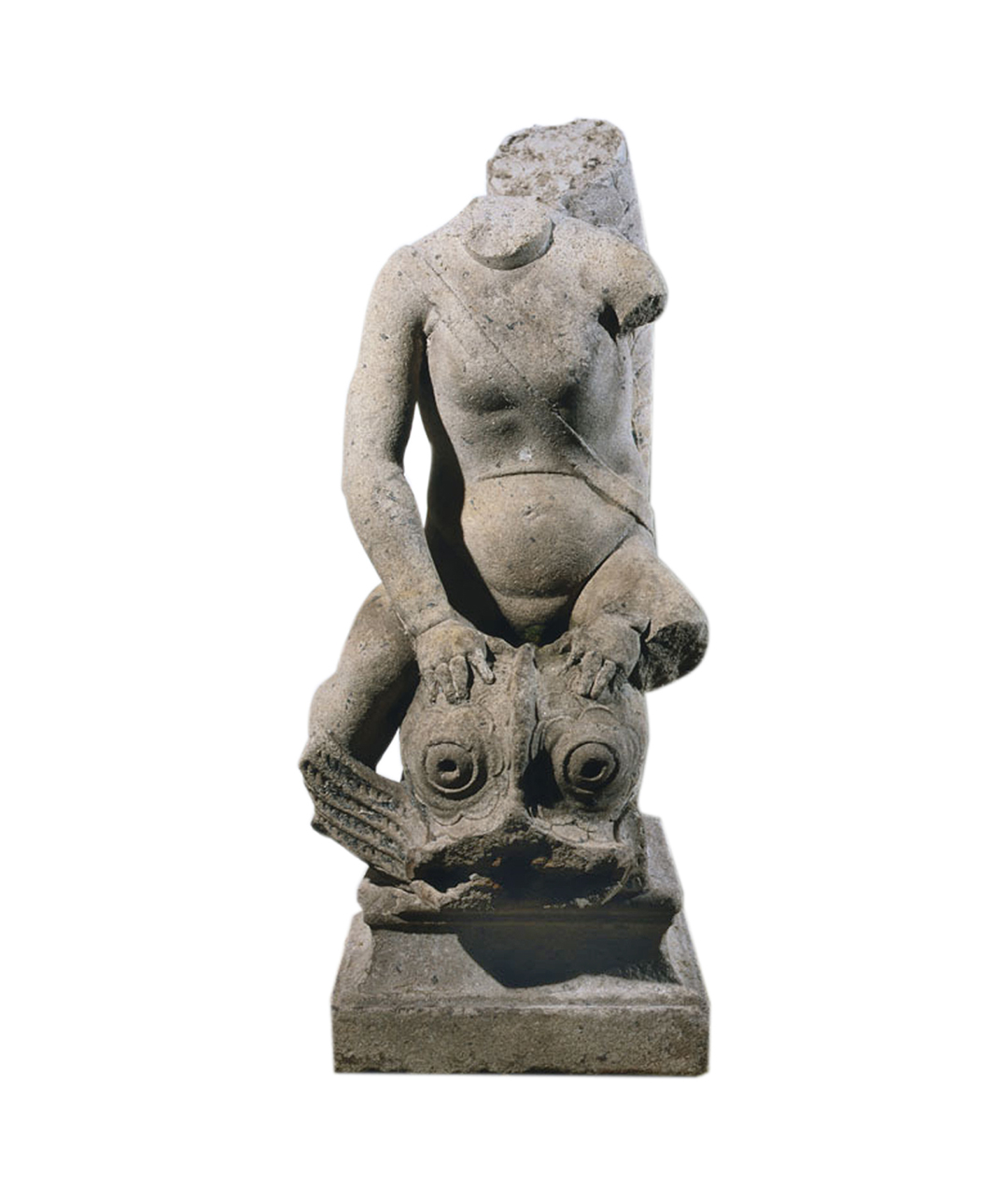 18th century Freestanding sculpture Inventory sheet This sculpture was part of the S. Roque Fountain in Porto, demolished around 1875. It was located in the square of the same name, which also disappeared to make way for the opening of Rua Mouzinho da Silveira. The sculpture r…
Fountain statue
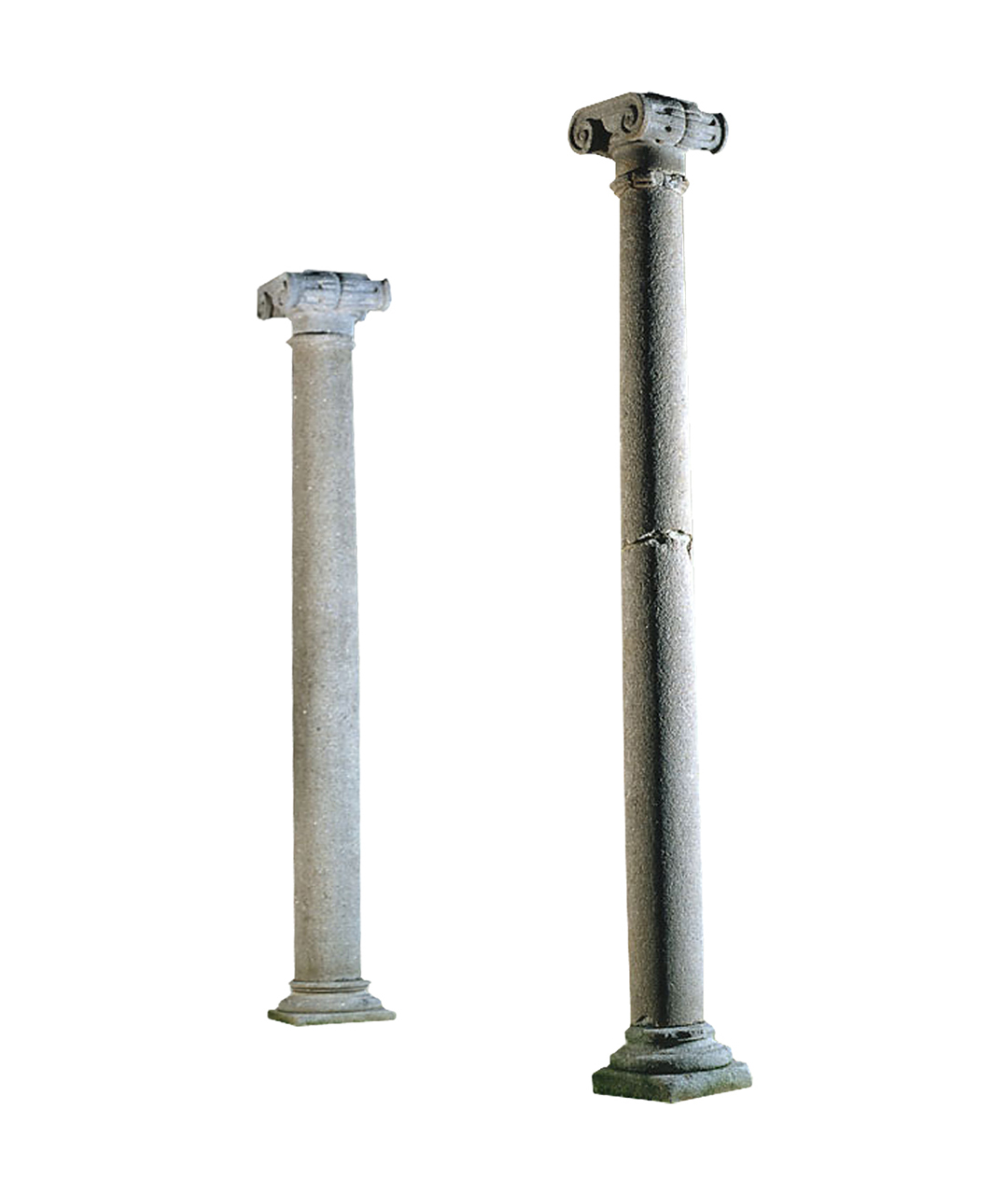 18th Century Architectural sculpture Inventory sheet This column, with a smooth cylindrical shaft topped by a conical capital, is one of five from the refectory of the Convent of Santa Clara in Porto. Founded in the 15th century, this convent was suppressed following the disso…
Column
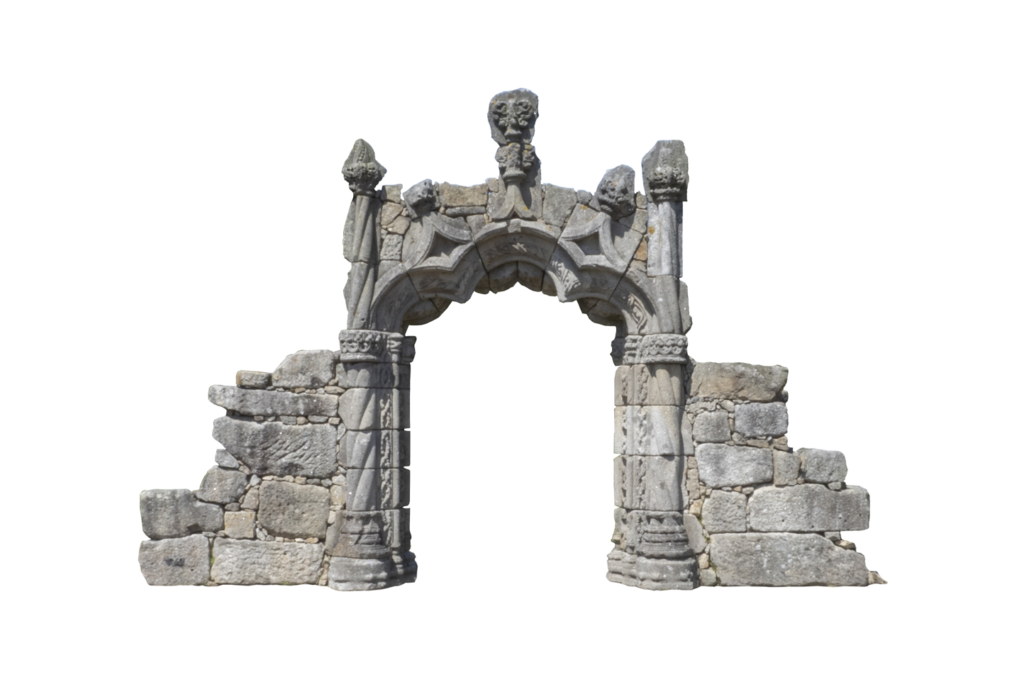 16th Century Architectural sculpture Inventory sheet This Manueline portal was formerly a chapel entrance of the now extinct Madre de Deus de Monchique Convent. The convent was between the current Rua da Restauração and Rua Nova da Alfândega, in the Miragaia area of Porto. It…
Portal
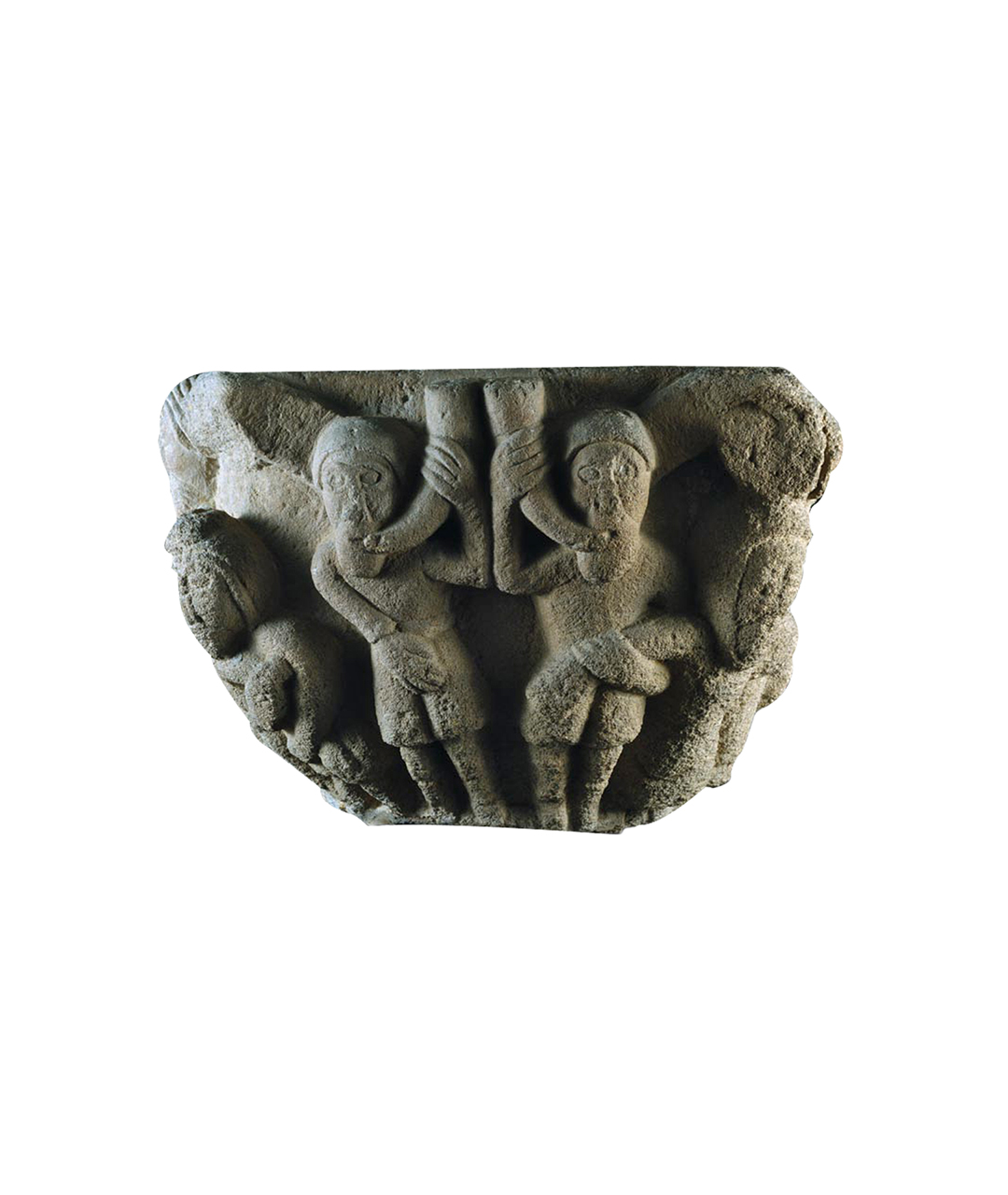 16th century Medium/low-relief Inventory sheet This pilaster chapiter comes from the vanished Romanesque church of Amorim in Póvoa de Varzim and was probably used as a holy water font. This example is decorated on three sides with figurative warrior scenes. The front displays…
Chapiter
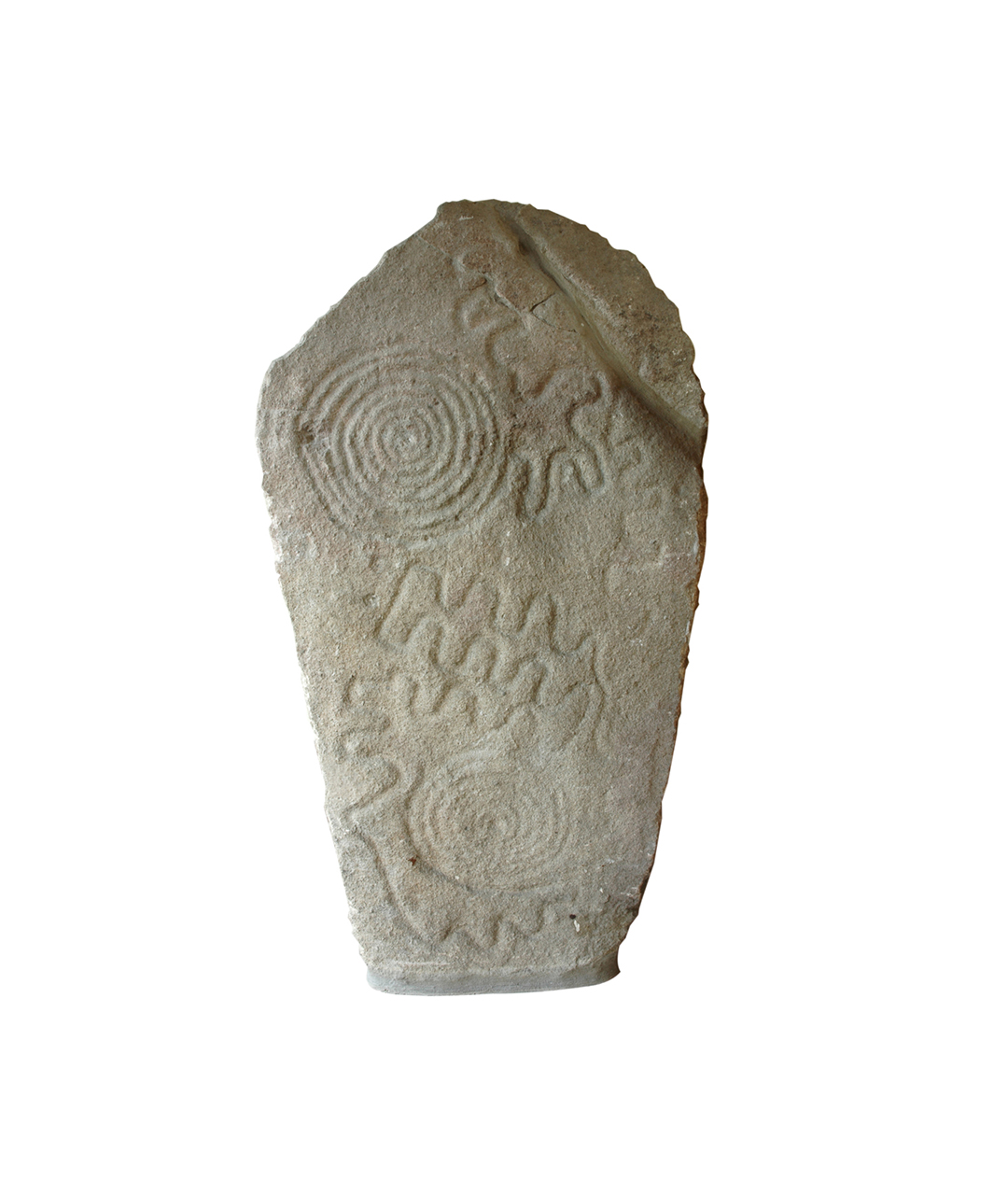 Chalcolithic (3300-1200 BC) Low-relief Inventory sheet From the Monte de Eiró (parish of Penhalonga, Marco de Canaveses), this stone was part of a boulder complex from which it was cut. It is a rectangular-shaped granite monolith decorated with geometric representations, two s…
Stone with Inscriptions
Furniture
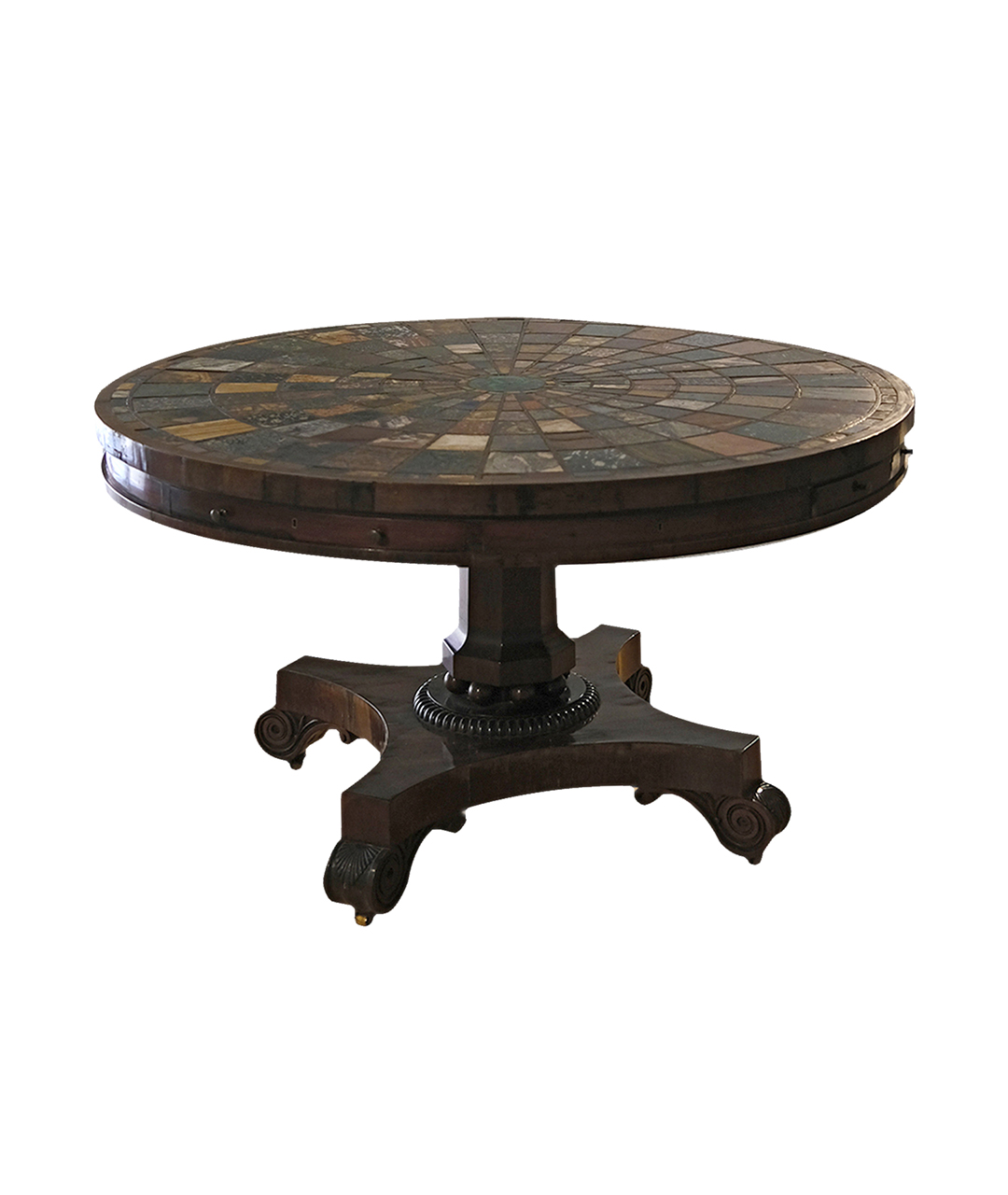 England (?) 1830 Mahogany; gilt brass; 273 lithotypes Inventory sheet In 1838, this table belonged to the João Allen Museum in Porto, where it was classified. Probably made in England, the top has 273 rare and ancient lithotypes from Italy, from emblematic archaeological sites…
Library table
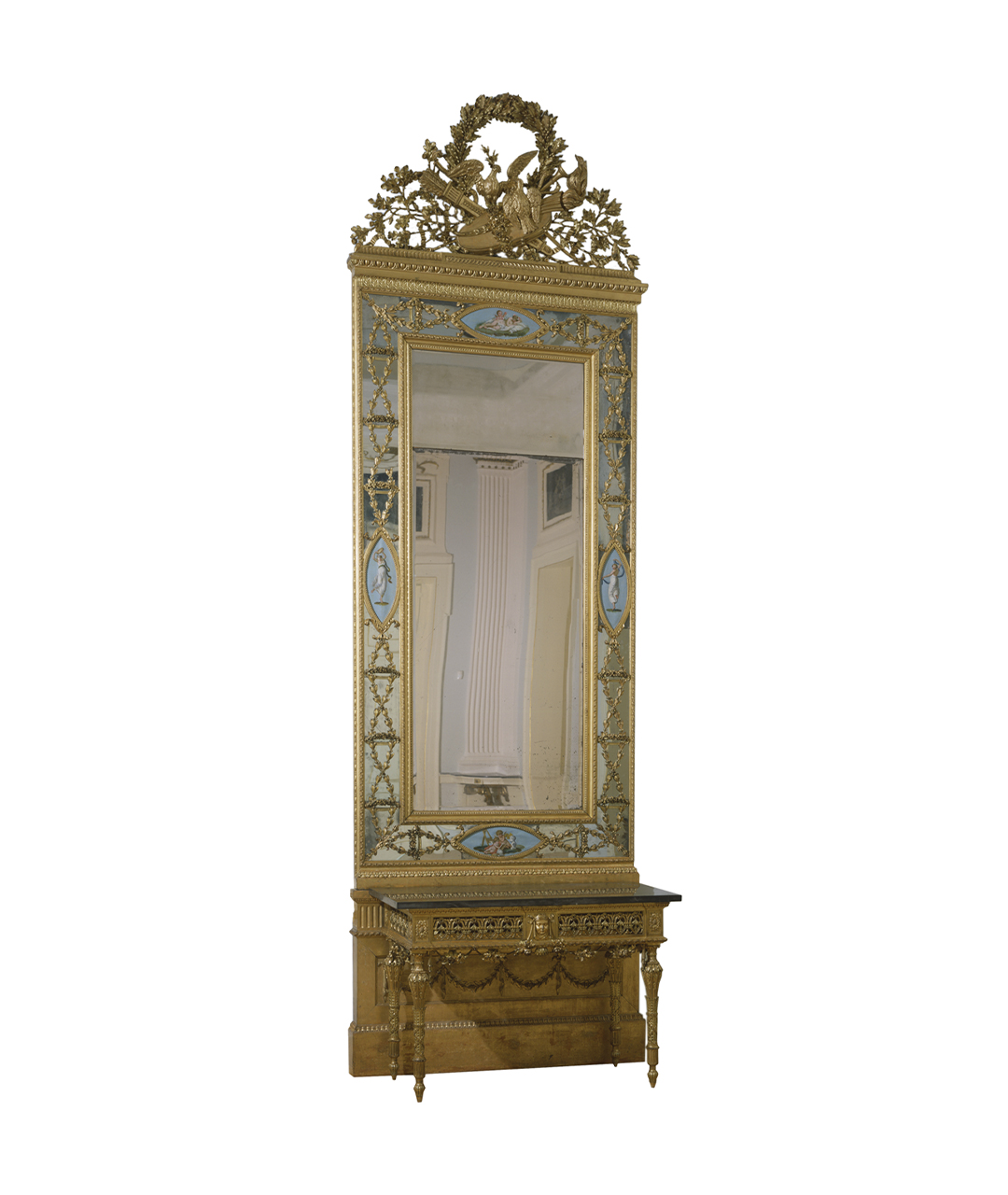 Luigi Chiari (attributed) 1800-1805 Carved and gilded Nordic Spruce, mahogany and chestnut; oil painting on canvas on the mirror medallion; black marble Tremó 47 Mob MNSR inventory sheet Tremó 48 Mob MNSR inventory sheet Attributed to the Italian artist Luigi Chiari, these tru…
Pair of pier-glass and console tables
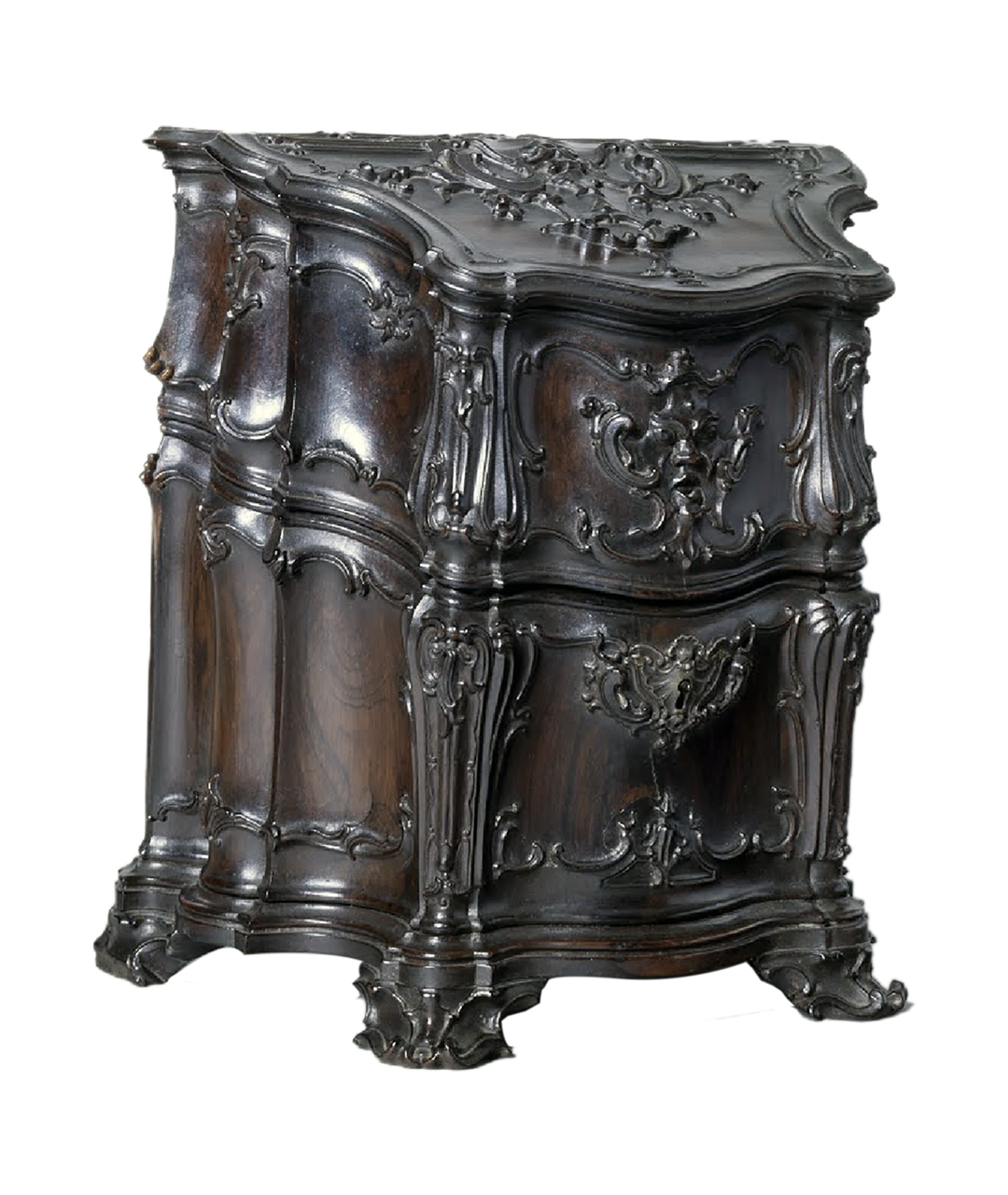 Portugal 1750-1755 Carved Brazilian rosewood; red velvet lining; gilded fittings; chiselled and drawn silver escutcheon Inventory sheet The progressive sophistication of domestic habits, essentially in the second half of the 18th century, can be seen in this piece. Displayed o…
Cutlery case
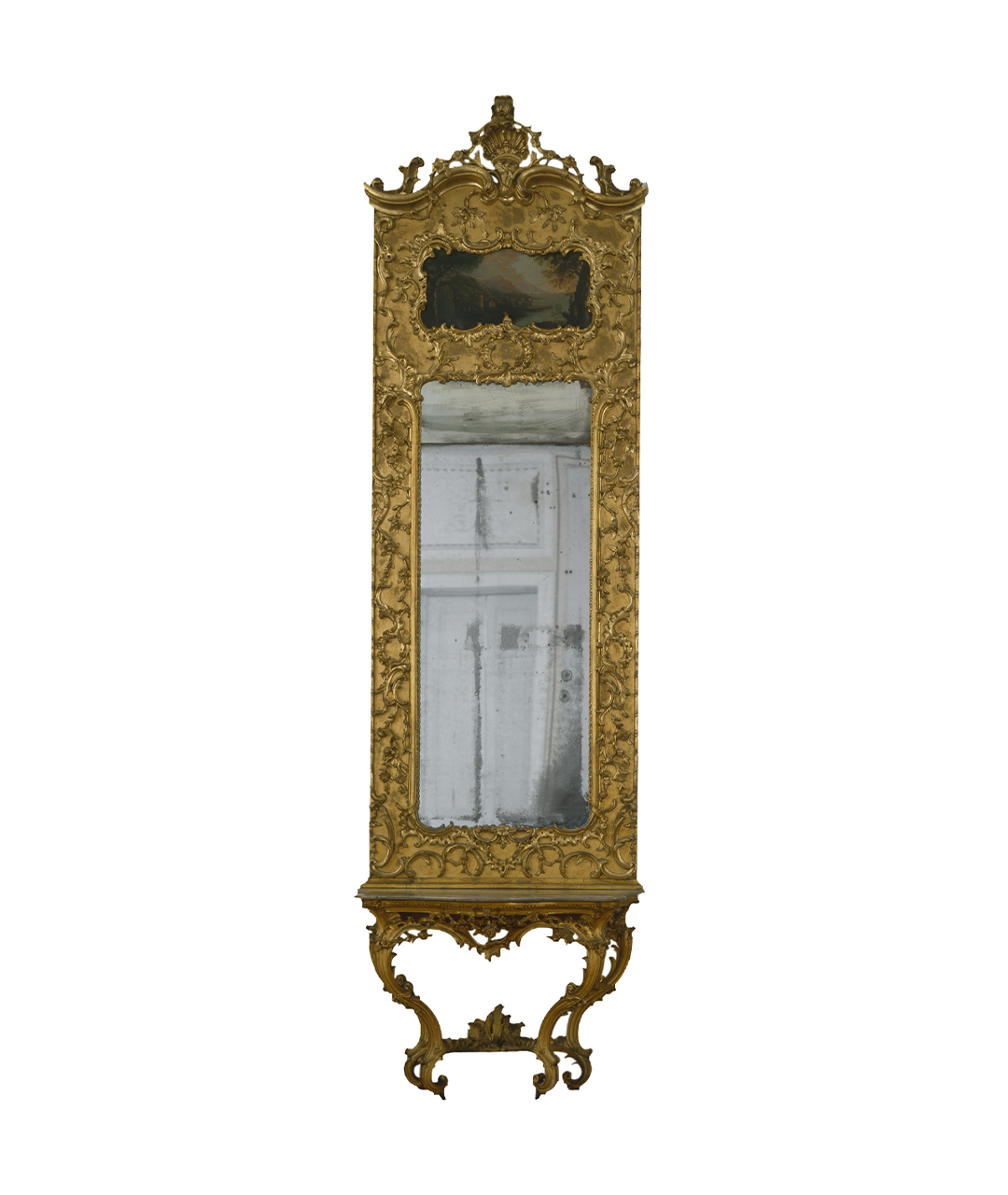 France 1730-1750 Gilded Nordic Spruce; oil painting on canvas in the mirror decoration; white marble Inventory sheet The use of a large mirror between two shutters, to which a console could be added, was a decorative solution widely used in France from the early years of the 1…
Pier-glass and console tables
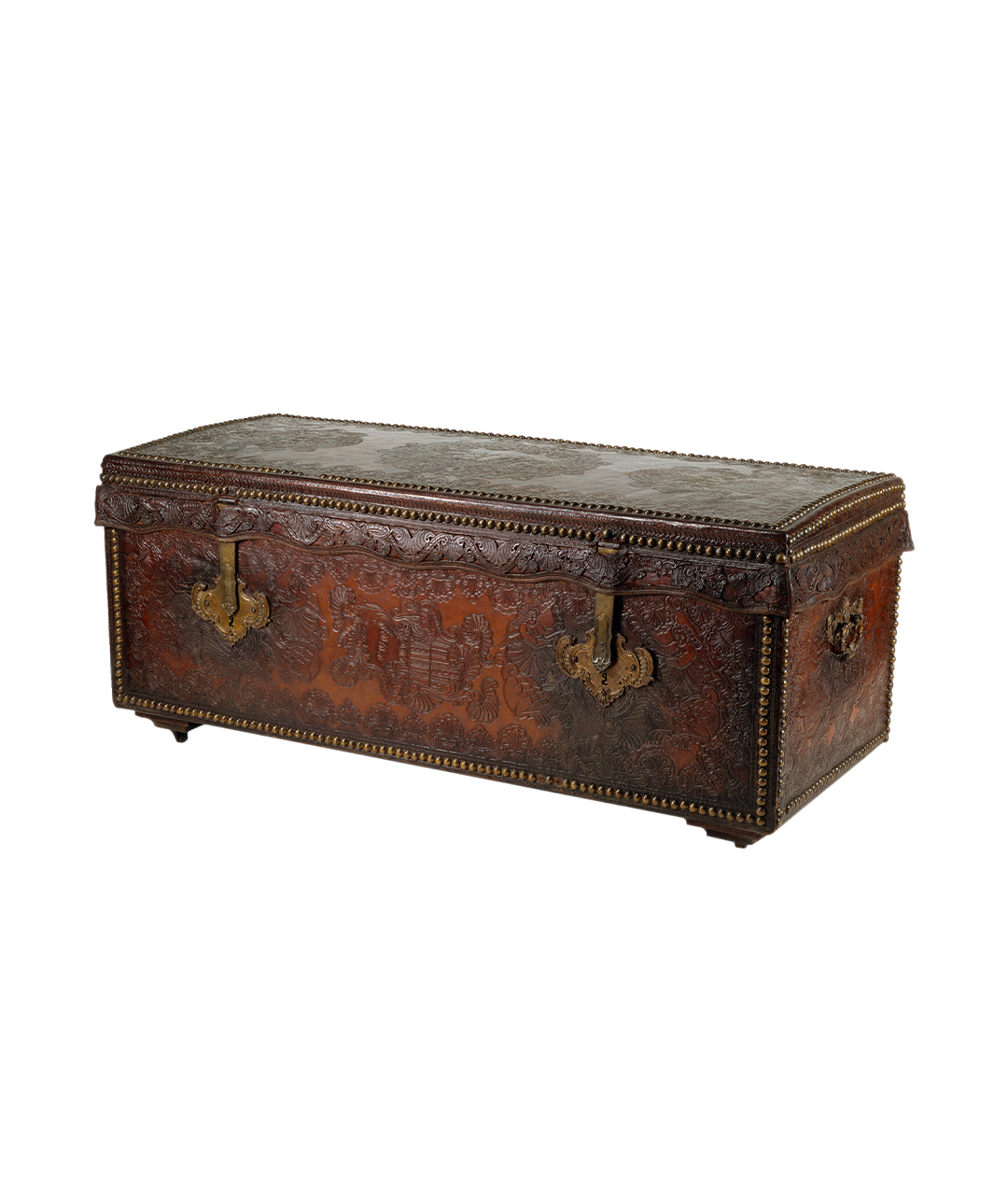 Portugal 1750-1775 Wood, carved leather; fabric (damask) and chiselled metals (iron, brass and bronze) Inventory sheet On the top of this chest, inserted in a cartouche, we can find the scene that determines the specific function of this chest, that of containing the bridal tr…
Trousseau chest
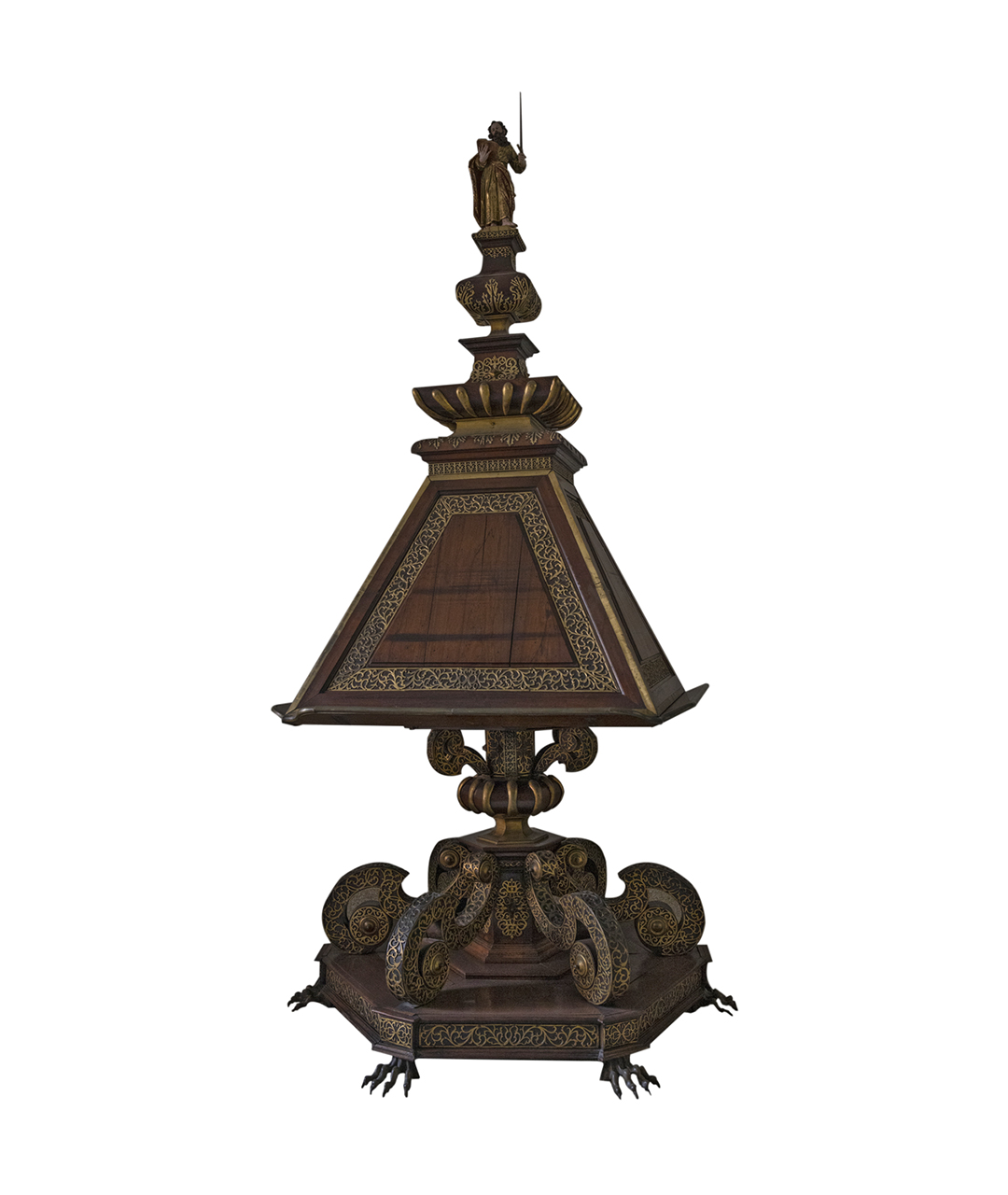 António de Azevedo Fernandes, Porto 1697 Brazilian rosewood; gilded brass fittings; gilded and polychrome wooden image Inventory sheet This lectern was commissioned by Mother Mariana de S. Paulo, abbess of the Royal Convent of Santa Clara of Vila do Conde, and was intended for…
Lectern
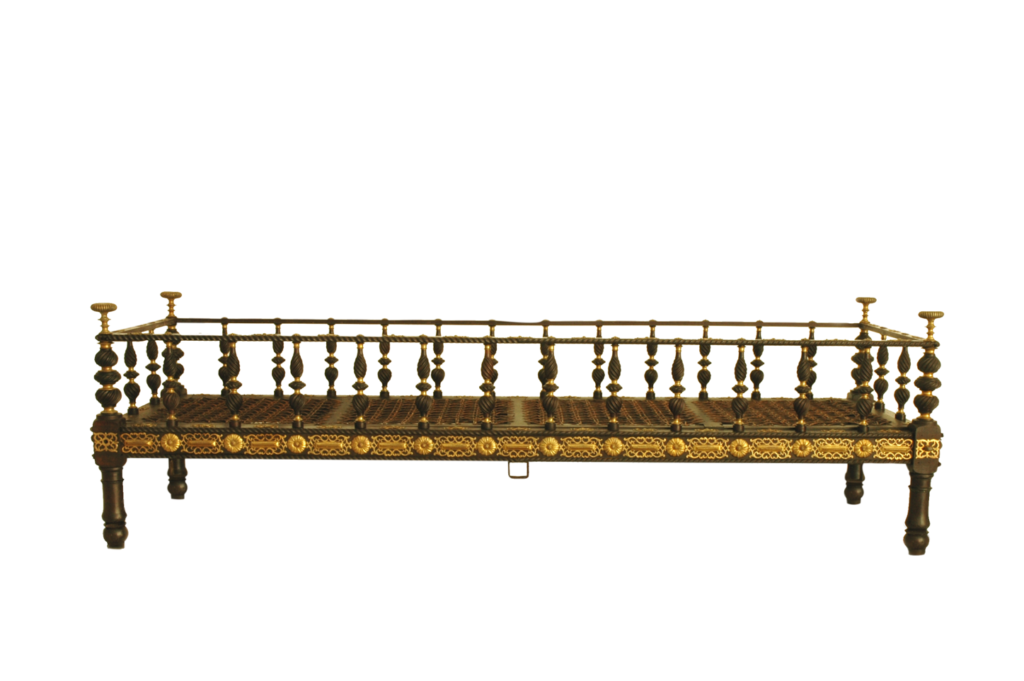 Portugal 17th century (late) Turned Brazilian rosewood, cut and cast gilded brass, cane Inventory sheet This bier was used for the burial of nuns, transporting the body to its grave in the Royal Convent of Santa Clara of Vila do Conde. The assemblers of this type of piece inte…
Bier
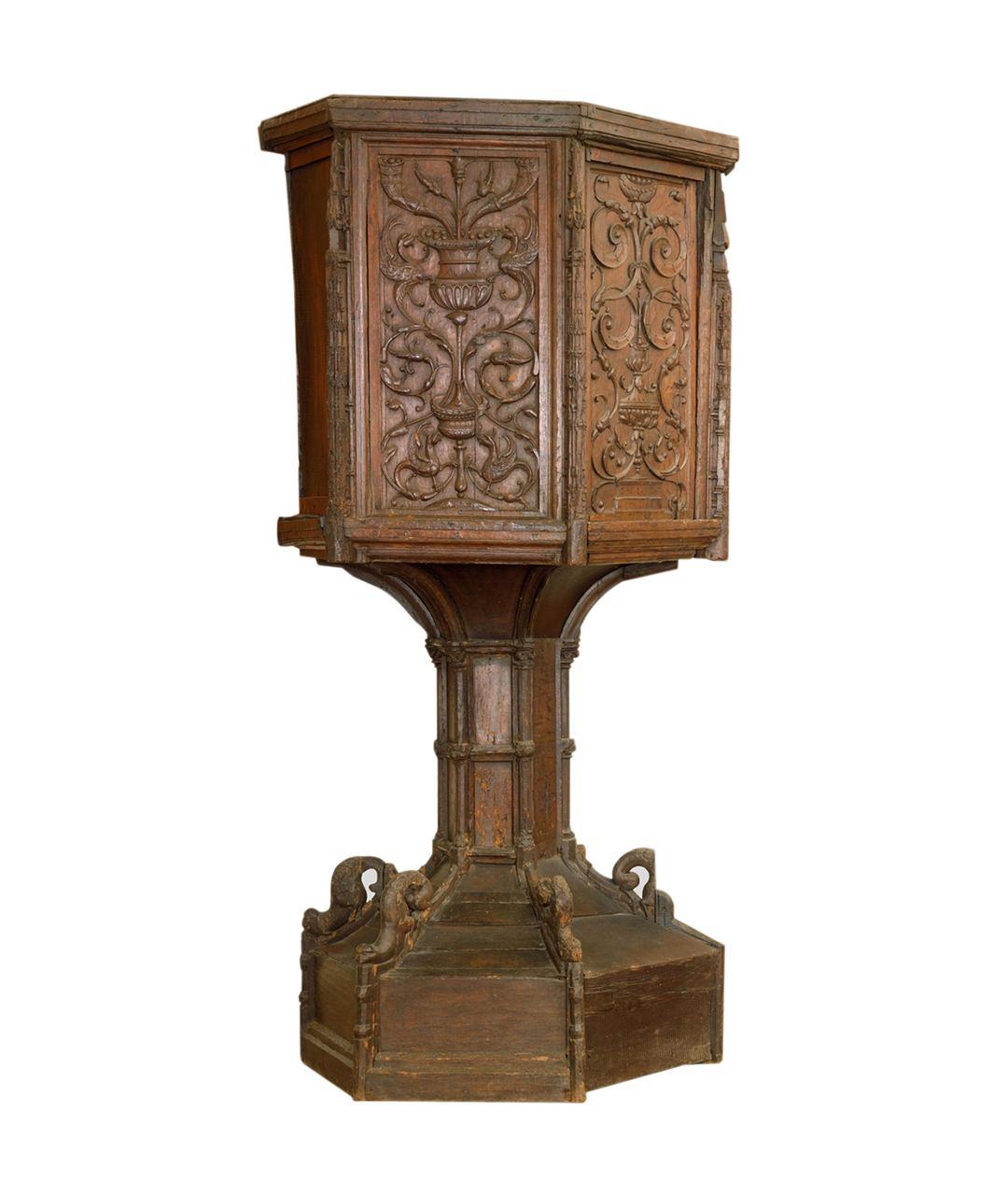 Portugal 1521-1550 Carved northern oak; pine, chestnut (?), tola, metals Inventory sheet It is very rare for wooden Renaissance pulpits to have survived to this day. In the long history of this remarkable piece, tradition has it that it was used by St. Francis Xavier when prea…
Pulpit
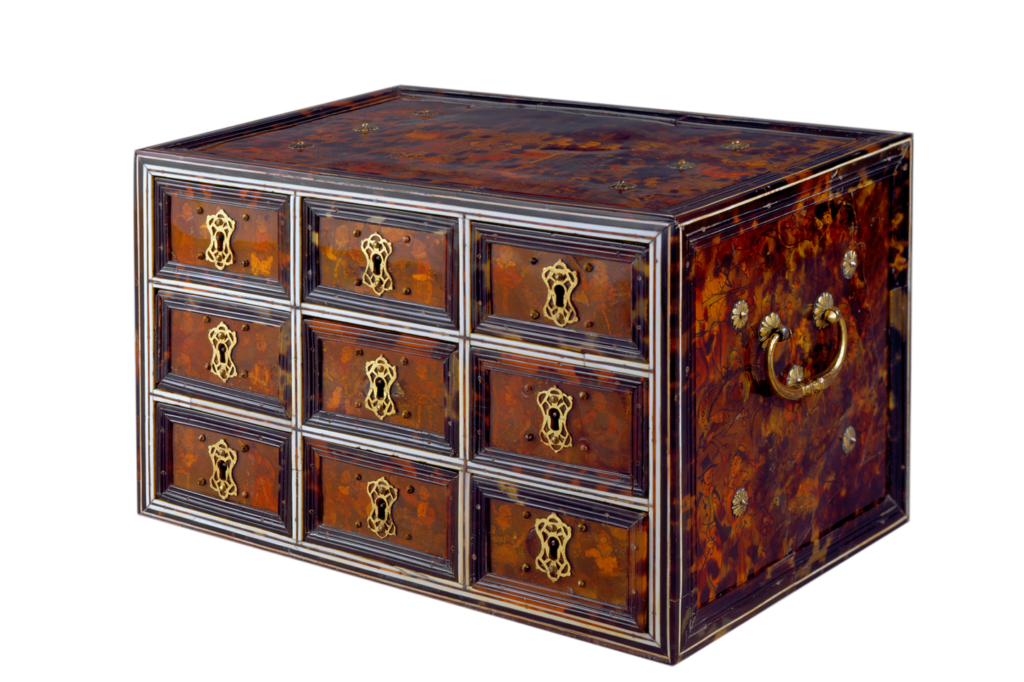 India, Gujarat 1570-1580 Teak; gold leaf; polychrome painting; tortoiseshell plates; ivory; gilt copper Inventory sheet This small, tortoiseshell plated box is polychrome painted, including on the reverse and inside its nine drawers. It is a very rare piece that portrays the d…
Table cabinet
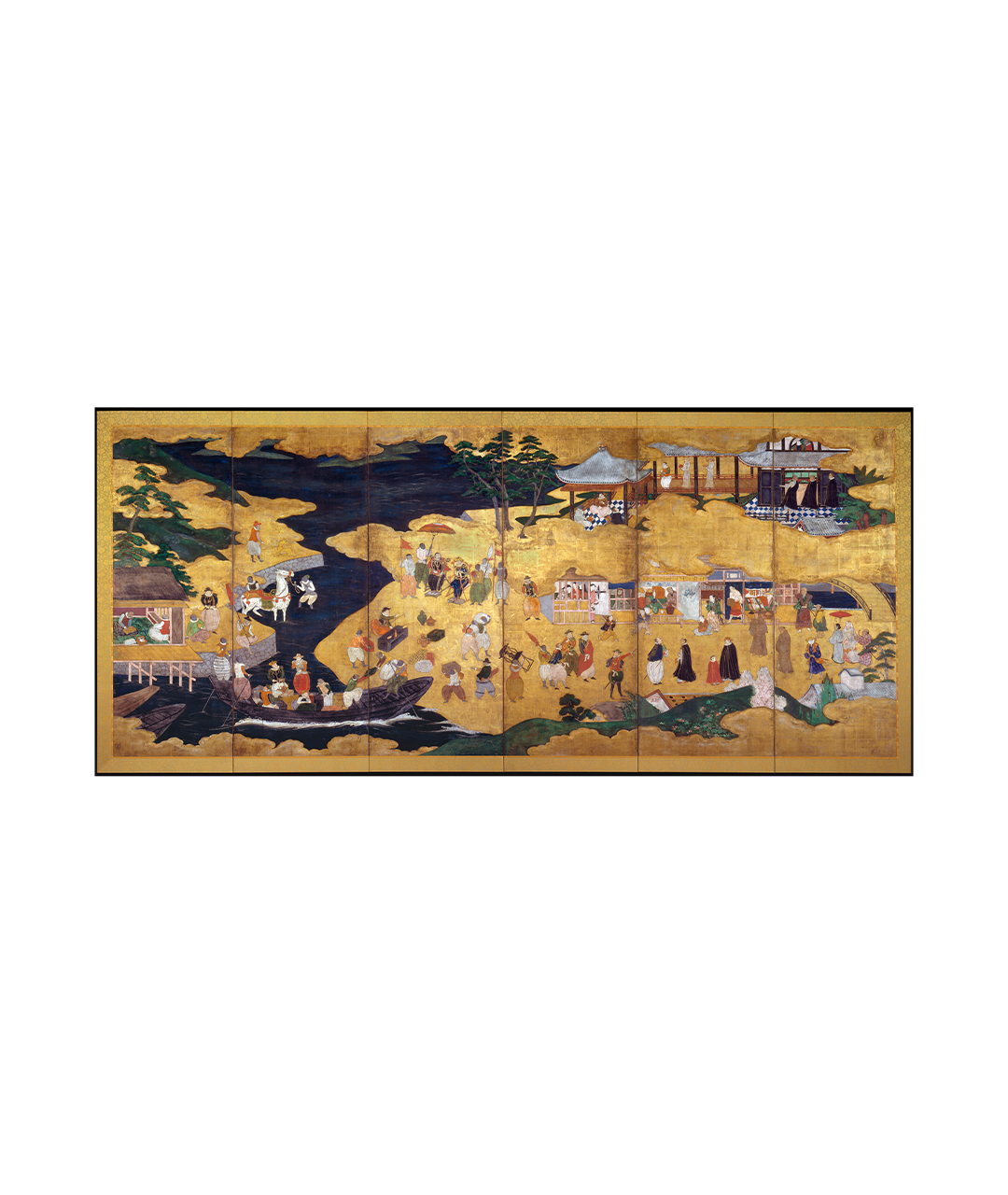 Japan/ Kano School Namban Art, Momoyama Period (c. 1600 - 1610) Tempera painting on mulberry paper covered with gold leaf; lacquered wooden grid Biombo 864 Mob MNSR inventory sheet Biombo 864 Mob MNSR inventory sheet These screens depict the presence of the Portuguese in south…
Namban Screens
Goldwork and Jewellery
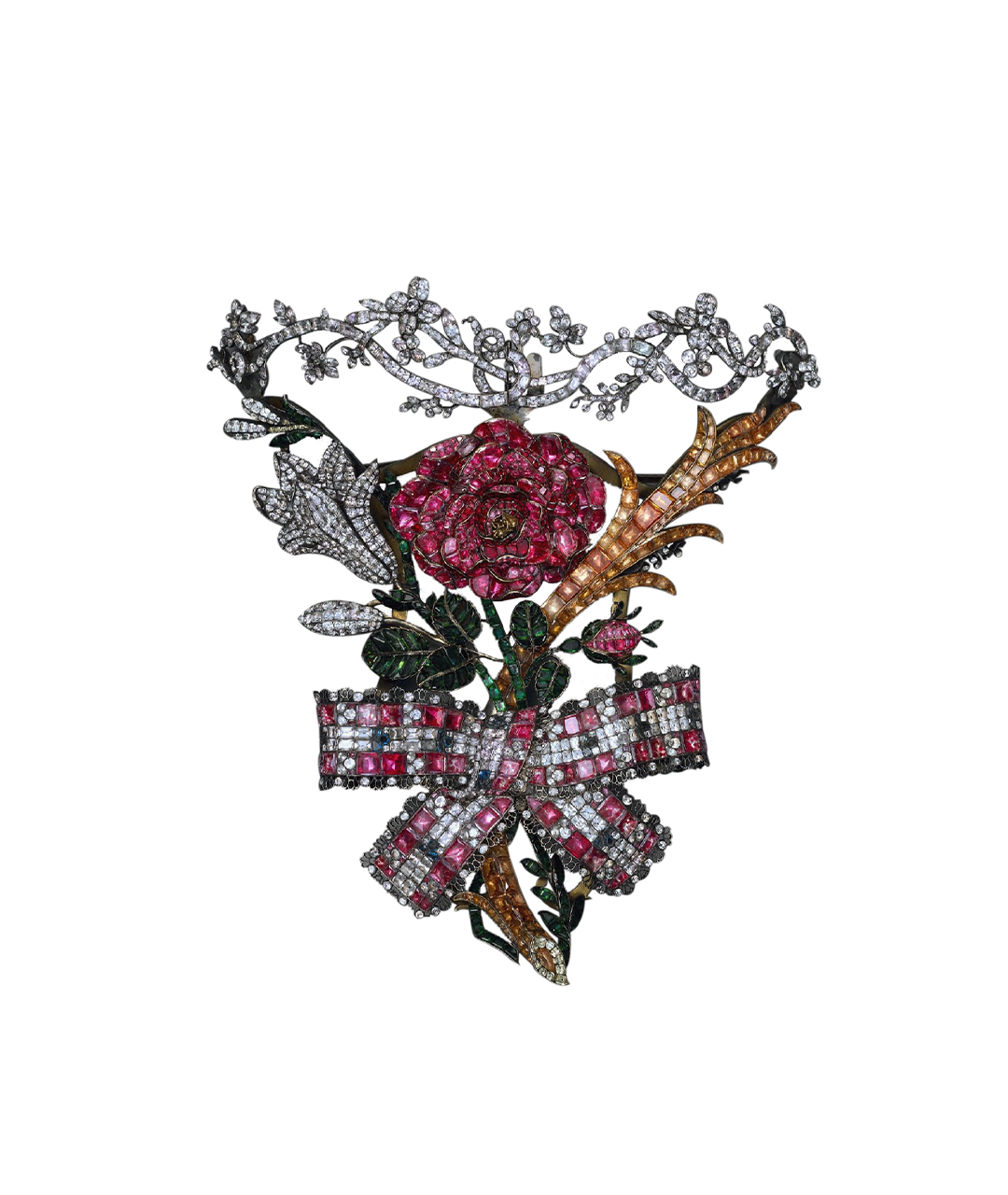 Portugal No manufacturing marks 1775-1800 Silver, yellow topazes, chrysoberyls, garnets, quartz, beryls and colourless topazes; green and blue doublets, quartz and red-lined topazes This bodice ornament is linked to the devotion to the Virgin of Carmel in Lisbon. The discovery…
Bodice Ornament
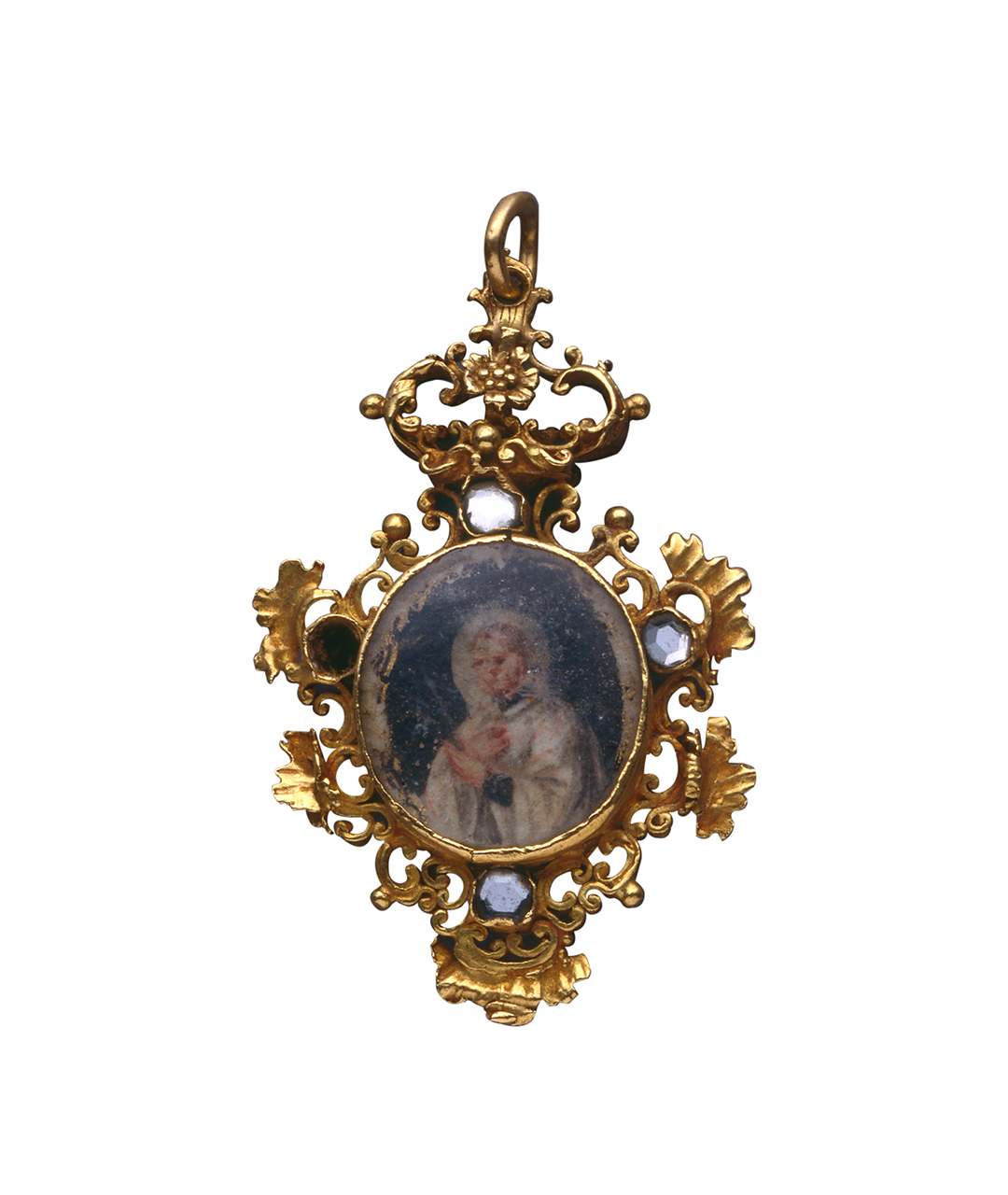 Spain No manufacturer's mark 1750-1800 Cast gold, chiselled; colourless quartz; engraving The medallion has two polychrome engravings, placed in the centre and between glazes. On the face, the Divine Shepherdess is depicted, and on the reverse side, St Isidore. The devotion an…
Devotional pendant
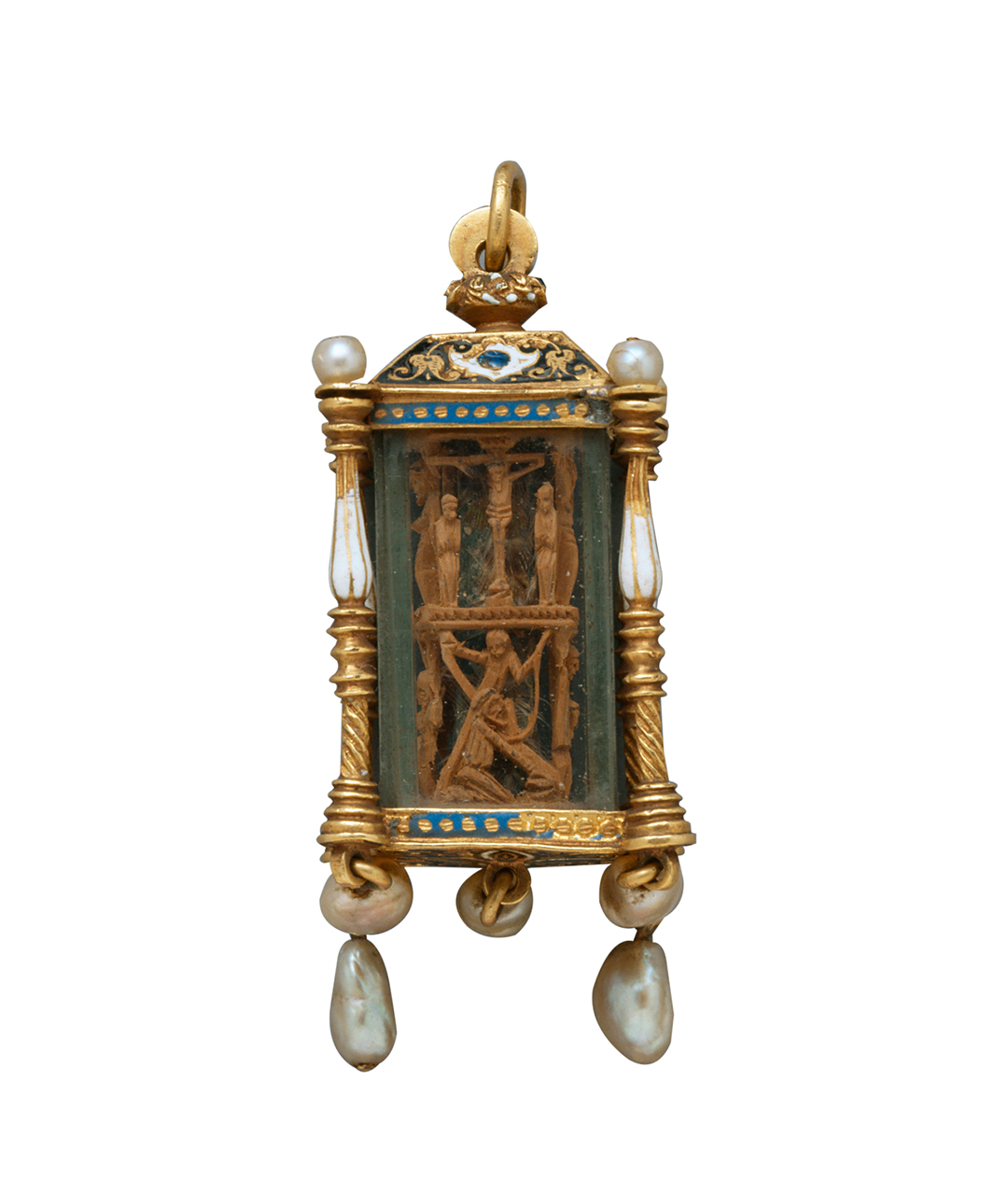 Mexico or Spain 1550-1600 Gold, enamels, natural pearls, glass, boxwood and hummingbird feathers This devotional pendant, made of gold with applications of enamels and natural pearls, is in the shape of a small temple. Its sides feature a set of eight miniaturised scenes from…
Devotional Lantern Pendant
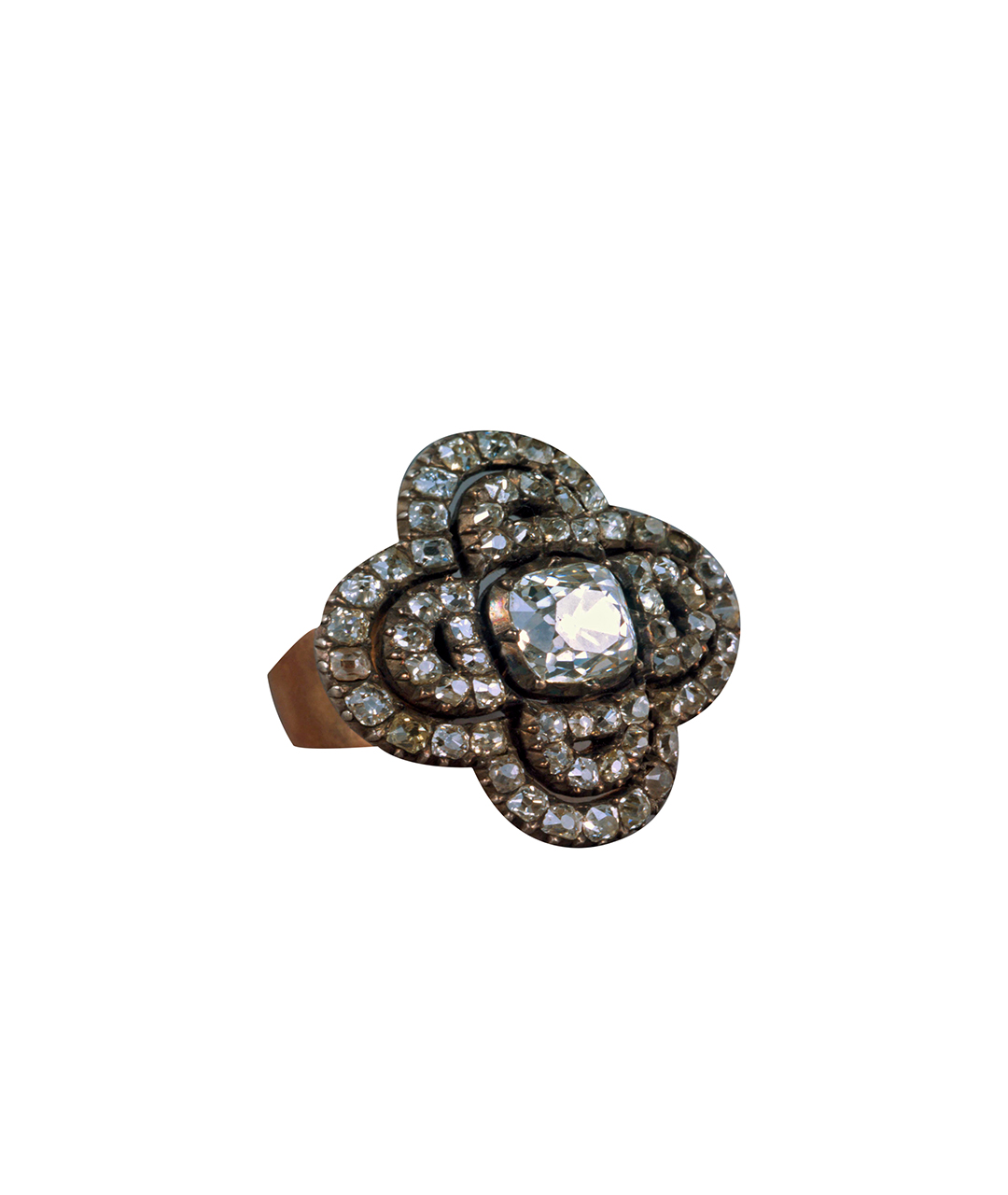 No manufacturer's mark 1790 Gold, diamonds Inventory sheet Like the crosier and the mitre, the ring is another of the objects symbolising the dignity of a bishop in the Catholic Church. Representative of fidelity and union with the Church, the episcopal ring is the first of th…
Episcopal ring
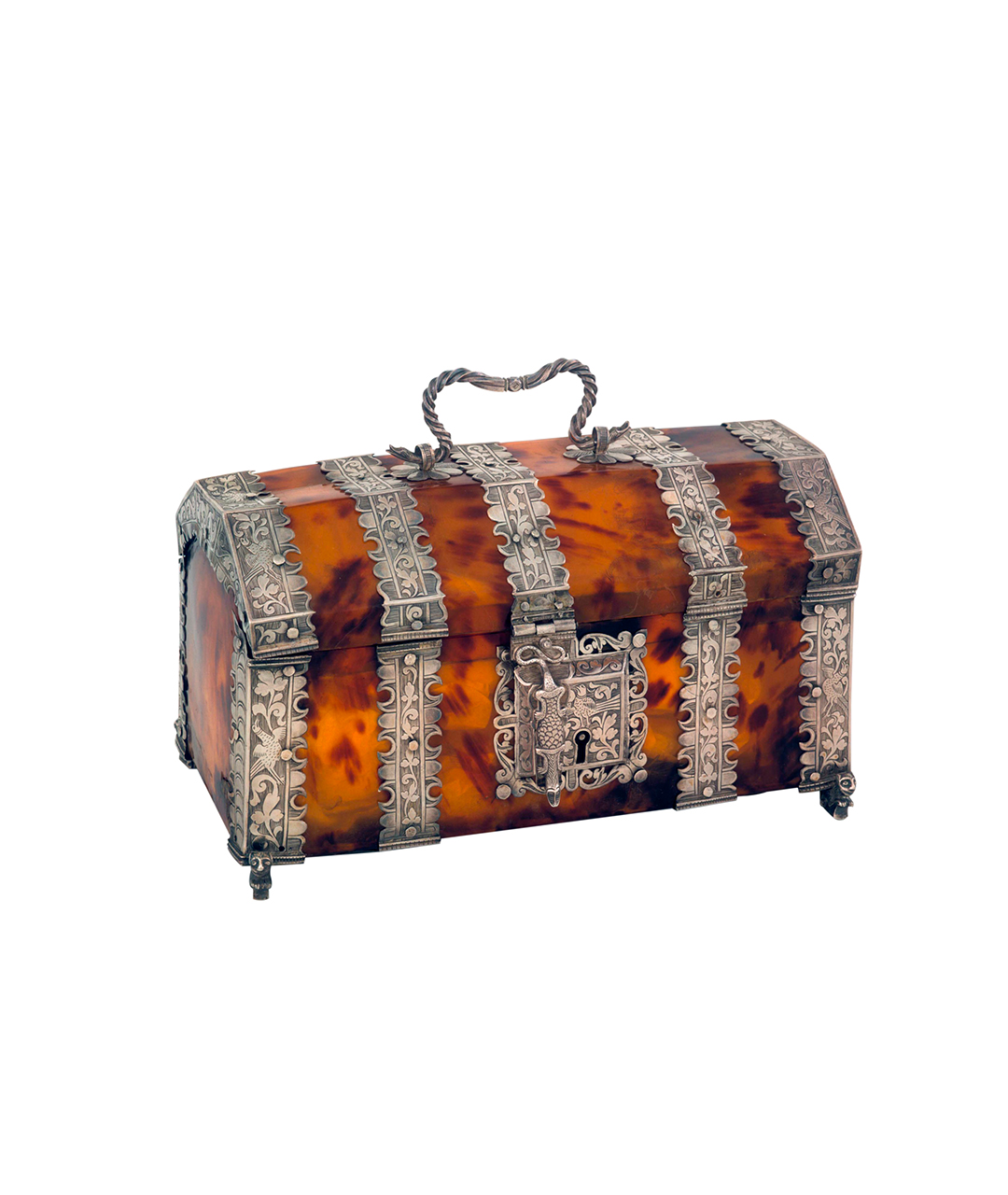 India, Gujarat 16th century Tortoise shell; silver, chiselled, cut and cast Inventory sheet This coffer, datable to the second half of the 16th century, was executed in translucent tortoiseshell plates taken from the belly of the shell. The silver mountings are decorated with…
Coffer
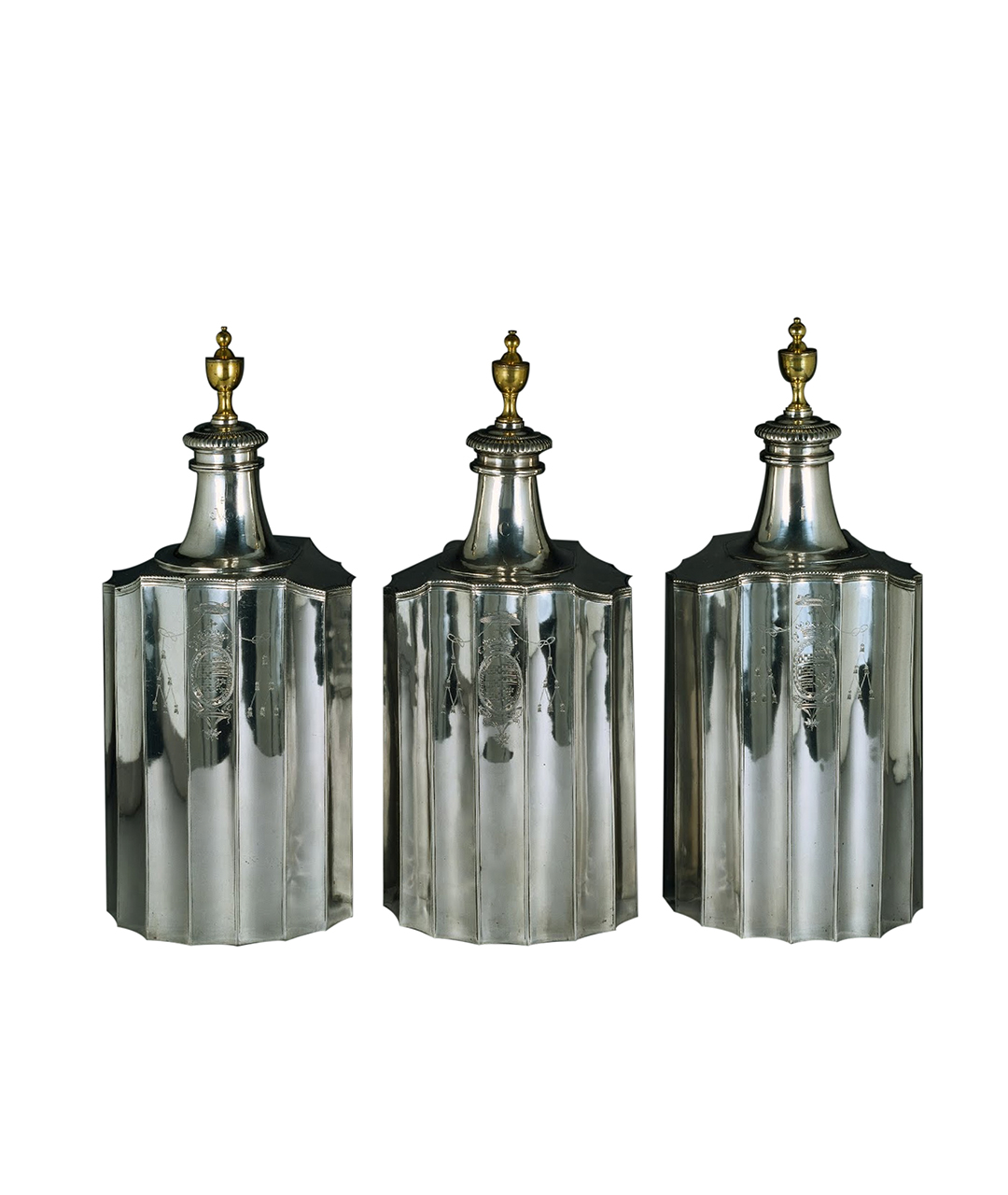 Portugal , Porto Goldsmith: IOC, José de Oliveira Caetano 1810 – 1818 White and gilt silver, rolled, cast, chiselled and engraved Inventory sheet The ampullae were used as a reserve deposit for the Holy Oils, present in certain Catholic rituals. These are fine examples of earl…
Set of Reserve Ampullae
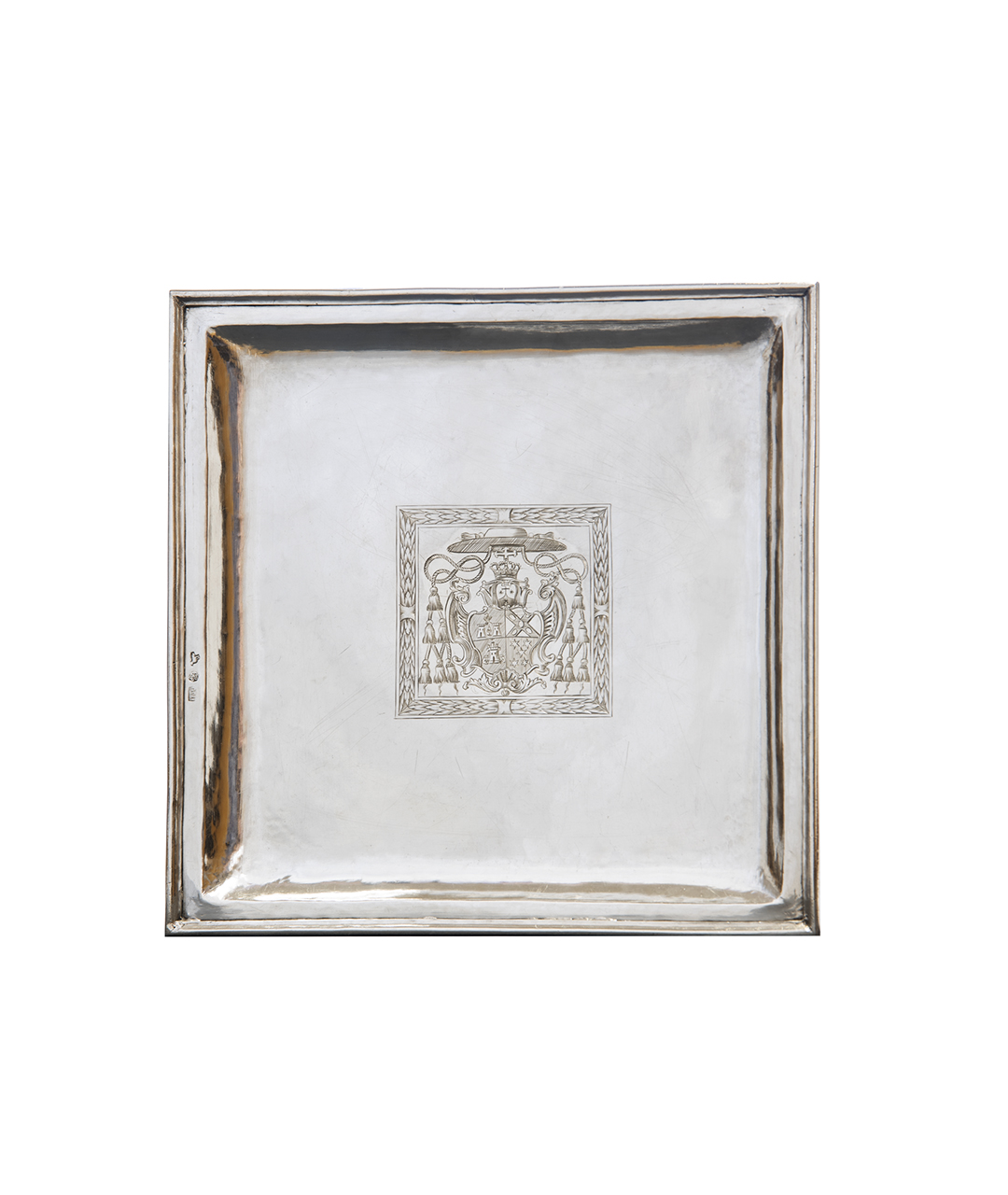 Italy, Rome Goldsmith: Pietro Paulo Pieri 1685 – 1718 Engraved and chiselled rolled silver Inventory Sheet Tray 38.1 Our MNSR Inventory Sheet Tray 38.2 Our MNSR A commissioned imported work, this tray features the Salgado, Araújo, Câmara and Tavares coat of arms of D. João da…
Tray
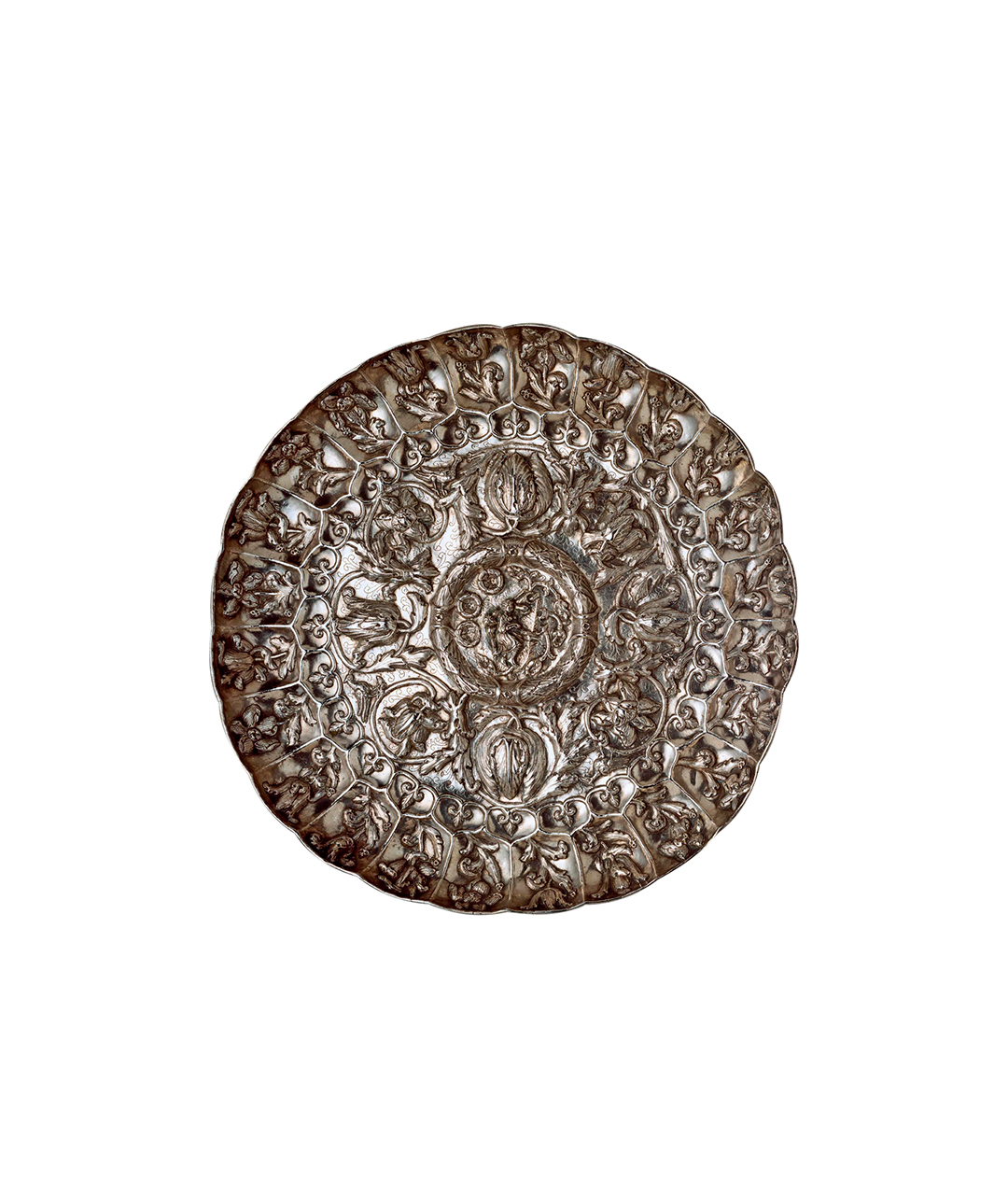 Portugal, Porto Goldsmith: BF, attributable to Baltazar Fernandes 18th century (1700-1758) Drawn and chiselled silver Inventory sheet Made in Porto in the first half of the 18th century, this large salver is stylistically associated with the late 17th century due to its compos…
Salver
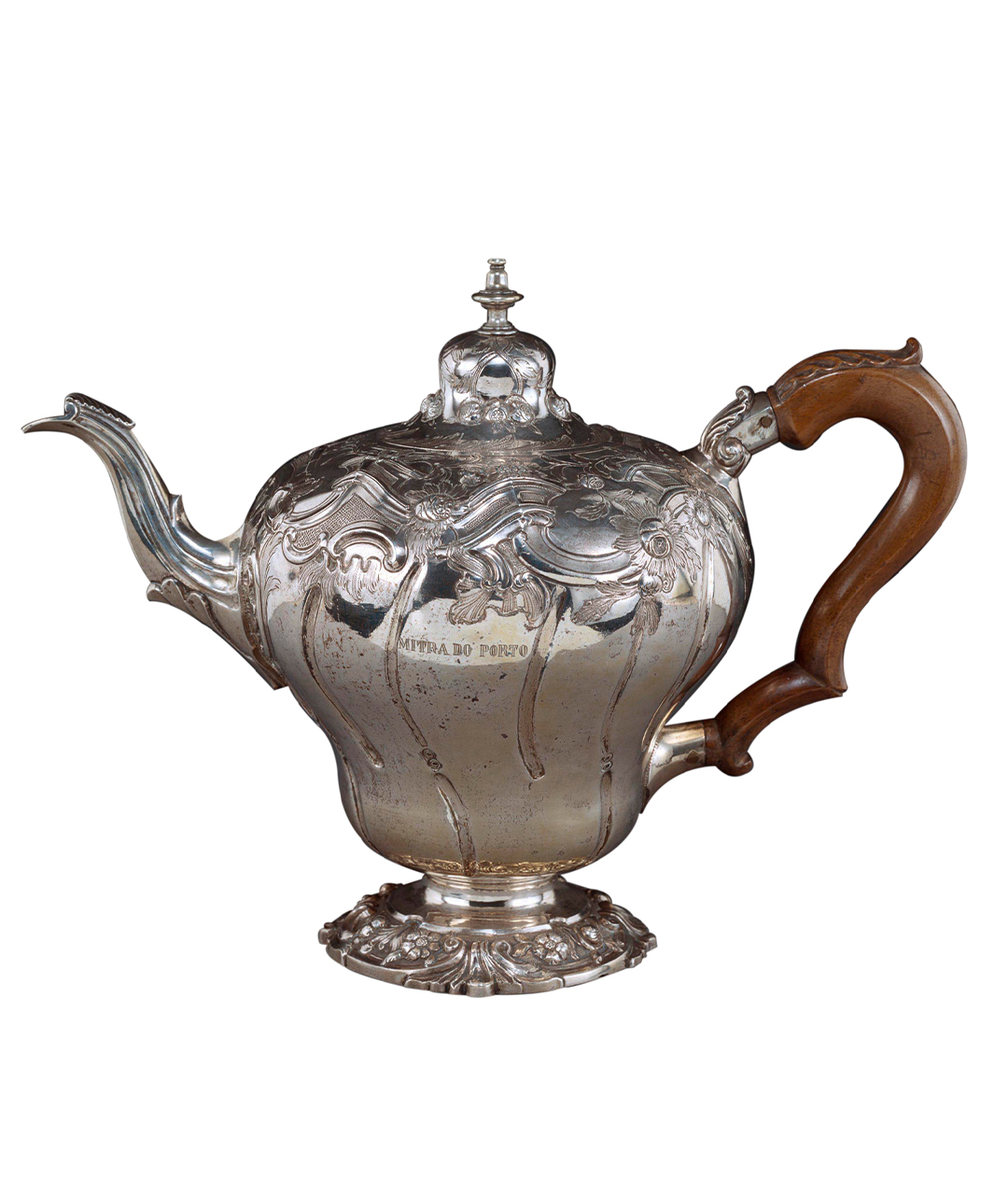 Portugal, Porto Goldsmith: IRC, unidentified 1768- c. 1784 Inventory sheet As a result of the maritime expansion in the Modern Age, contacts with the Orient and America created new consumption habits in Europe. Tea, coffee and chocolate became widespread as beverages, which le…
Teapot
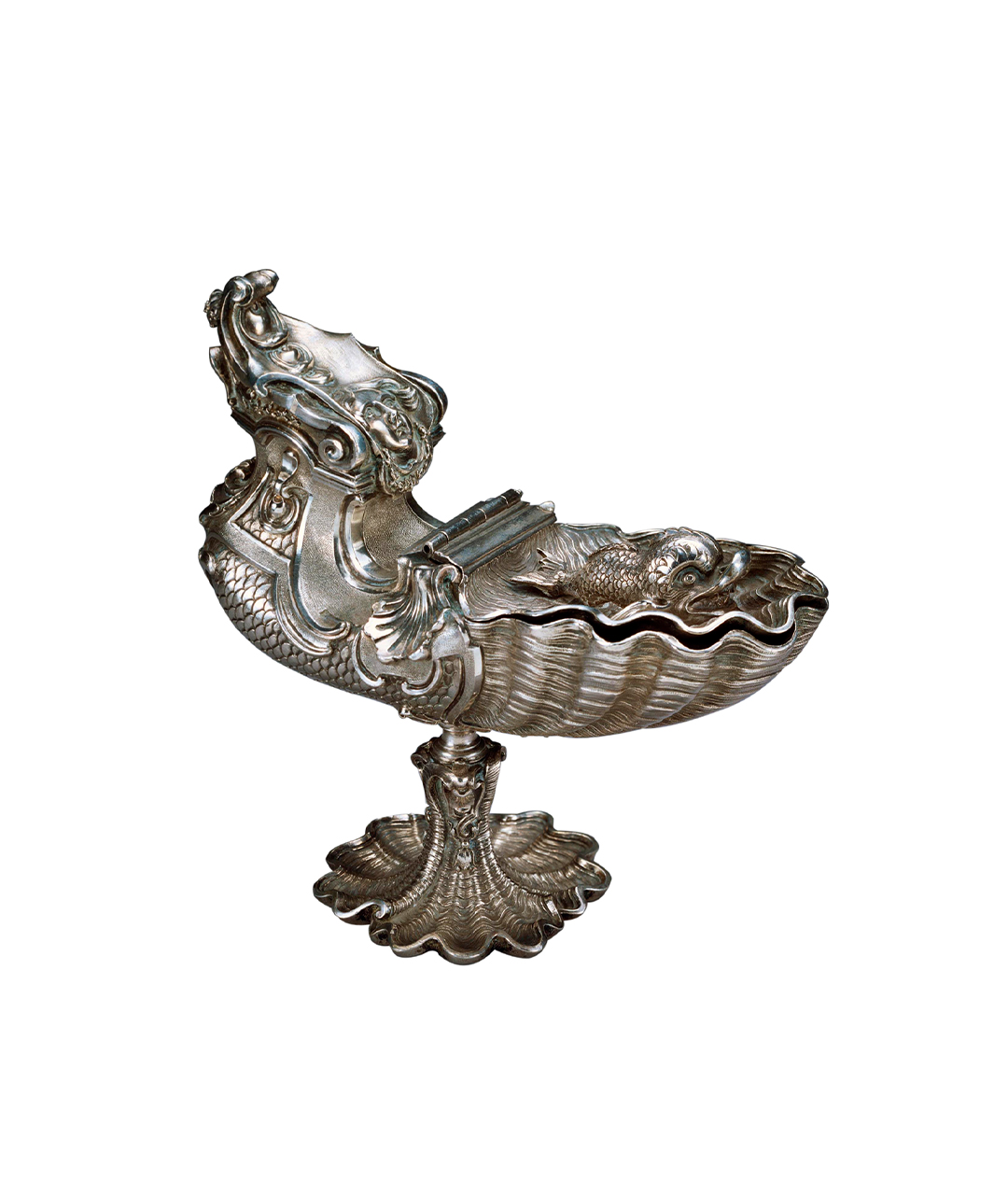 Portugal No manufacturer's mark 1700-1750 Inventory file Catholic ceremonies have included the burning of incense since the early days of Christianity. The incense boat, whose name comes from its boat like shape, was used to store the incense used in these rituals. This baroqu…
Incense Boat
Painting
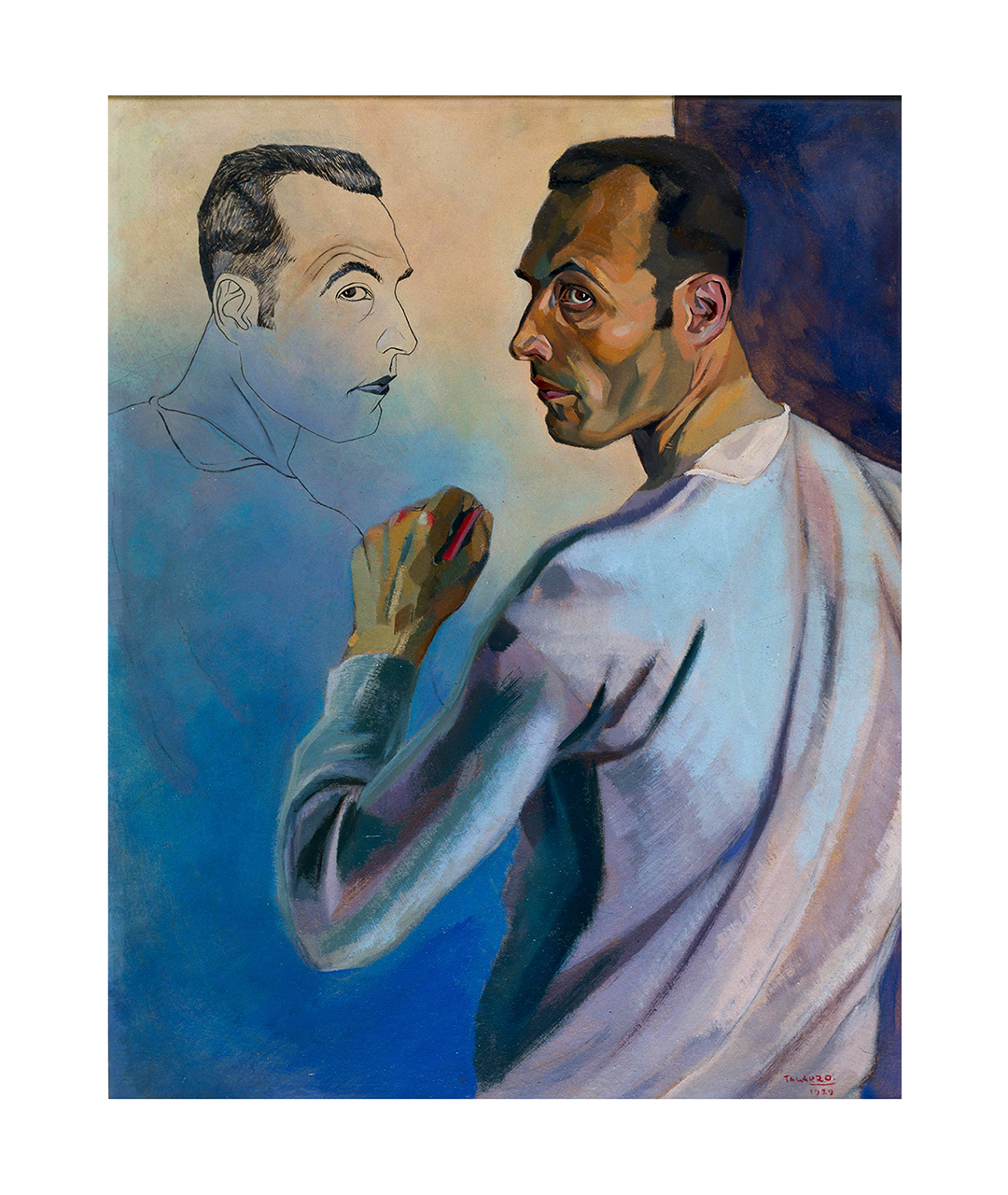 José Tagarro (1902-1931) 1929 Oil on pressed cardboard In this double self-portrait, the artist paints himself in the very act of self-depiction. It is a premeditatedly realised game of opposing times between the two artistic worlds in which the artist moved: drawing and paint…
Self-Portrait by José Tagarro
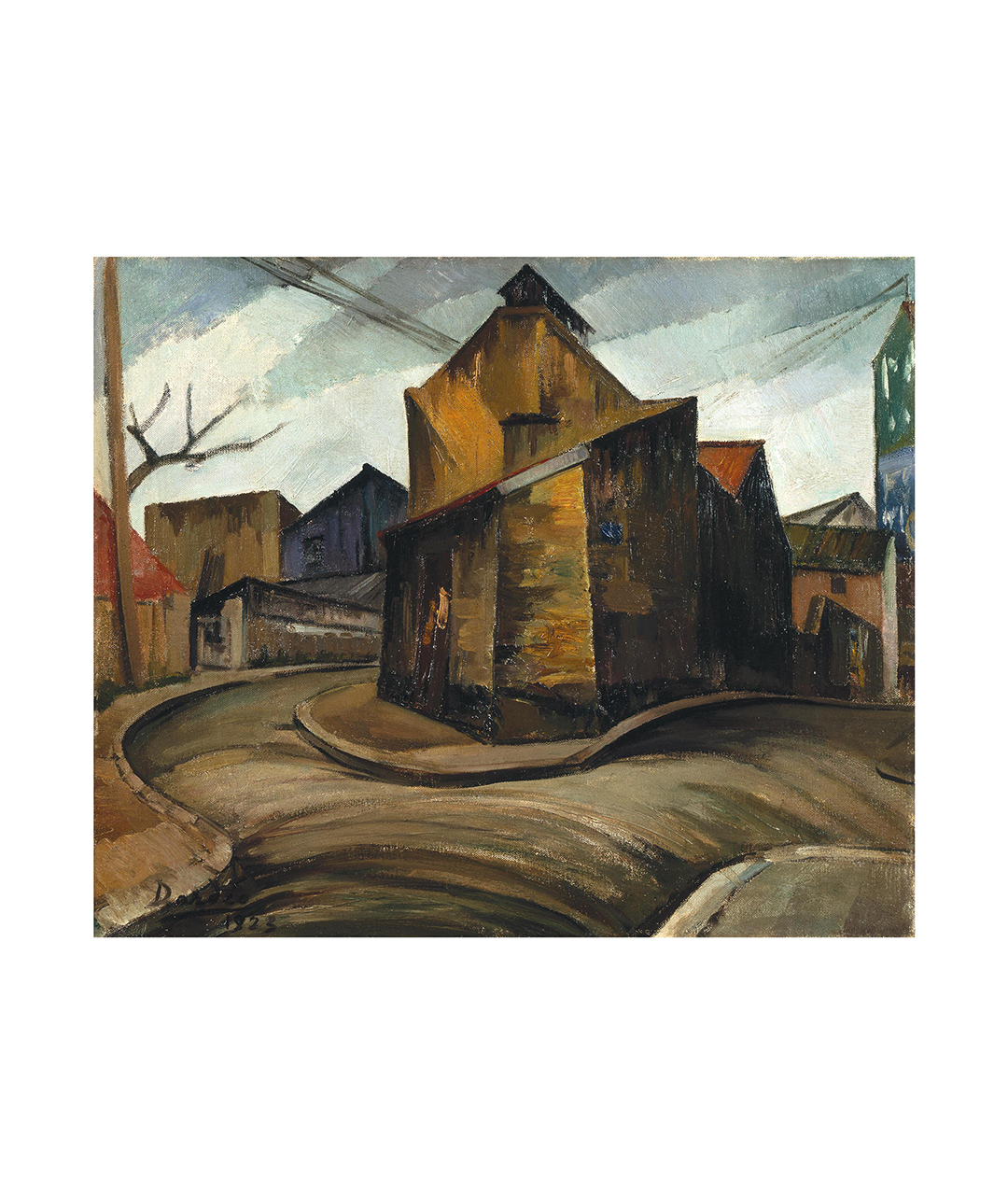 Dordio Gomes (1890-1976) 1923 Oil on canvas A key Portuguese artwork of the first half of the 20th century, this stretch of houses in the suburbs of Paris would also be explored by Dordio Gomes through engraving and in his Autorretrato da N atureza Morta (Still Life Self-Portr…
Houses of Malakoff
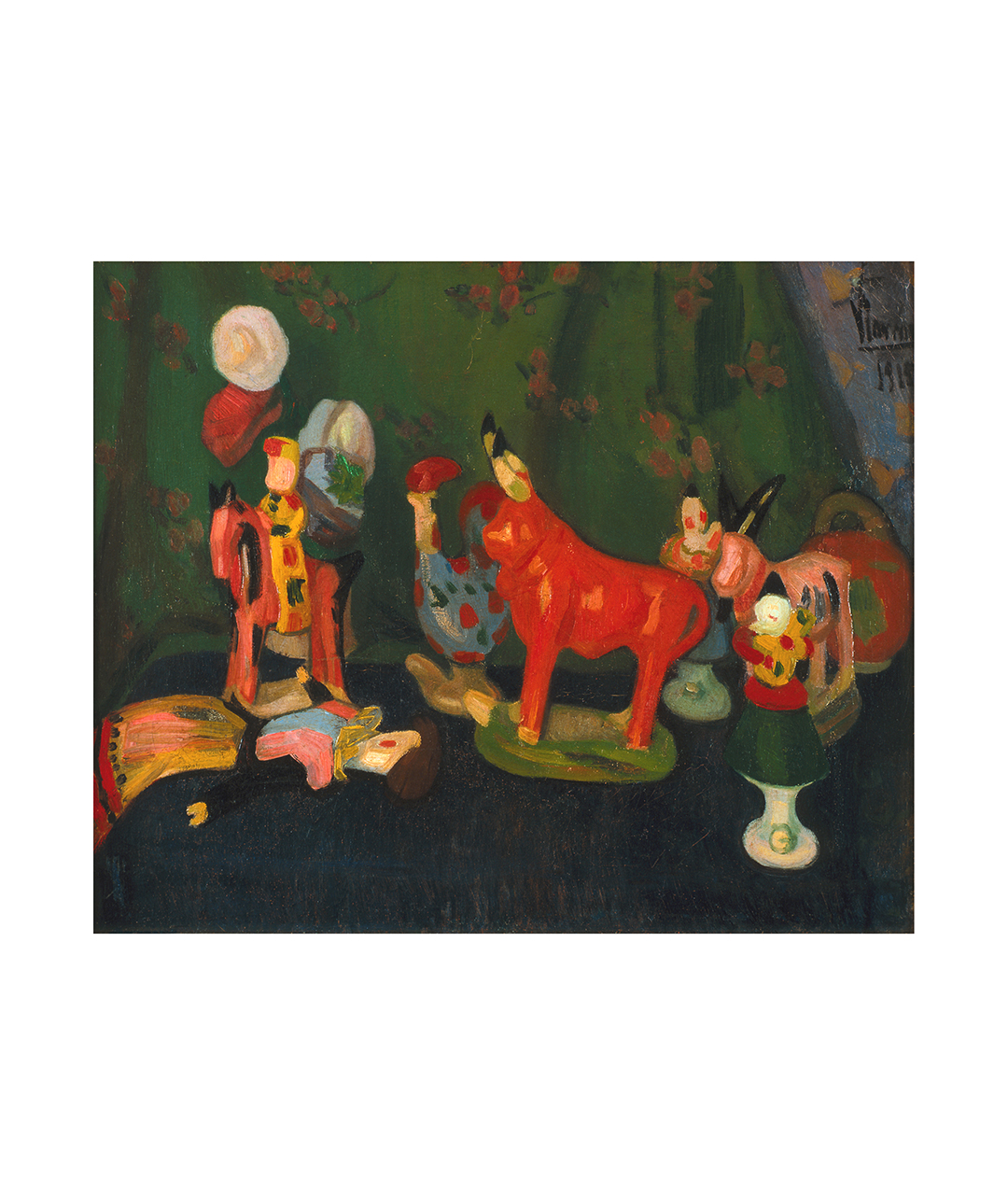 Eduardo Viana (1881-1987) 1915 Oil on canvas Testifying to the avant-gardism of Eduardo Viana's production in this period, the theme of this painting - a set of small clay figures characteristic of Barcelos and a rag doll - is completely in tune with the interest that emerged…
Barcelos Pottery
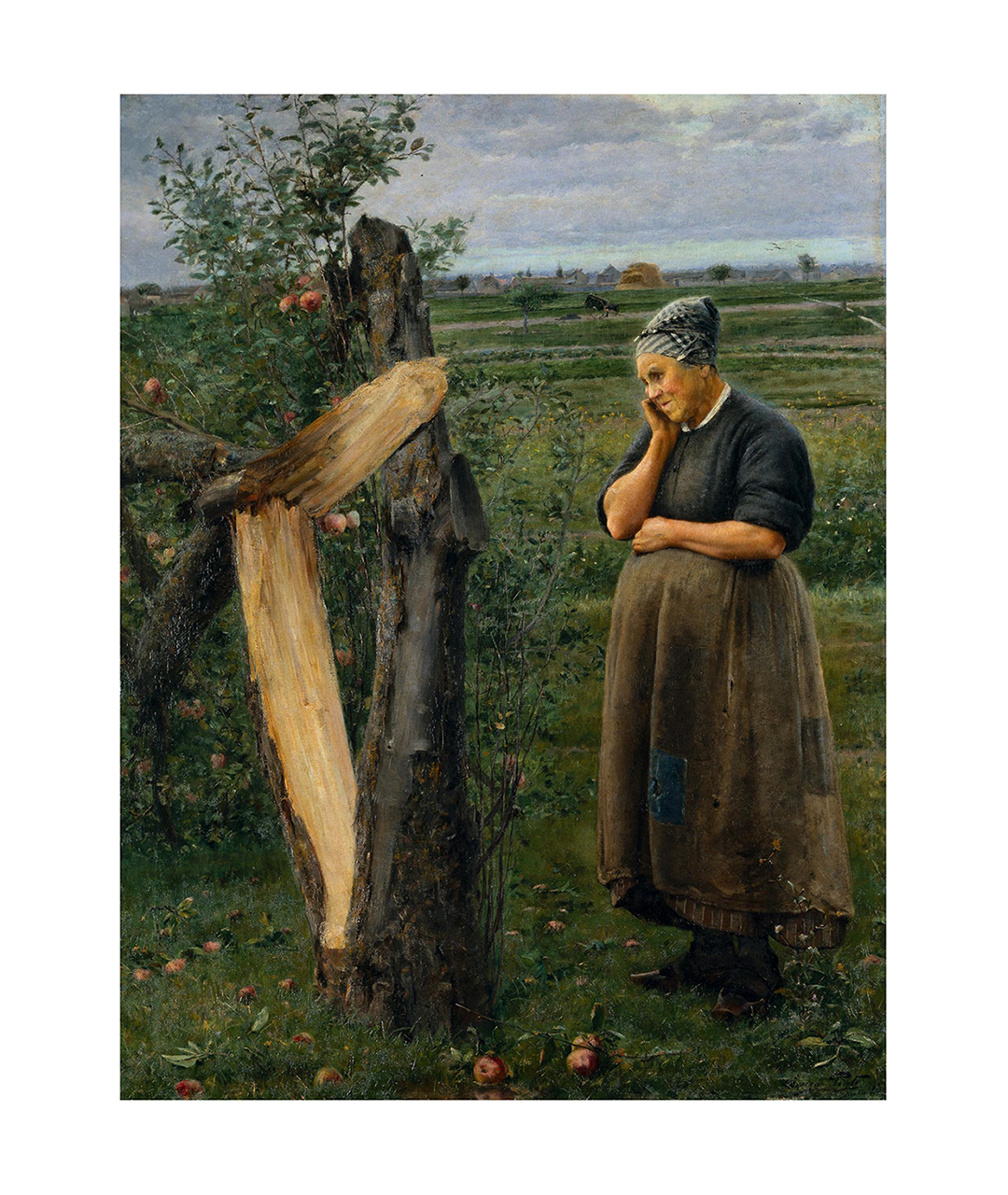 Oil painting of a very old woman observing a broken tree
Snapped Apple Tree
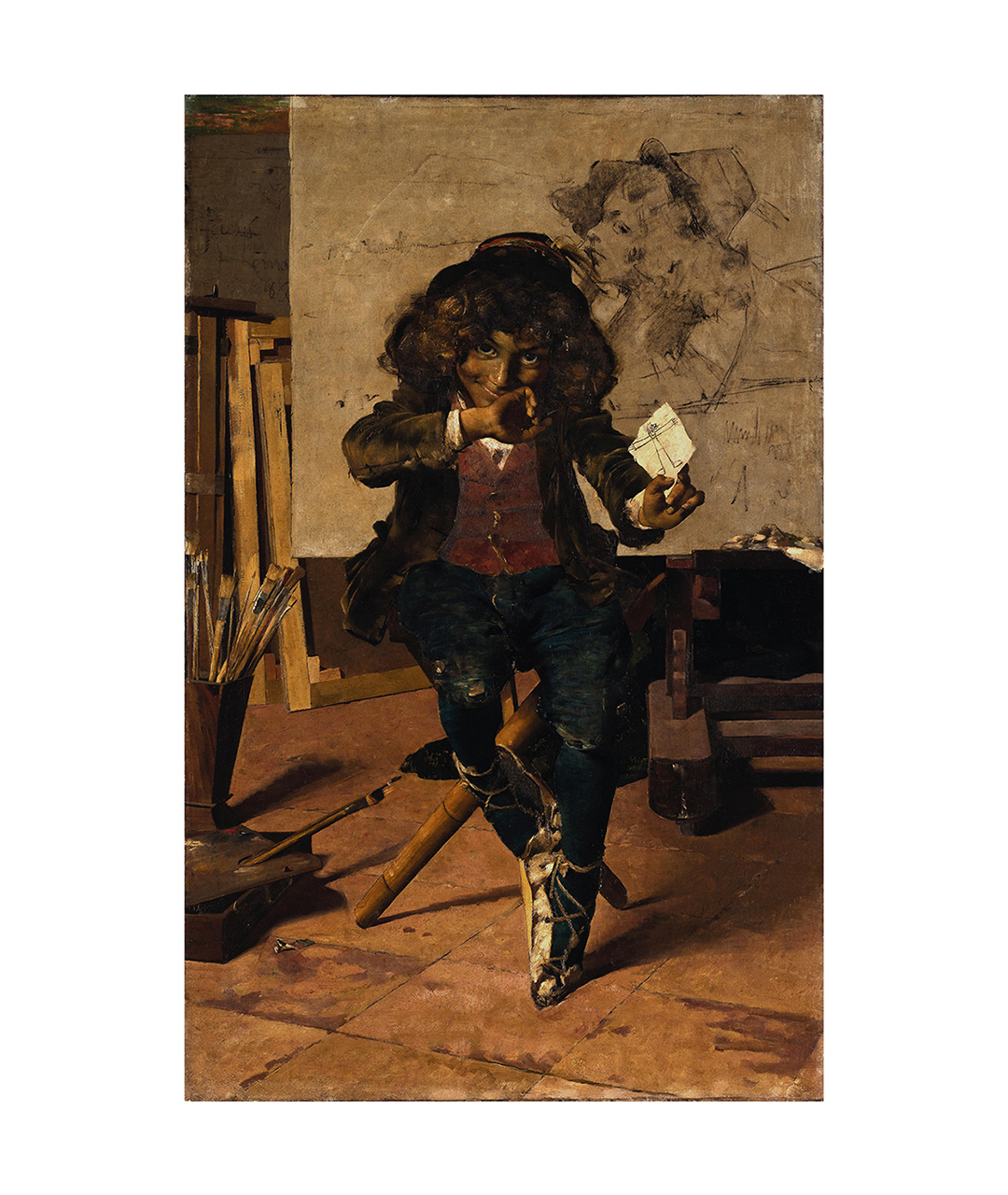 Henrique César de Araújo Pousão (1859-1884) Rome, 1882 Oil on canvas In this work, Henrique Pousão subverts the classic theme of the ciociaro, inhabitant of the Italian region of Lazio, represented here as a mischievous, half-clothed boy, captured not posing, but at the very m…
Awaiting Success
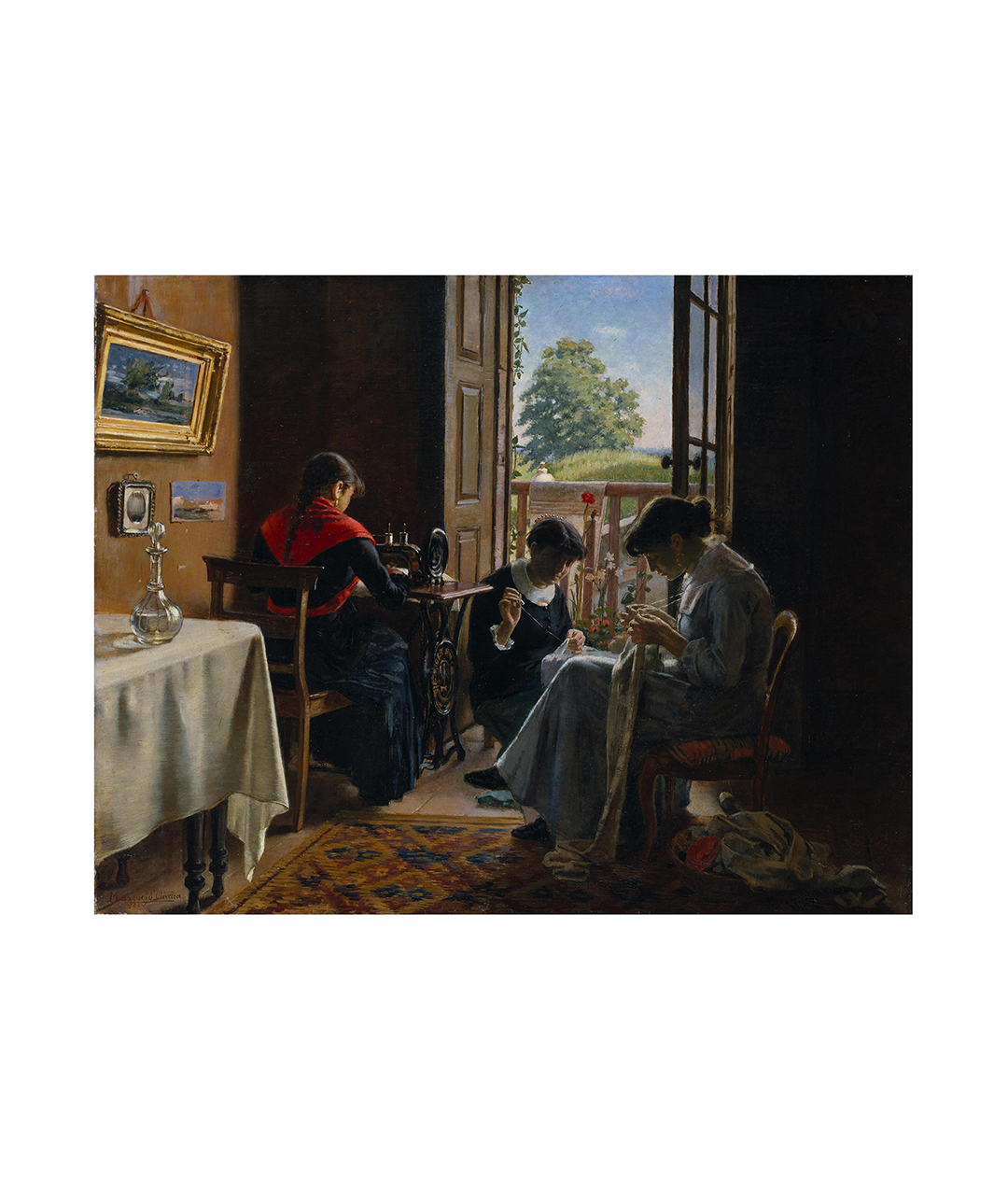 Marques de Oliveira (1853-1927) 1884 Oil on canvas This scene of domestic intimacy is well defined by the original title the painter gave it when he exhibited Entre o almoço e o jantar (Between Lunch and Dinner). Silva Porto displays a highly developed sense of composition her…
Interior (Seamstresses Working) or Between Lunch and Dinner
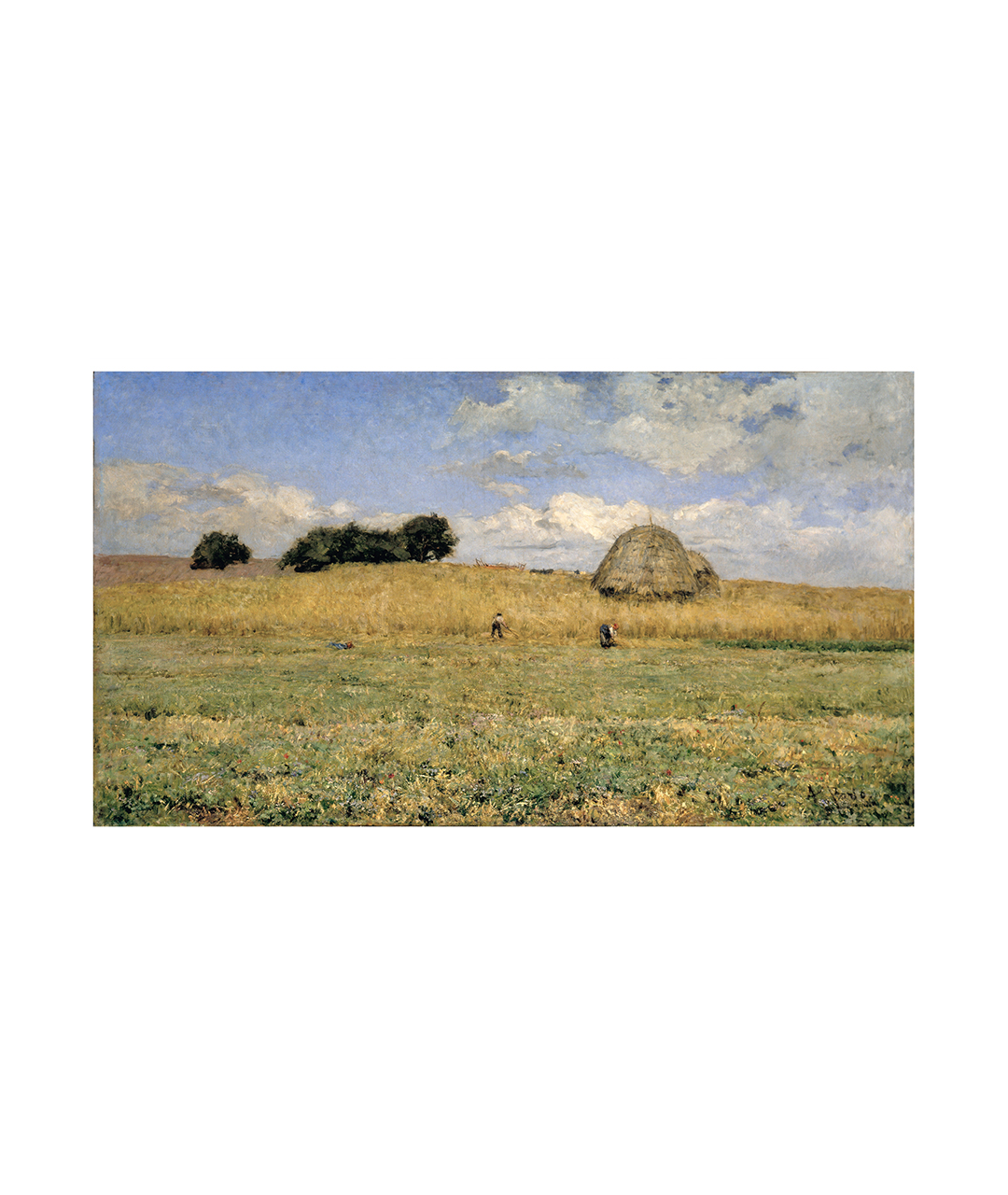 Silva Porto (1850 – 1893) 1878-79 Oil on canvas This final piece for his State scholarship in Paris was sent by the painter to the Academia Portuense in 1879. It represents a rural landscape in large format done in the outskirts of Paris. The vibration of the light on the moti…
A Wheat Field – Harvest (Outskirts of Paris)
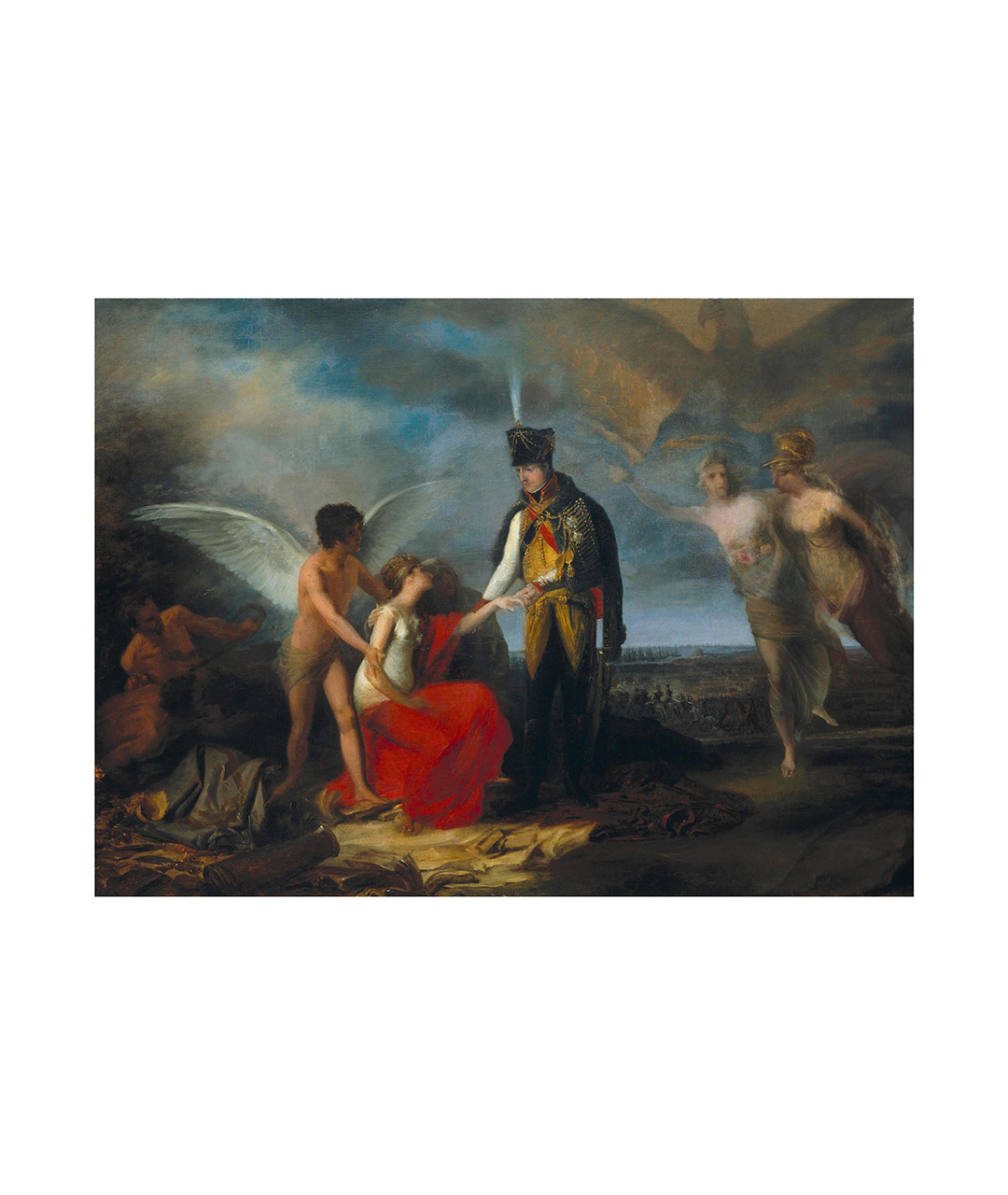 Domingos António de Sequeira (1768 –1837) 1808 Oil on canvas During the Peninsular War, Domingos Sequeira established friendships with officers of the Napoleonic army, such as the Count of Forbin, an officer and amateur painter. This approach earned him a commission for an all…
Junot protecting the City of Lisbon
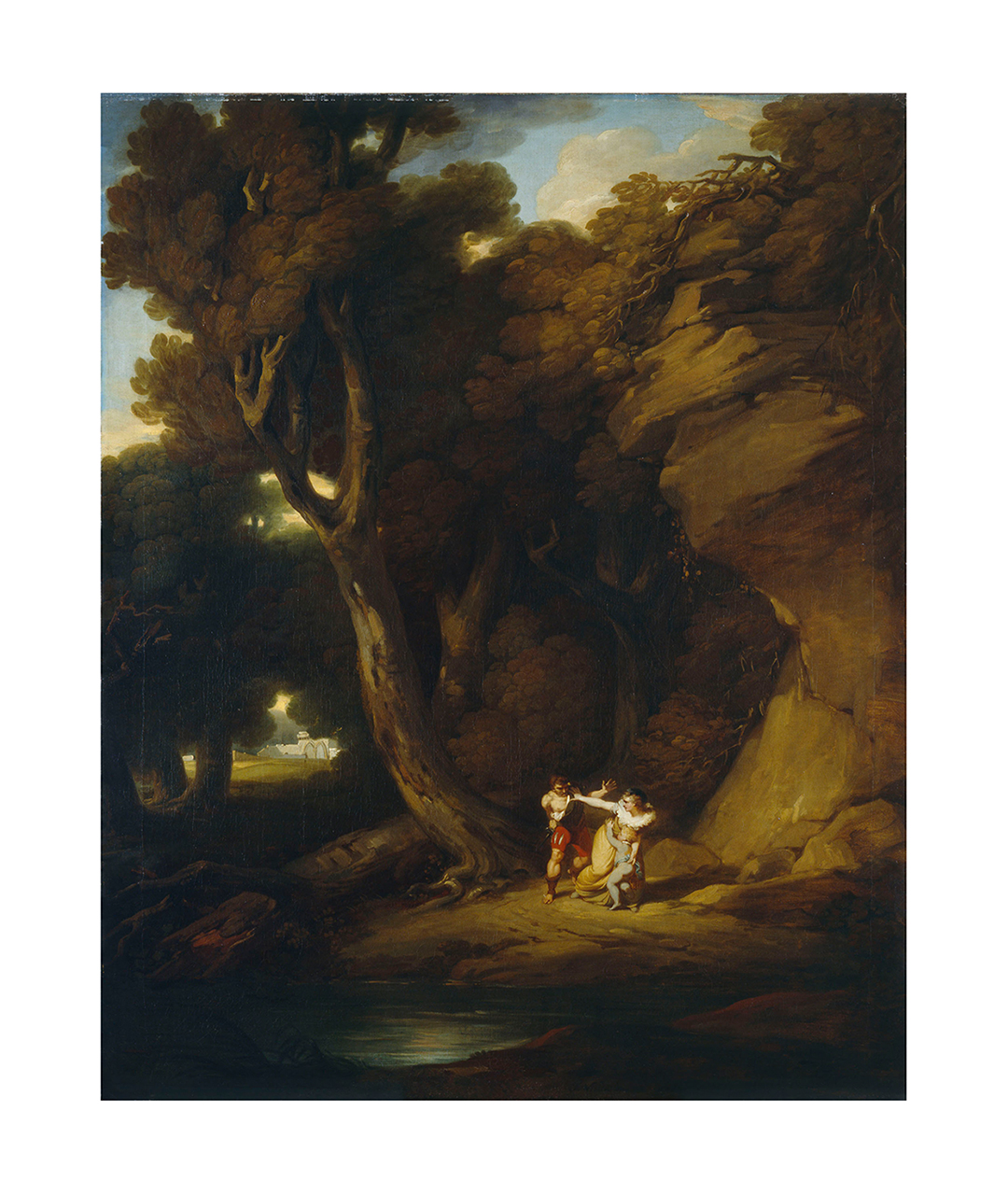 Francisco Vieira, known as “O Portuense” (1765–1805) 1798 Oil on canvas This scene was painted in London and presented in 1798 at the Royal Academy of Arts exhibition. The episode chosen by the painter refers to David Hume's History of England , and specifically a moment from…
Flight of Margaret of Anjou
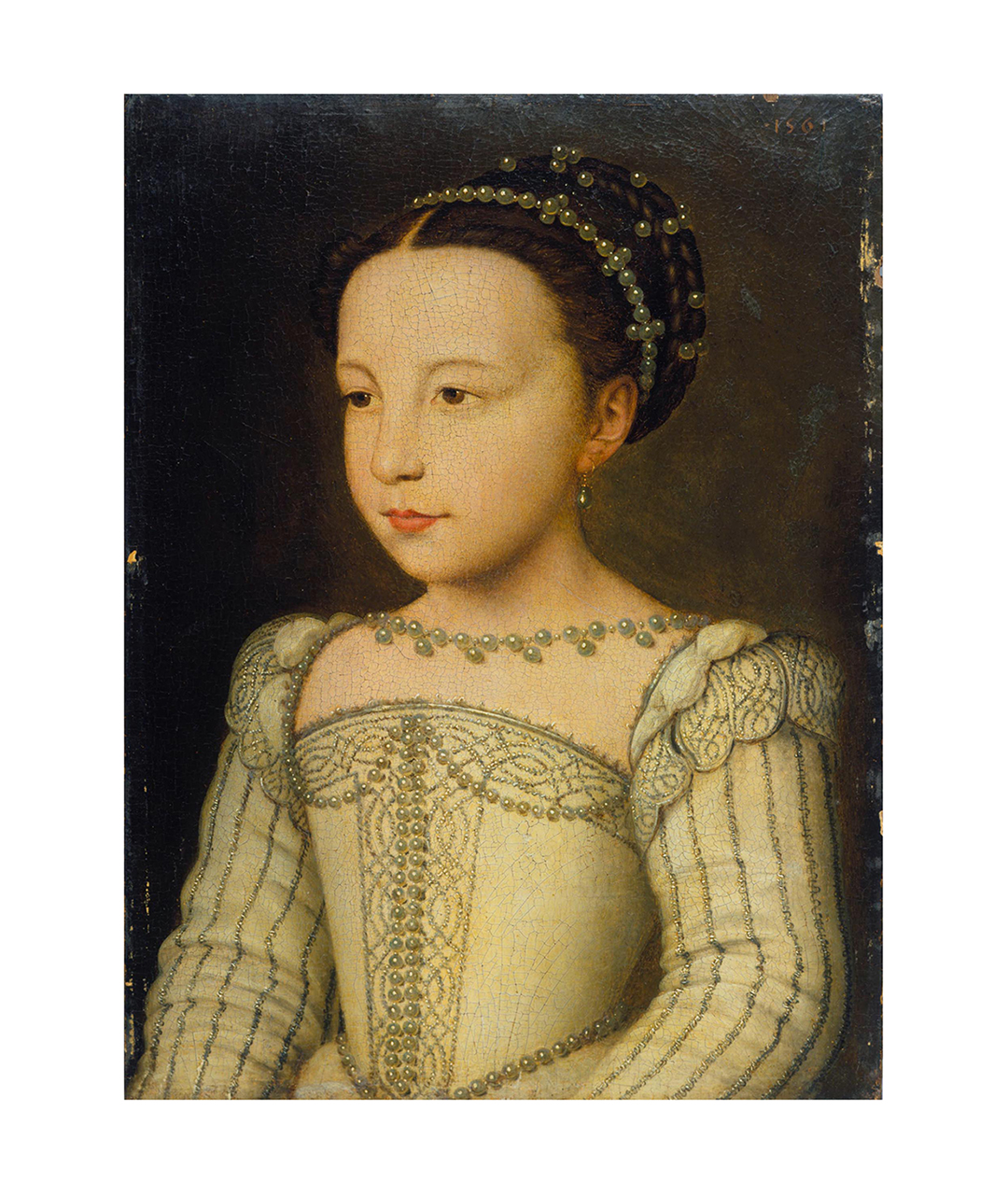 François Clouet (1505-1510 - 1572) Oil on oak Dated 1561, this small work depicts a 16th century French court figure, Princess Marguerite de Valois (1553-1615), done by one of the most prestigious French painters of the time, François Clouet. It was considered one of the great…
Portrait of Princess Marguerite de Valois
Textile
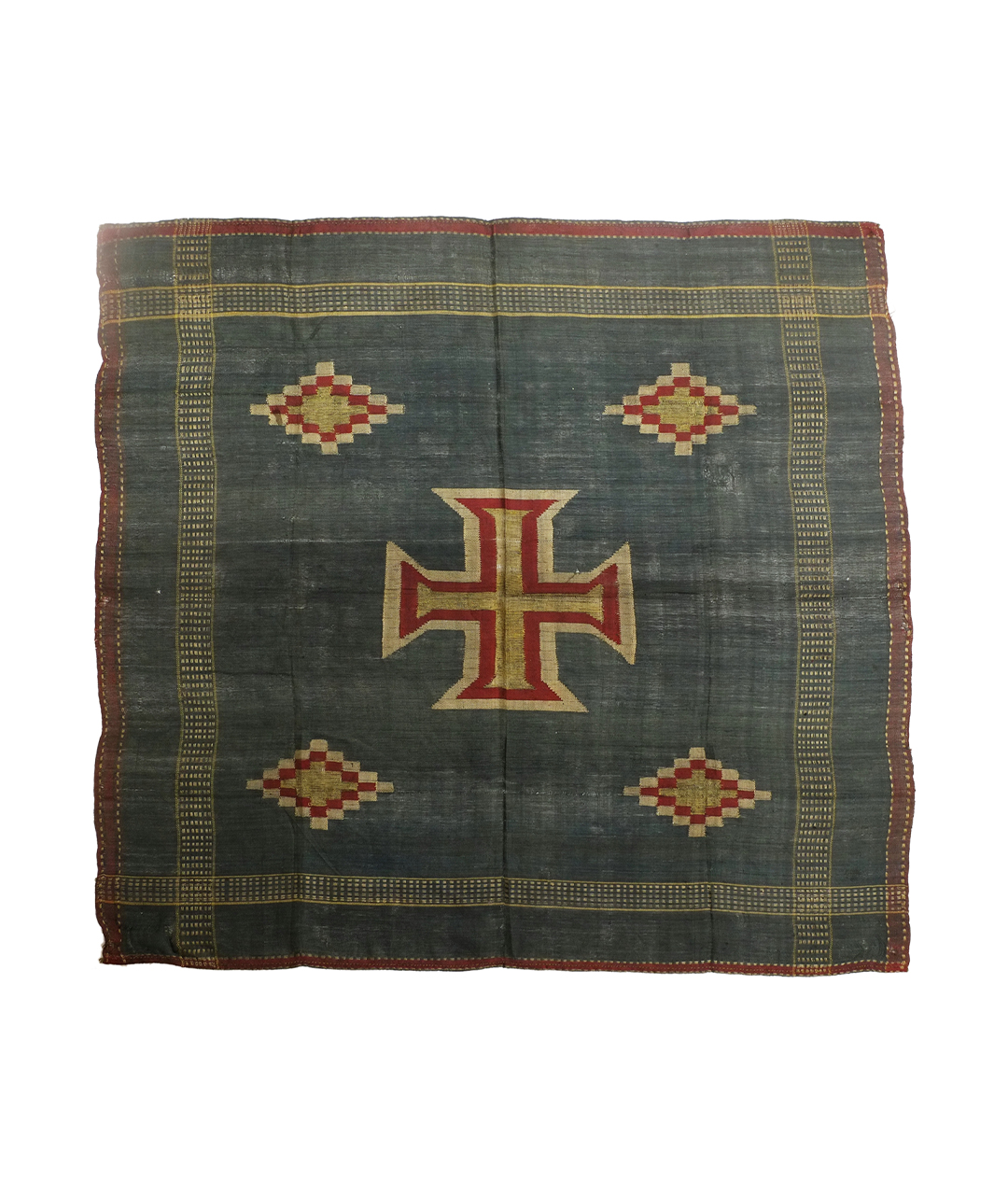 17th Century India Green, red, yellow, white natural silk thread; silver strip Inventory sheet This cloth was designed to cover the chalice that is the recipient of the Blood of Christ after the Consecration performed during mass, the main Catholic religious ceremony. It is en…
Chalice Cloth
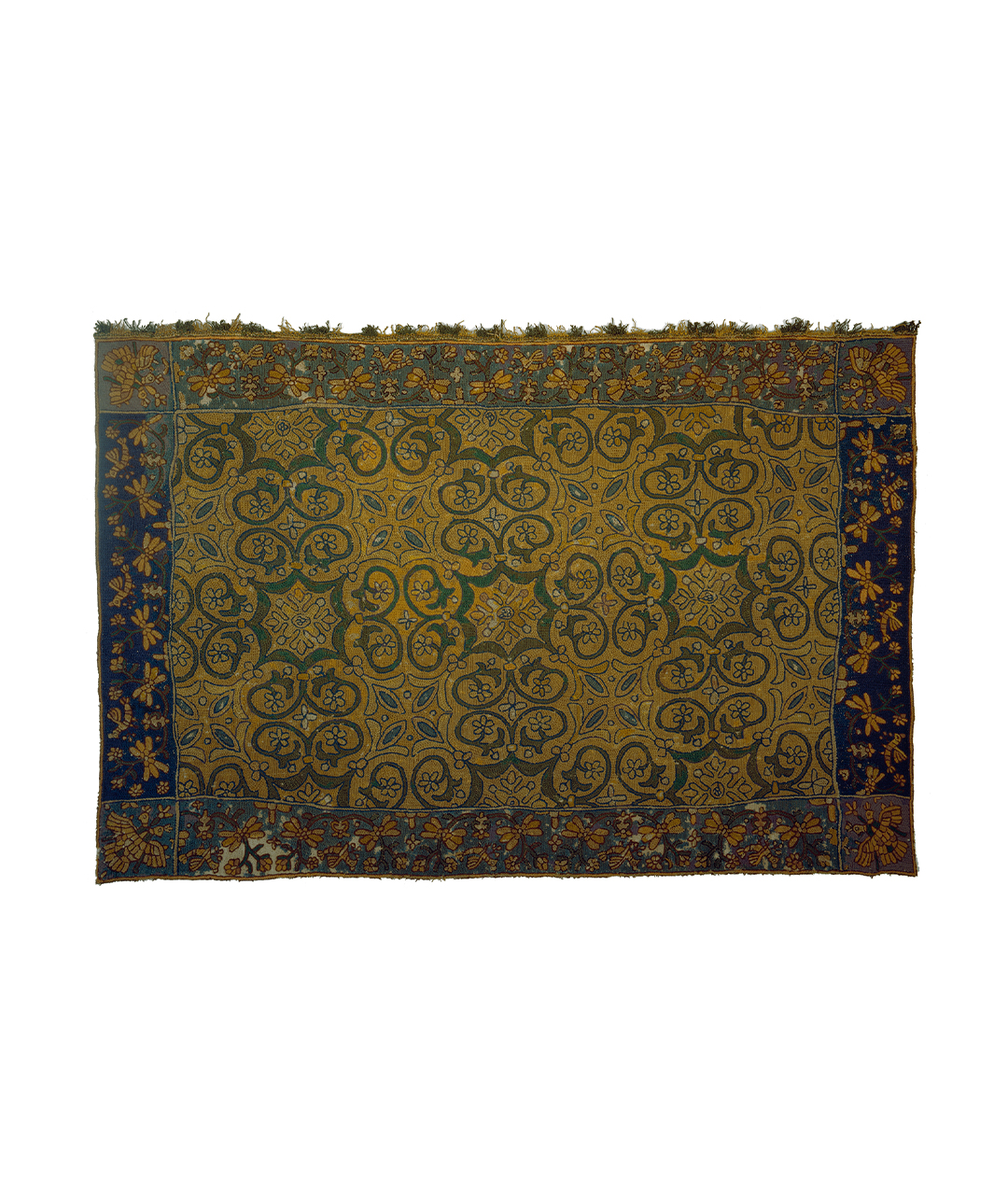 17th century Wool; linen Inventory sheet Attributed to the 17th century, this carpet is considered one of the oldest that have survived to this day. It has the particularity of presenting the embroidery stitch executed in several directions following the movement of the design…
Arraiolos Carpet
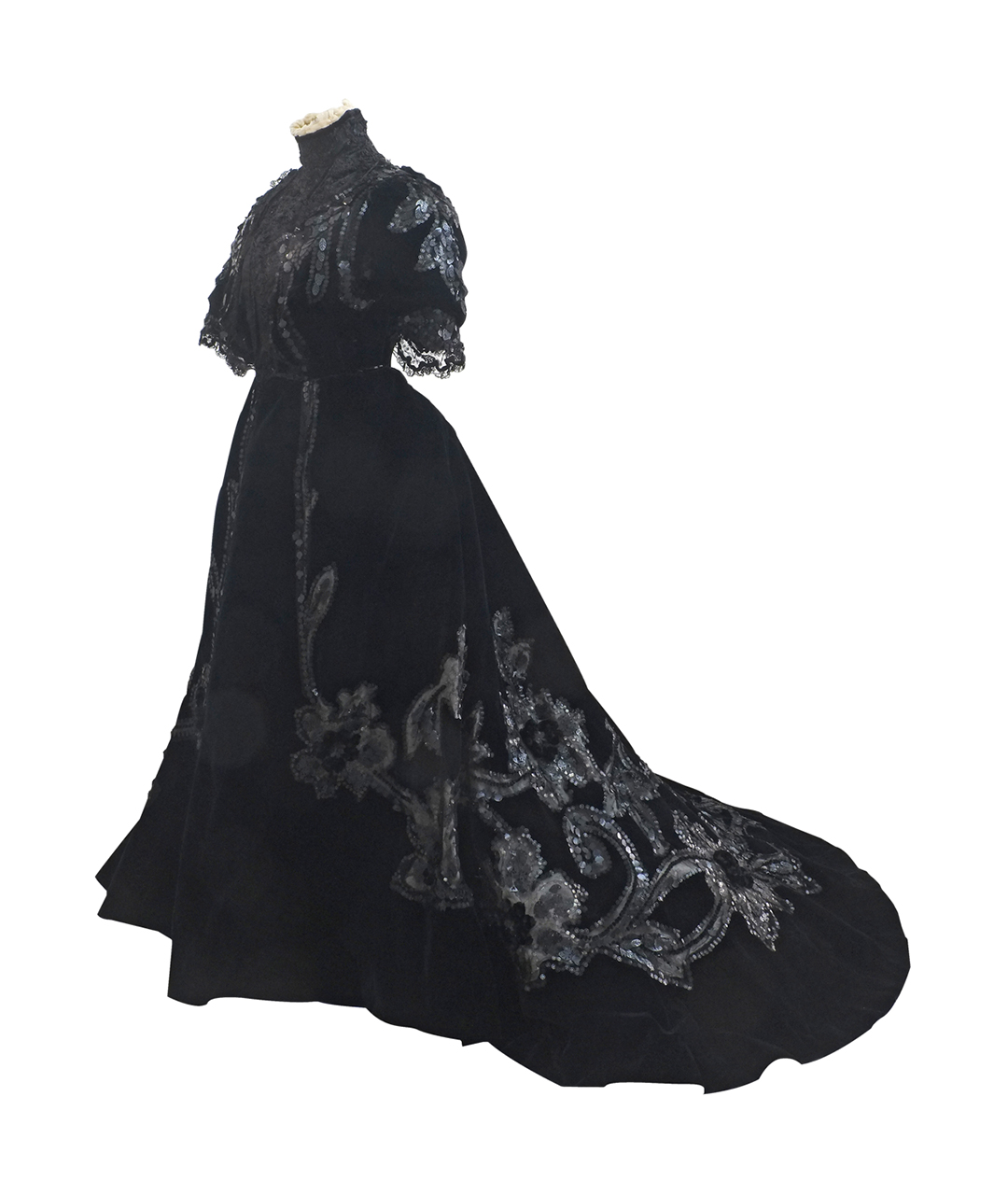 Aline Neuville's studio, Lisbon 19th century (end) or 20th century (early) Velvet; silk threads; lace; sequins; tulle; silk crepe; silk satin Inventory sheet Composed of a skirt and bodice, in black velvet, it is profusely decorated with floral motives, using lace, tulle, sequ…
Matching Skirt and Bodice
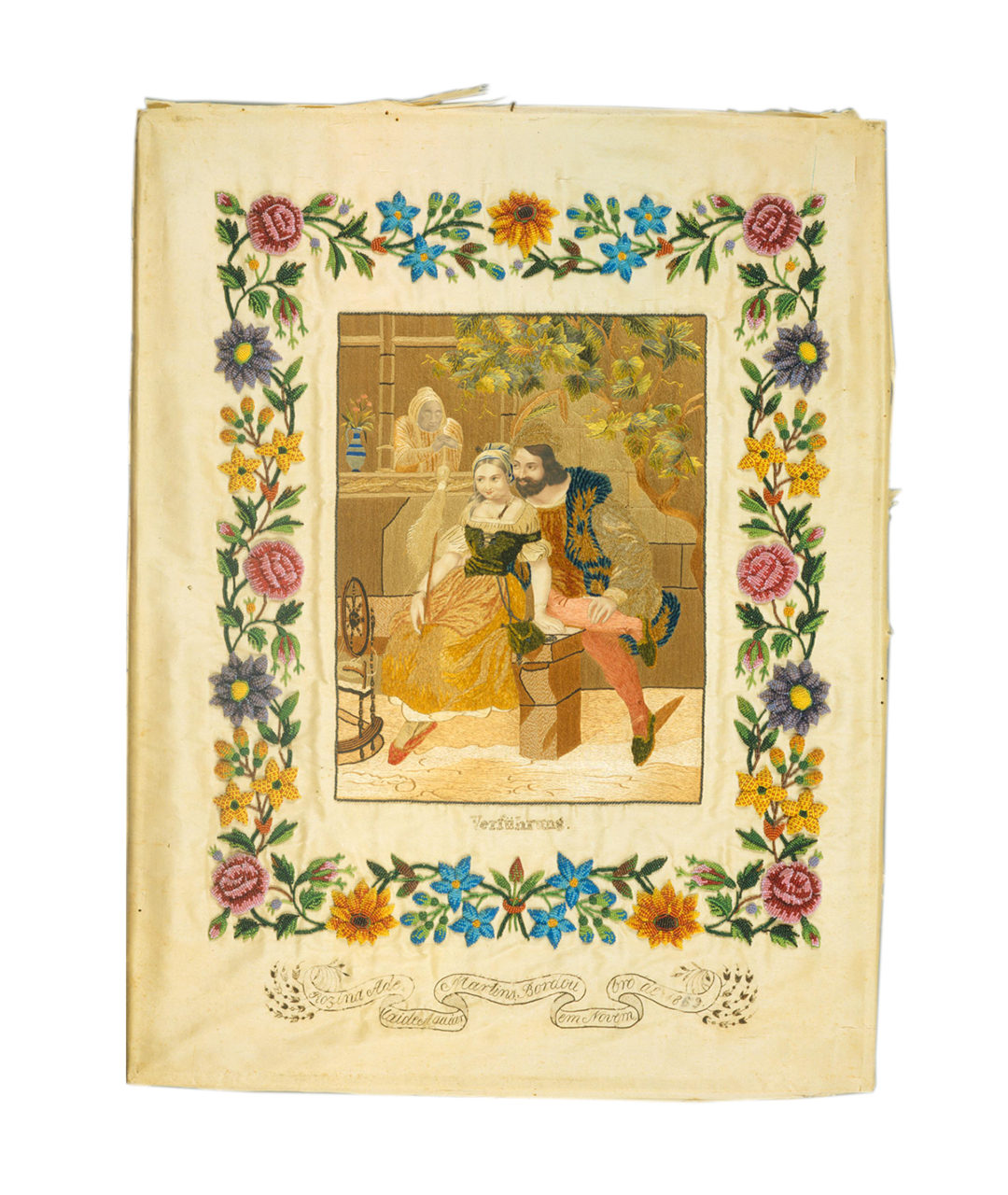 Polychrome silk threads, chenille, hair, coloured glass beads, paper. Silk support. 1869 Polychrome silk threads, swags, hair, colored beads, paper. Silk support. Inventory sheet This is a common 19th century piece of work, showing how many women used to occupy their time and…
Frame Embroidery, Seduction
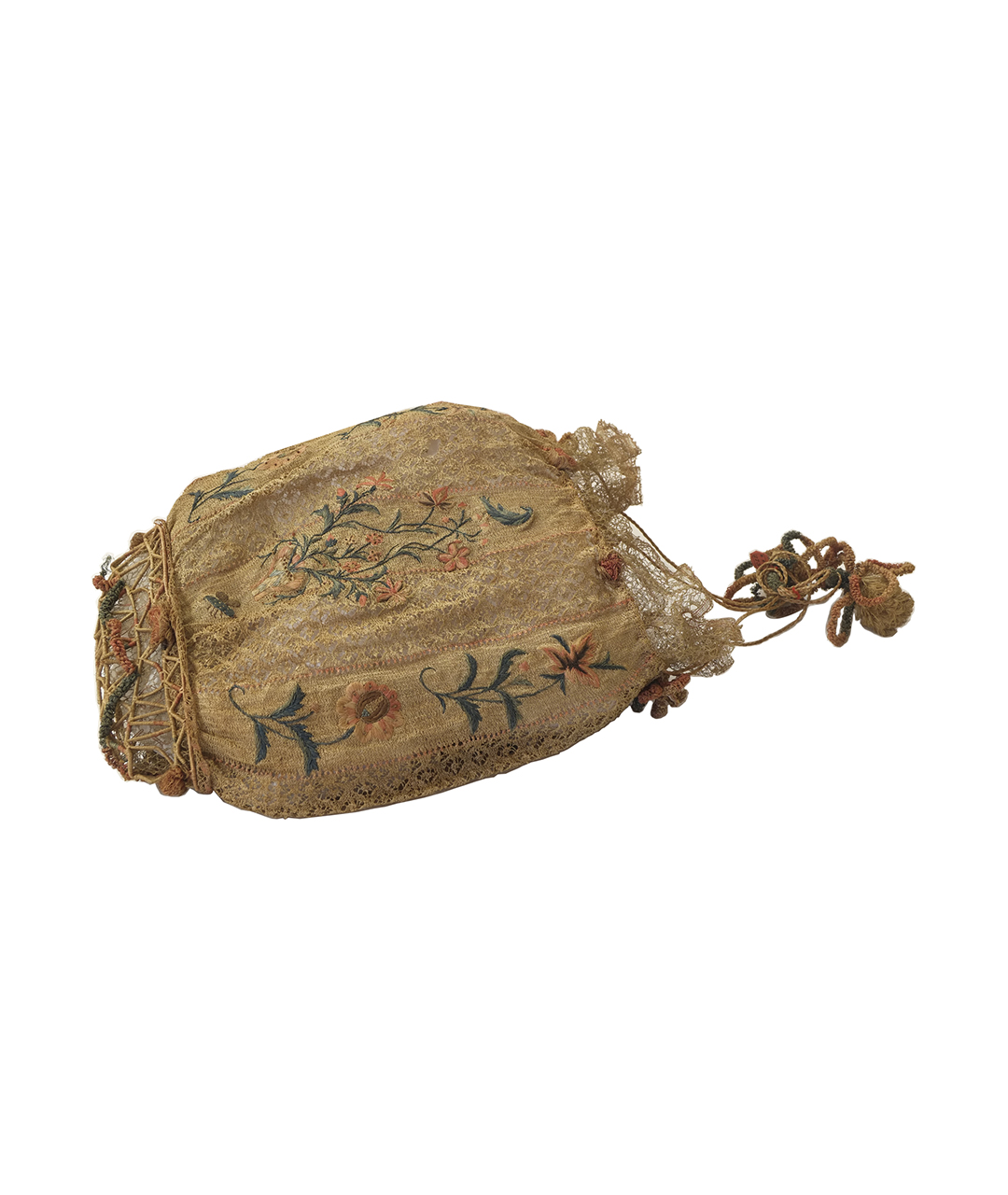 19th century (early) Sisal, natural colour and polychrome; bamboo Inventory sheet The need to carry things with them led men and women, from early times, to create bags and purses for their personal belongings, food, weapons and currency. Later on, pockets appeared with the sa…
Lady’s Purse
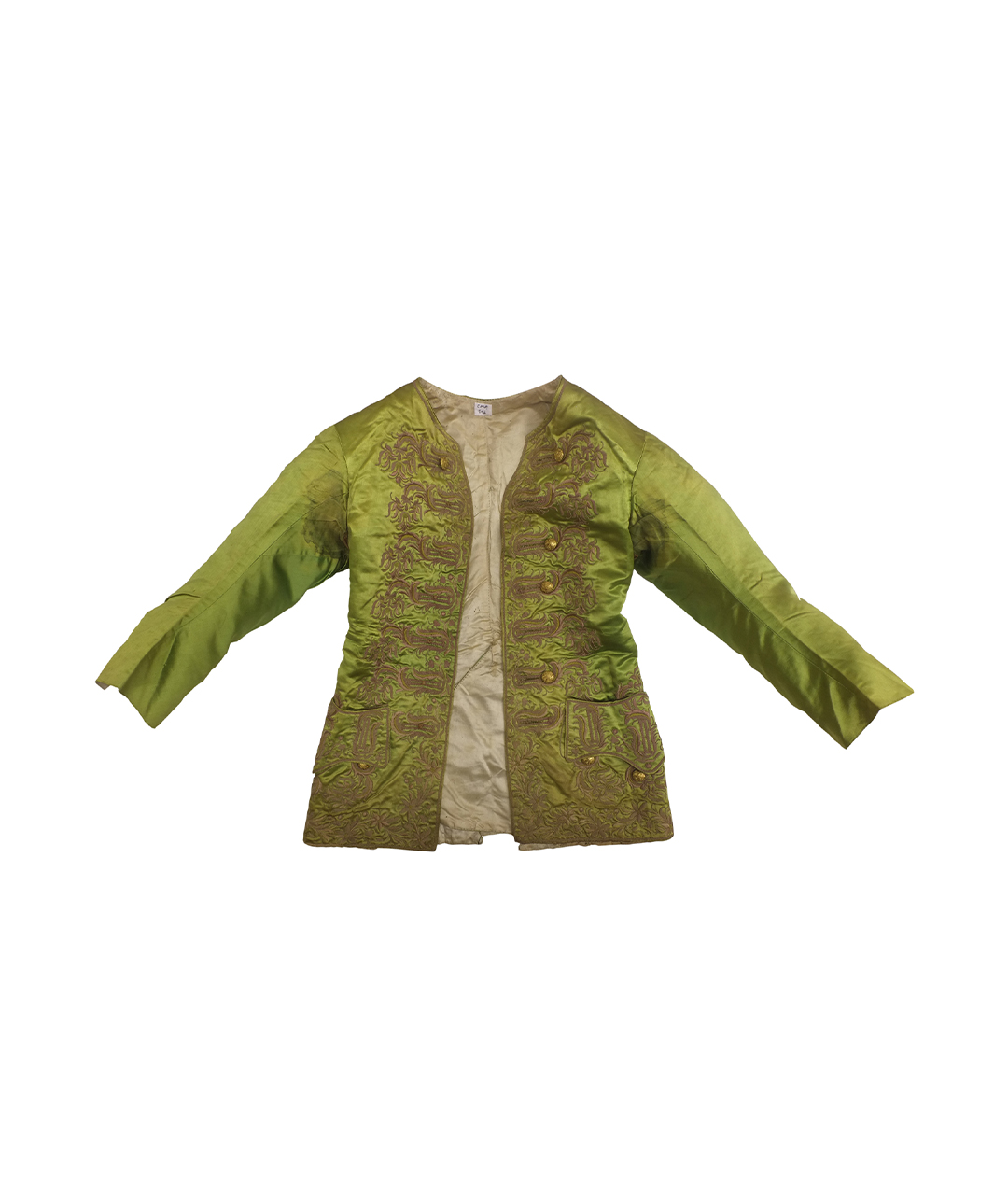 18th century (mid) silk cetim; silk threads metal Inventory sheet A piece of men's clothing, the vestia was worn over the shirt and under the coat, the latter always being longer and more decorated. Whether they were the same color or different colors, the coat and garment com…
Véstia
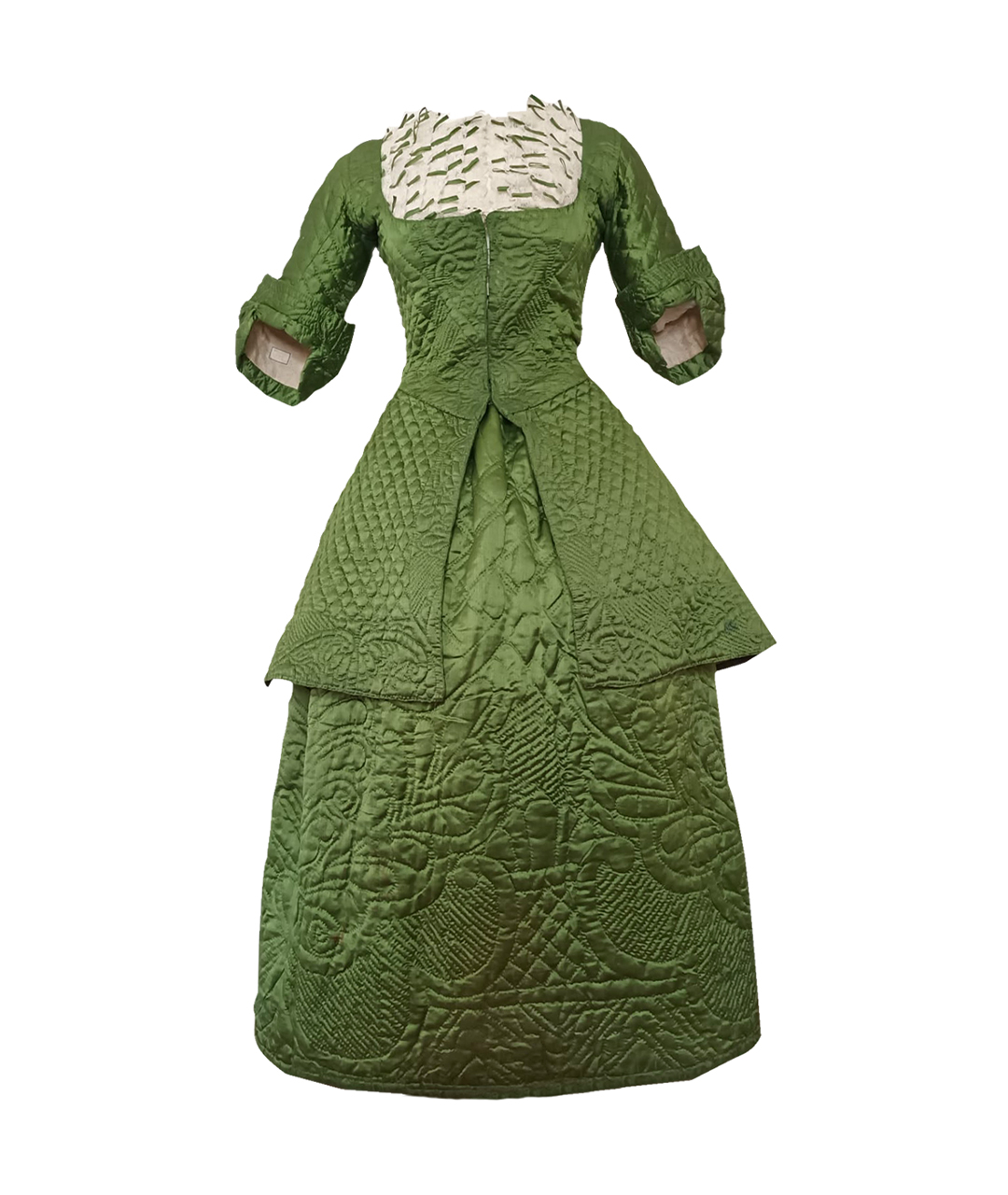 Silk satin (exterior); cotton (interior) Silk satin (outer); cotton (inner) Inventory sheet This set of skirt and jacket, probably winter wear, in green silk, is entirely decorated with geometric and vegetal motifs in relief. The outer fabric was stitched to the inner, with th…
Skirt and Coat Set
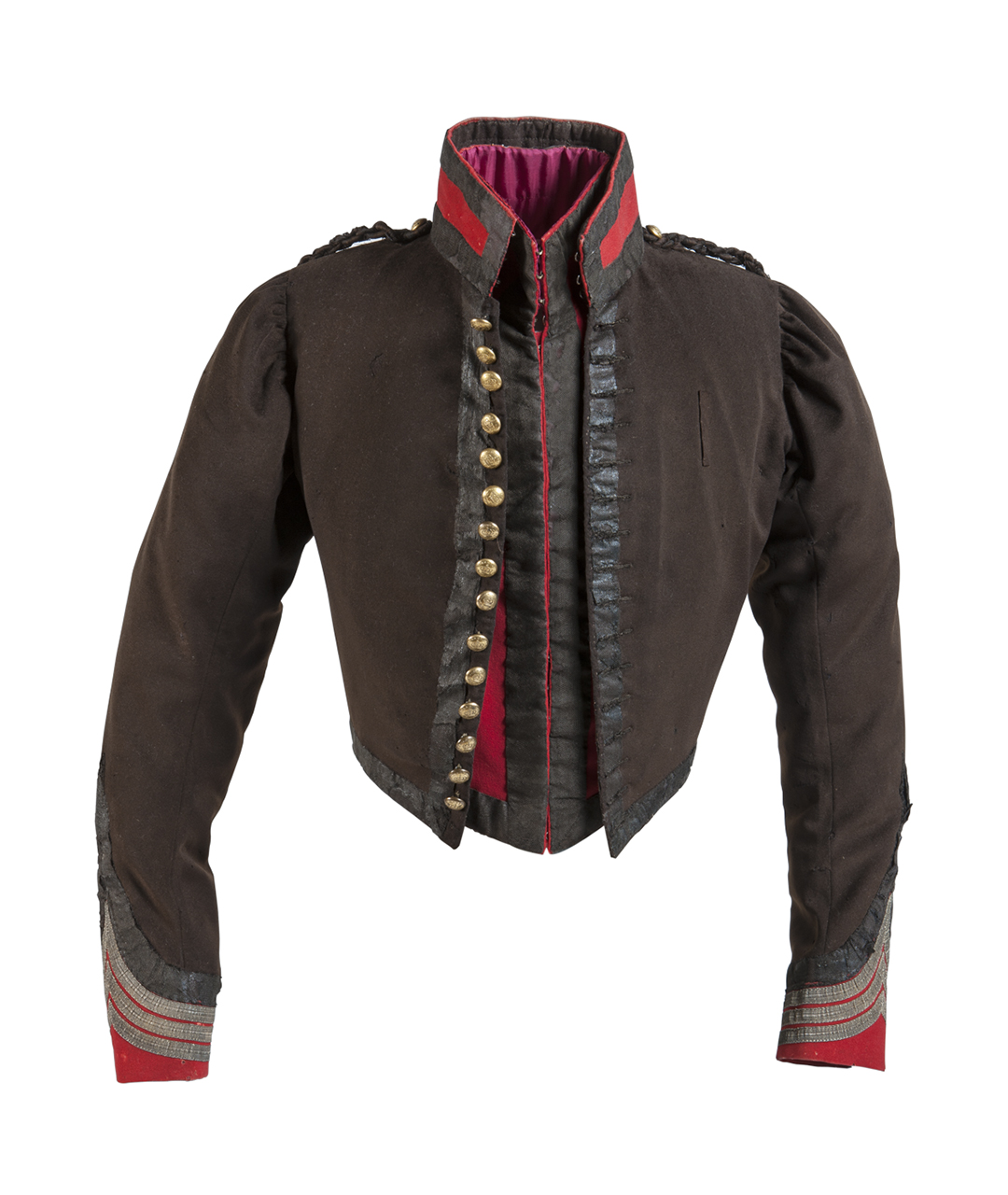 Portugal and England 19th century Wool, silk, leather and metals Dolman inventory sheet Cap inventory sheet Sword and Boldrie inventory sheet Lanyard inventory sheet with cartridge belt Map holder inventory sheet Eyepiece inventory sheet Cocked hat inventory sheet Vest invento…
Uniform of Honorary Colonel of the Hunter Battalion No. 5
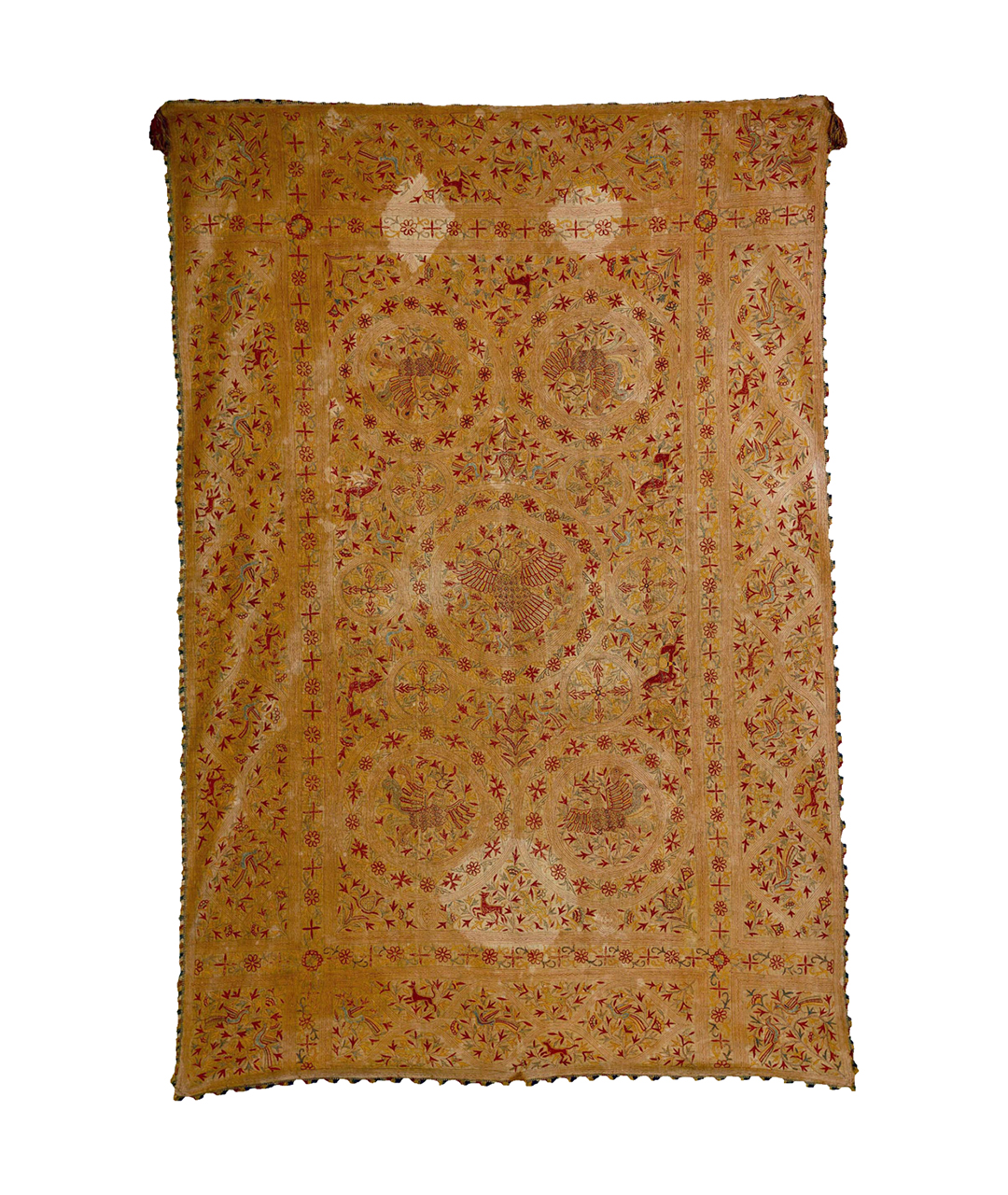 India, possibly Cambay, Gujarat 17th century Cotton; loose silk polychrome threads; lint cotton filling. Inventory sheet Godrim is a term taken from the Indian for ‘quilt’. This piece is made of two cotton sheets, embroidered together, with a lint cotton filling giving it reli…
Godrim/Quilt
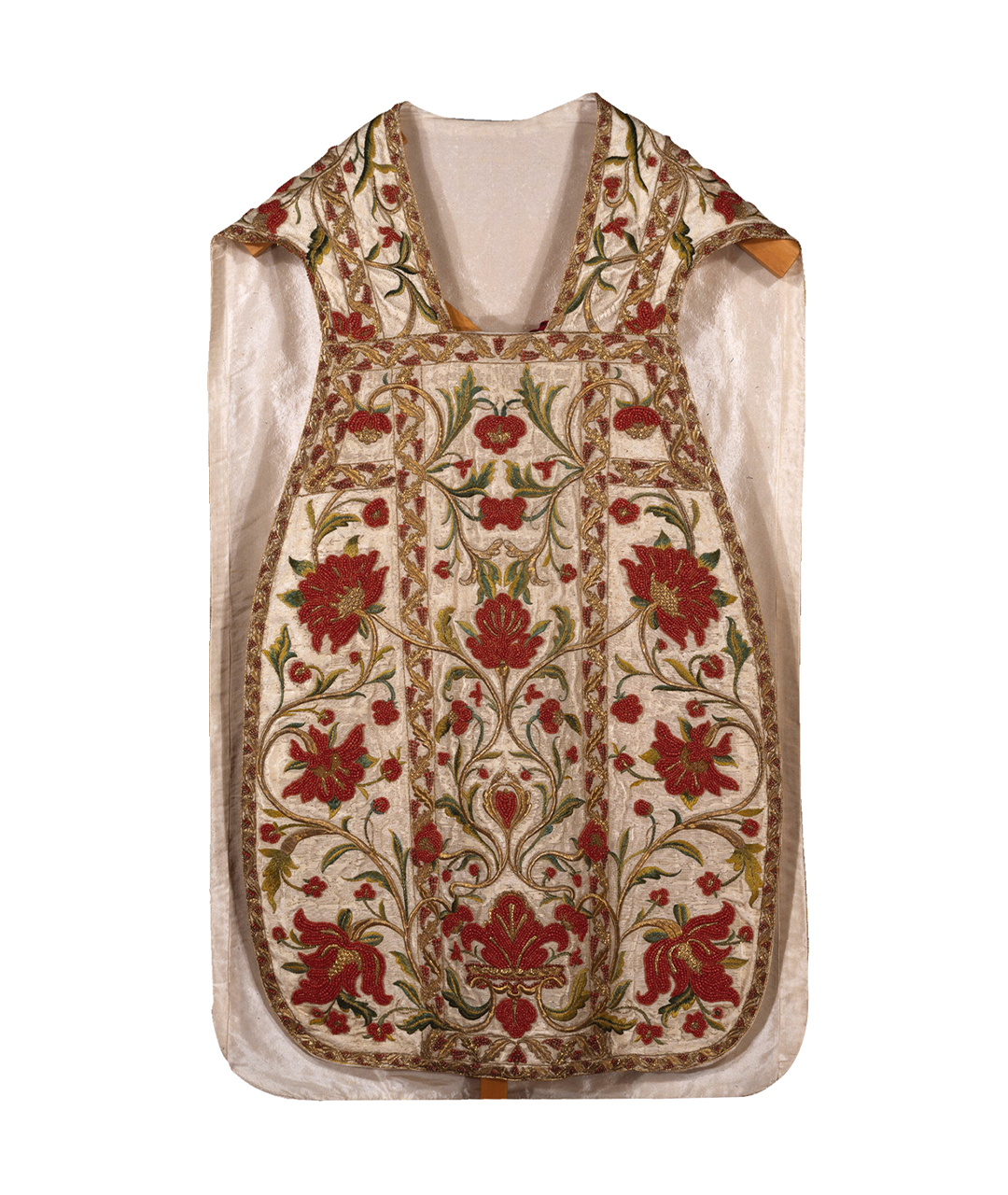 Italy (?) 18th century (1st half) White silk llama and gold thread; embroidery: gold thread, polychrome silks and coral beads. Inventory sheet This is the garment worn by the priest, in the main Catholic religious celebration: the mass. Exceptional in its artistic quality and…
Chasuble
Glass
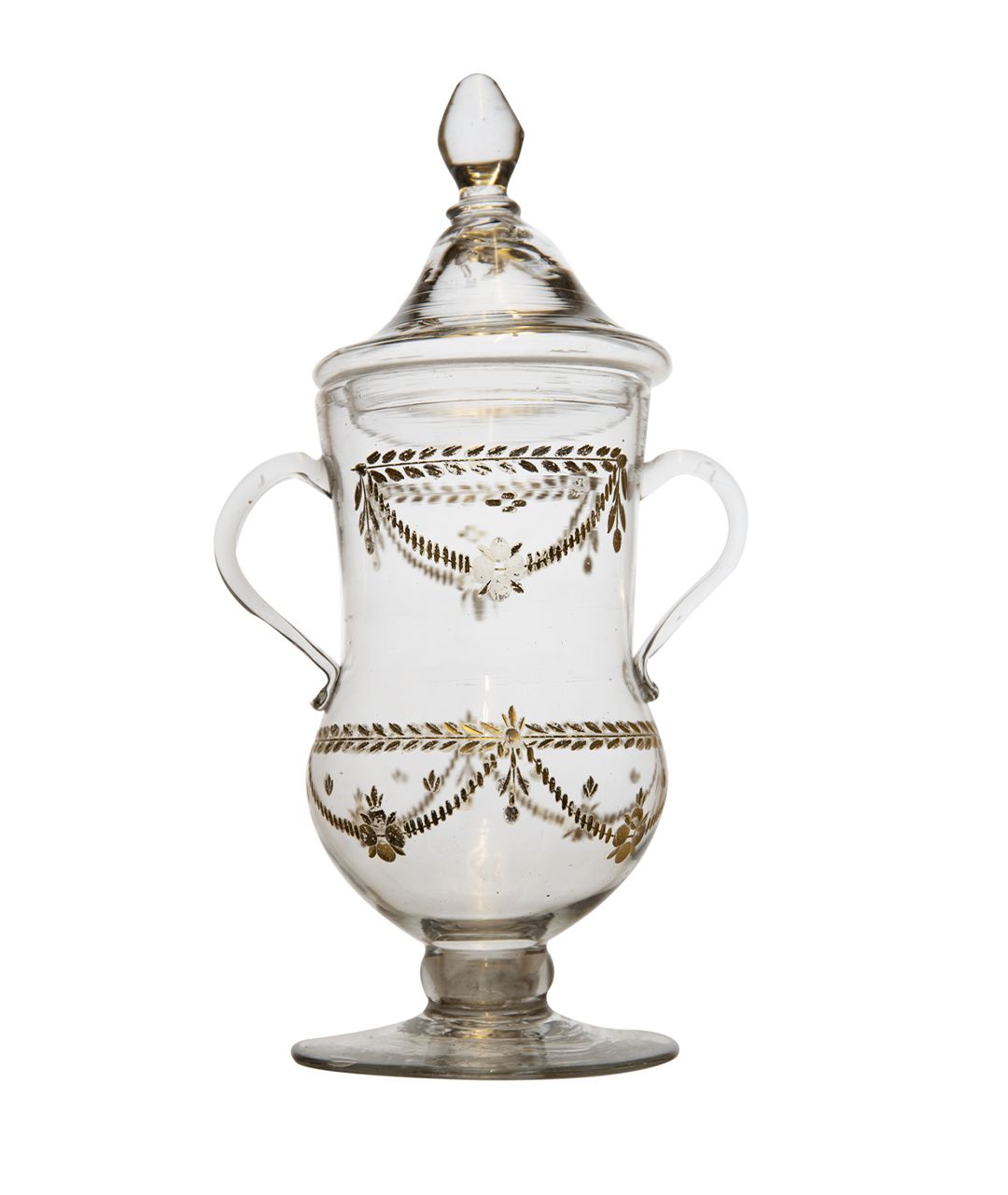 Spain, Royal Glass Factory of La Granja de San Ildefonso 1775 Clear engraved and gilded glass Inventory sheet More like a vase with a lid in shape, this bowl’s laurel leaf garland ornamentation follows neoclassical models of form and decoration, the main artistic trend follow…
Cup with lid
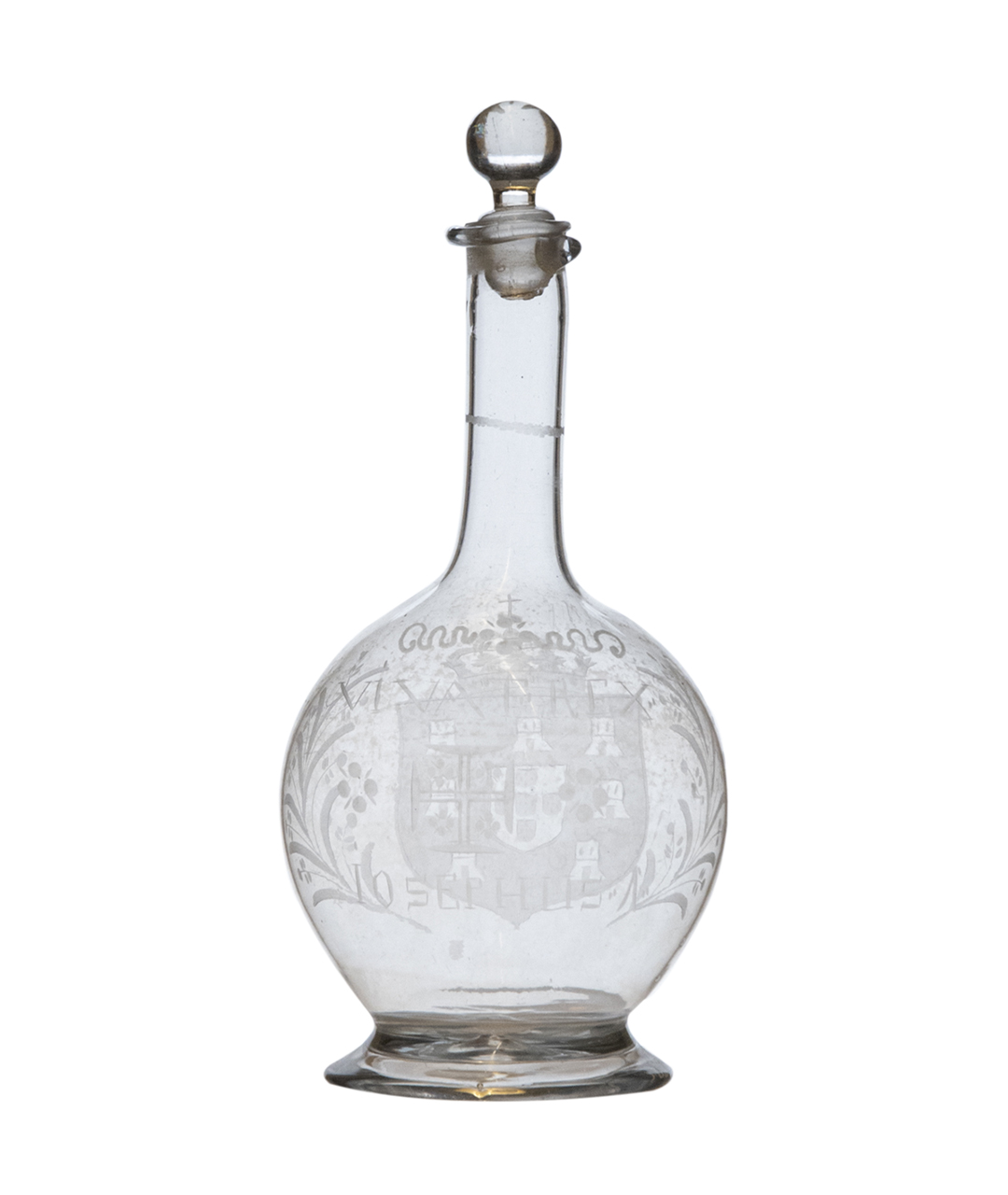 Royal Glass Factory of Marinha Grande 1769-1780 Colourless wheel engraved glass Inventory sheet For domestic use and tableware this high neck bottle has a spherical cap, a technical innovation which allowed for the preservation of the liquids within it. It was produced by the…
Bottle
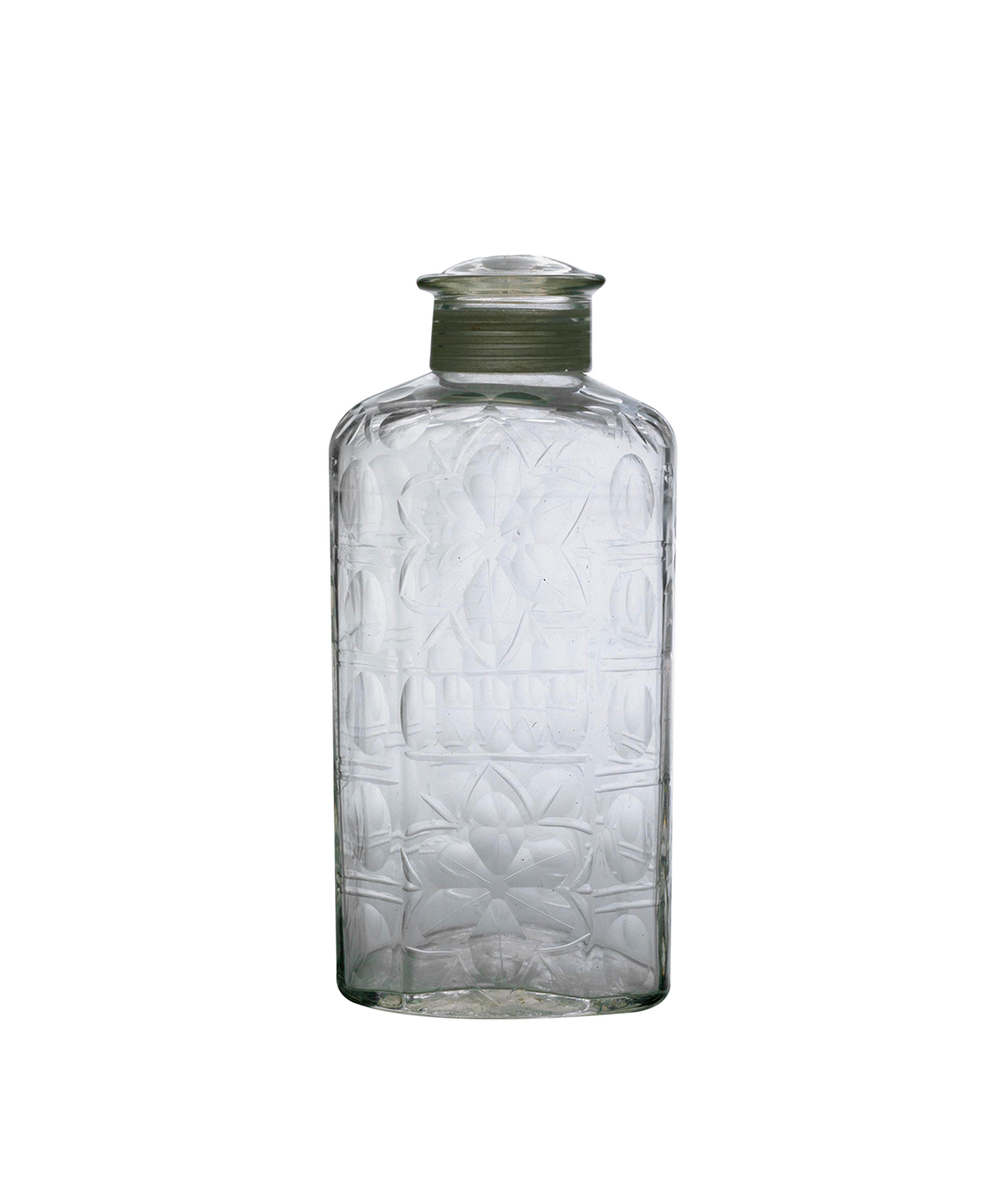 Royal Glass Factory of Marinha Grande 1770 - 1800 Lapidated colourless glass Inventory sheet In the 18th century, flasks were used as containers for all kinds of liquids, but the documentation of the time specifically mentions that flasks with screw tops , or with outer thread…
Flask
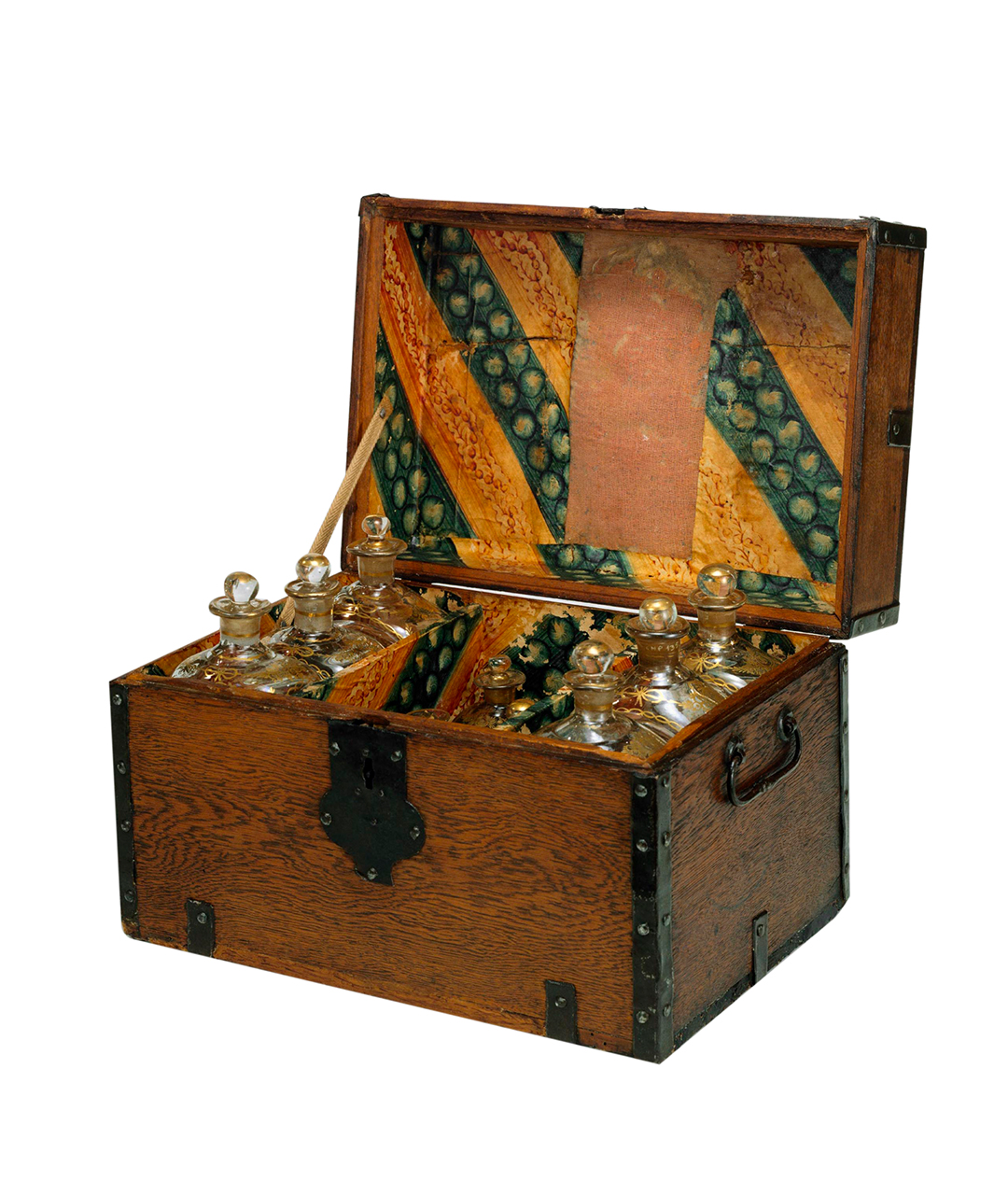 Bohemia 1750-1800 Oak and Nordic Spruce; iron; stamped paper; colourless engraved and gilded glass Inventory sheet Flask cases were used for storing and preserving bottles in an organised way in compartments, when travelling. The gold ornamentation, for economy of means, was o…
Travel flask case
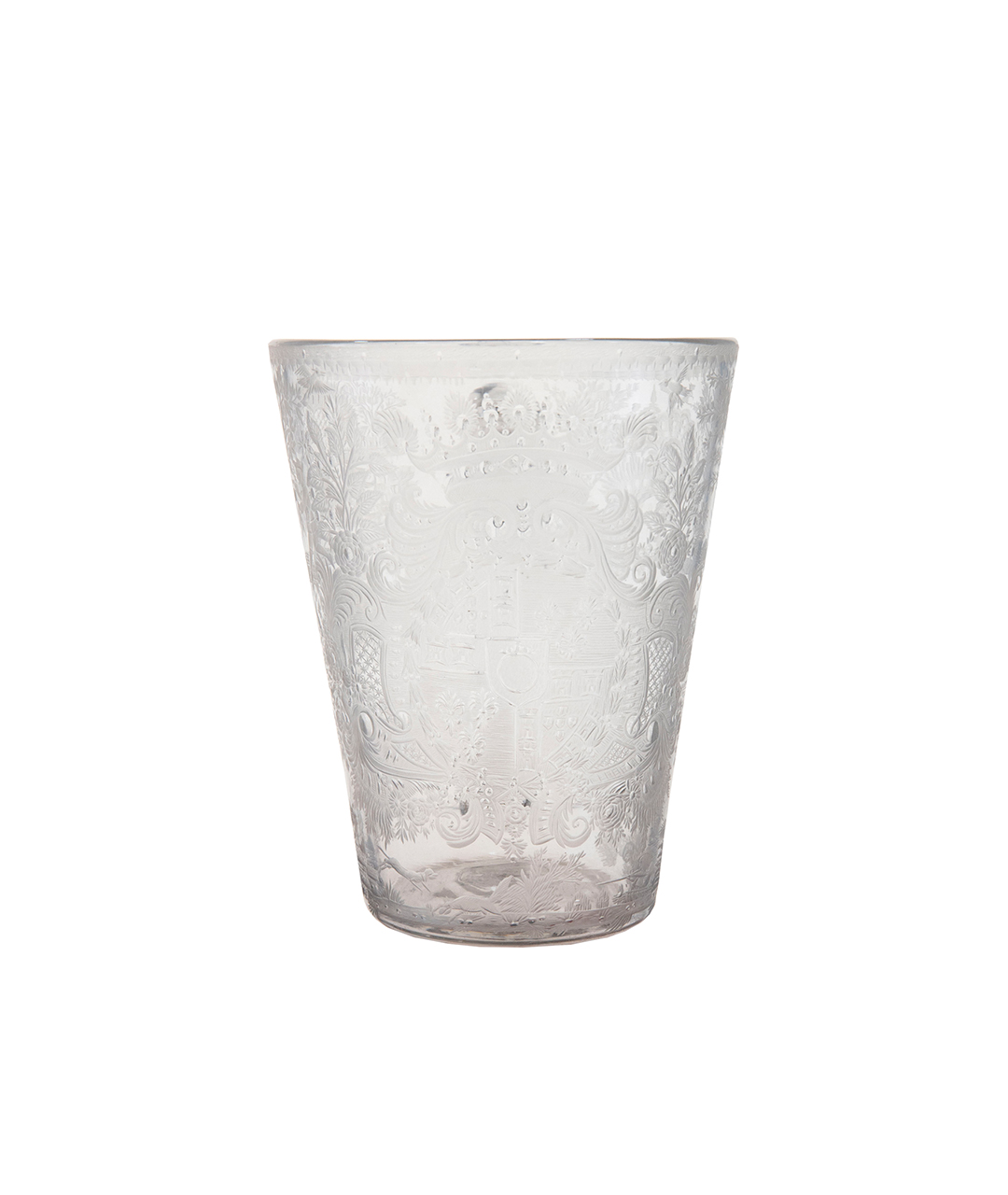 Central Europe 1775-1800 Clear glass engraved with a diamond tip Inventory file This piece was certainly made to order, as indicated by the coat of arms of the powerful Meneses de Cantanhede family, Marquises of Marialva or of Louriçal. There is additional continuous and detai…
Mug
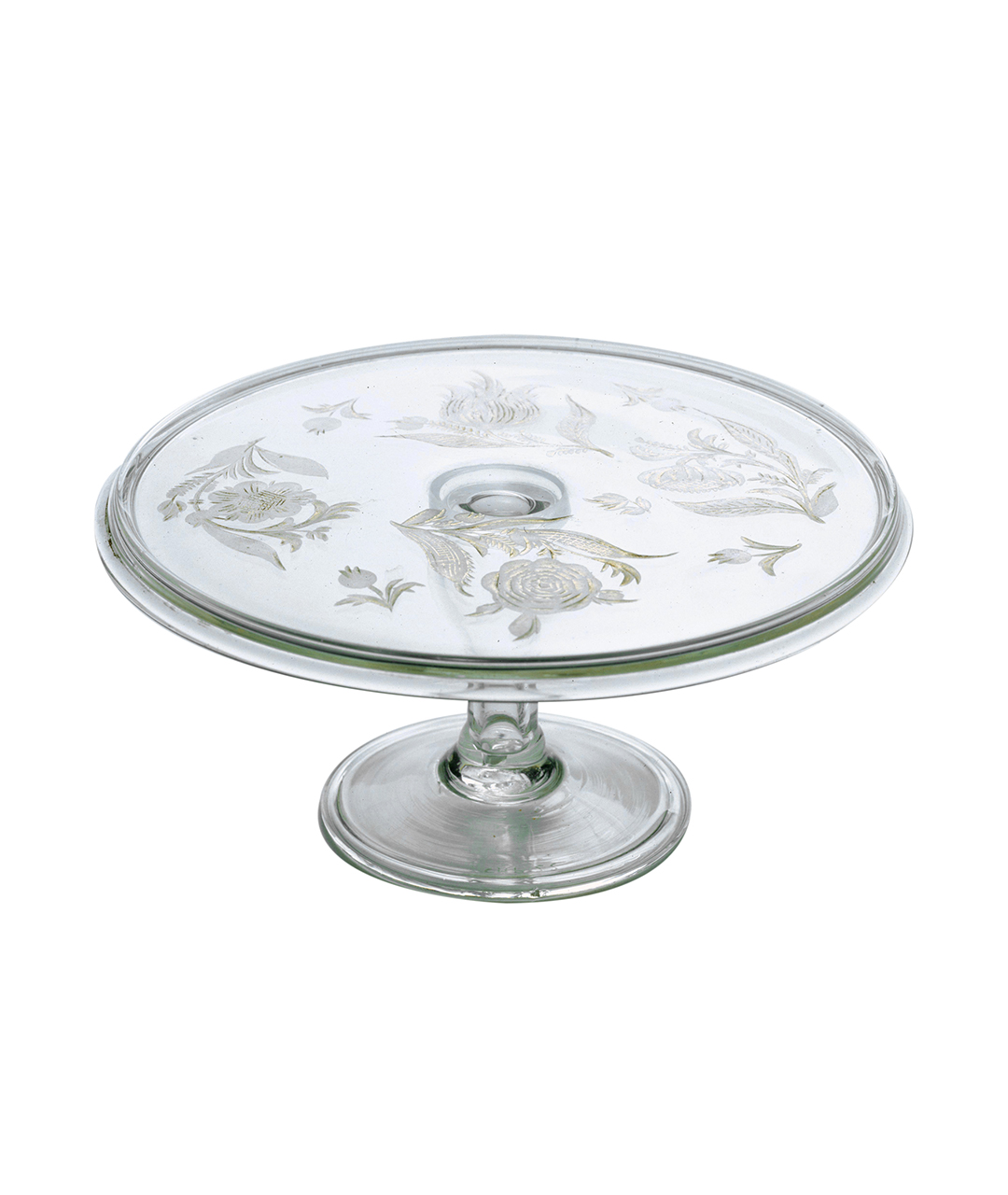 Royal Glass Factory of Marinha Grande (?) 1750-1800 Engraved and gilded colourless glass Inventory sheet Salver or tall-stemmed fruit bowl, of English origin, is reproduced in a mid-18th century catalogue of national glassware. They were used for the presentation of desserts a…
Salver
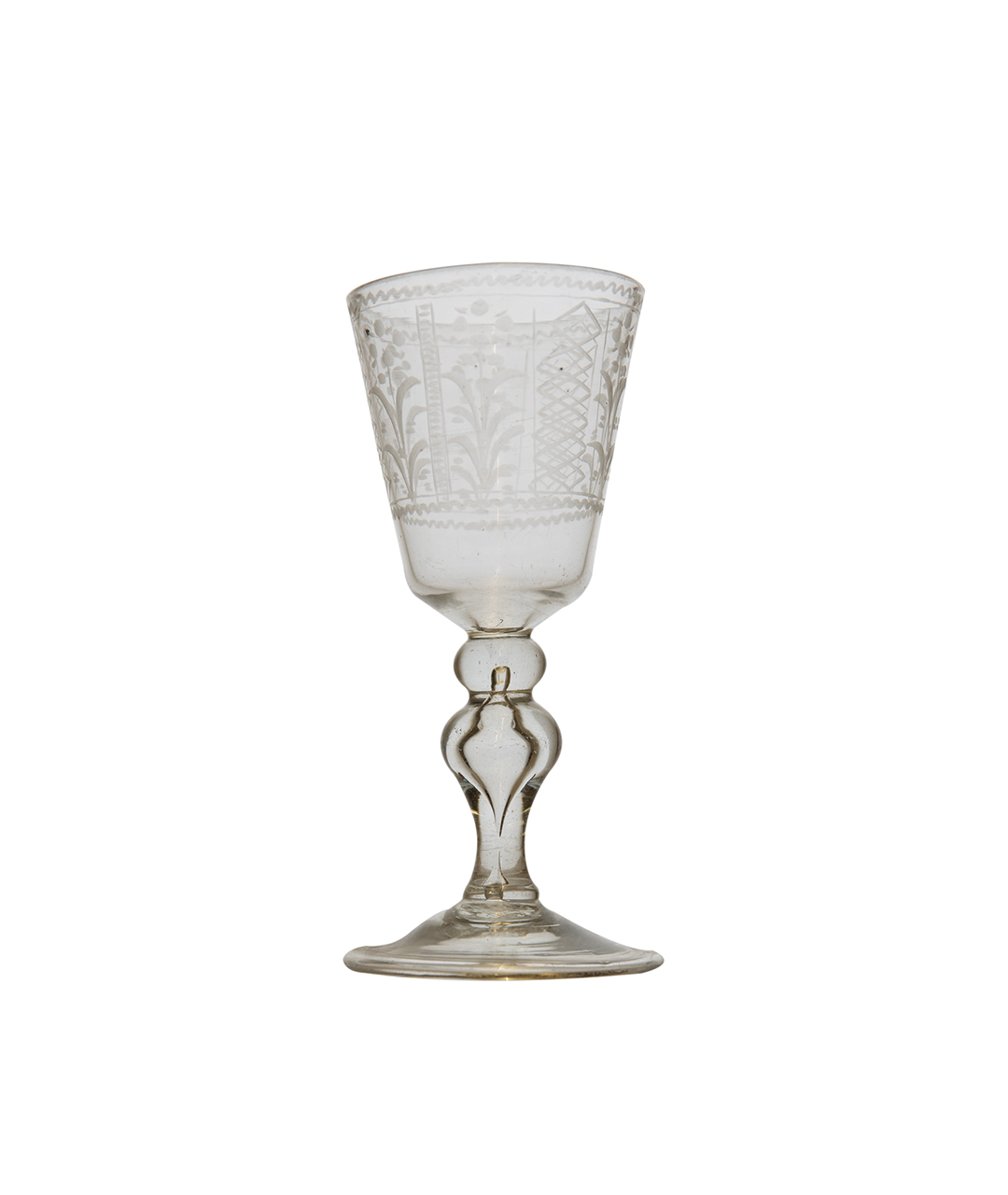 Royal Coina Factory (?) 1719-1947 Colourless wheel engraved glass Inventory sheet Goblet for fortified wines or liqueurs, in keeping with the sophisticated table habits of the nobility for which it was certainly intended. The elegant tall stem followed tastes and techniques of…
Goblet
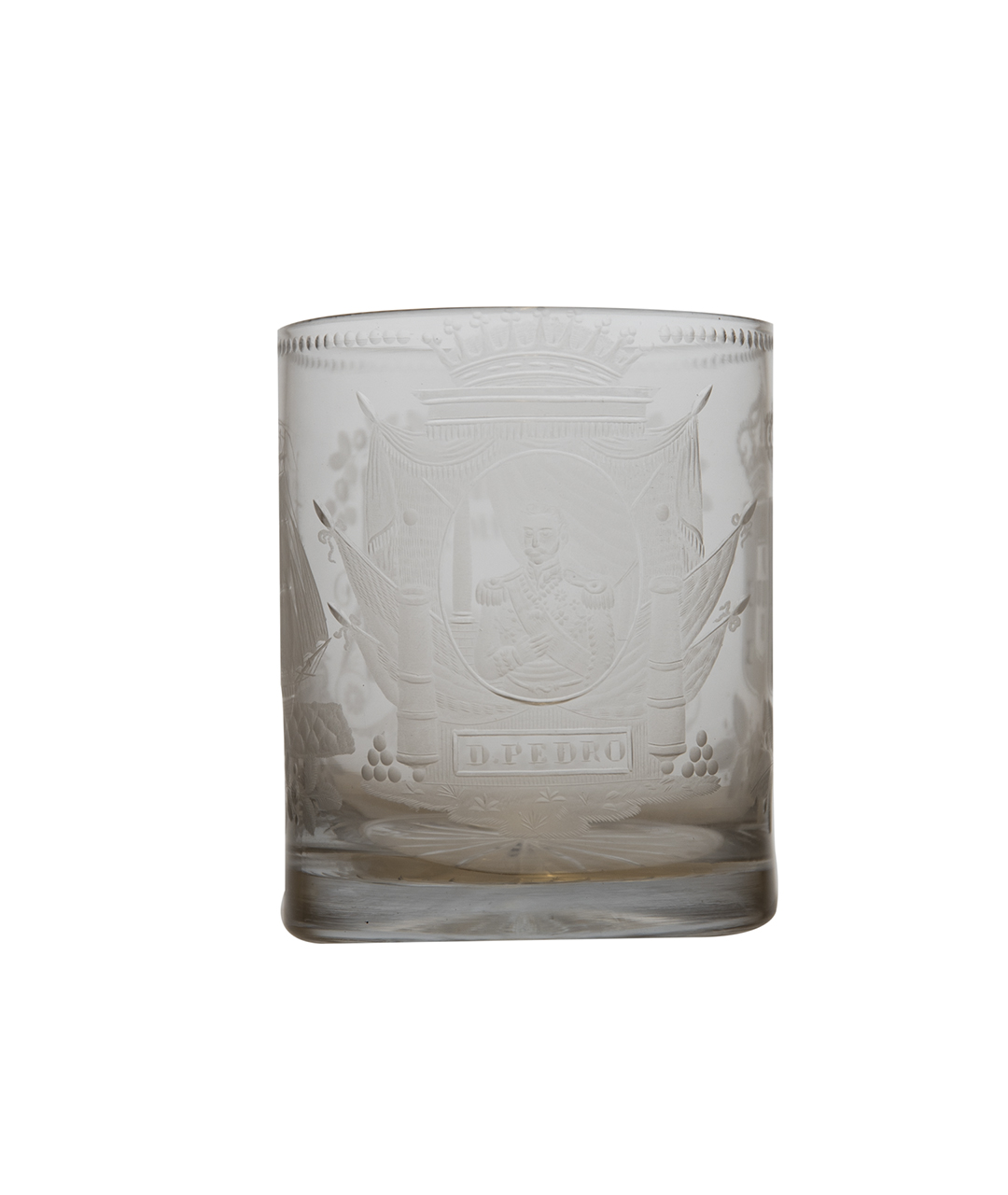 Engraved colourless glass Vista Alegre Factory, Joaquim Manuel das Neves (engraver) 1833-1840 Inventory sheet The delicate engraving evokes the military episode that preceded the Siege of Porto (1832-33), the landing of the army commanded by Pedro IV on Mindelo beach. On the s…
Beaker
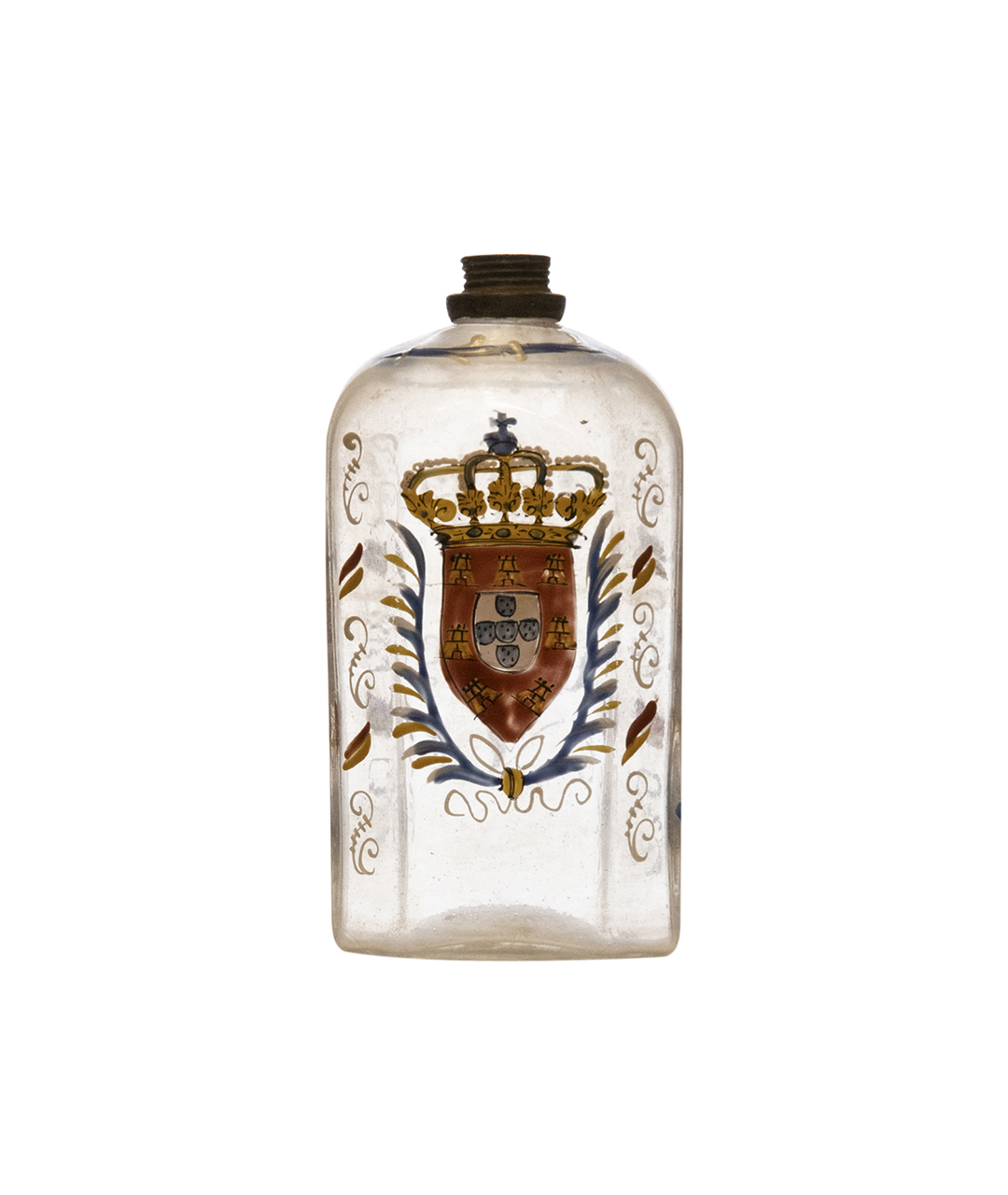 Royal Coina Glass Factory 1719-1748 Colourless glass, polychrome enamel painting; pewter Inventory sheet Flasks were extremely common in the 18th century, being used as containers for precious wines or other liquids, such as scented water or aromatic oils. This prismatic flask…
Flask
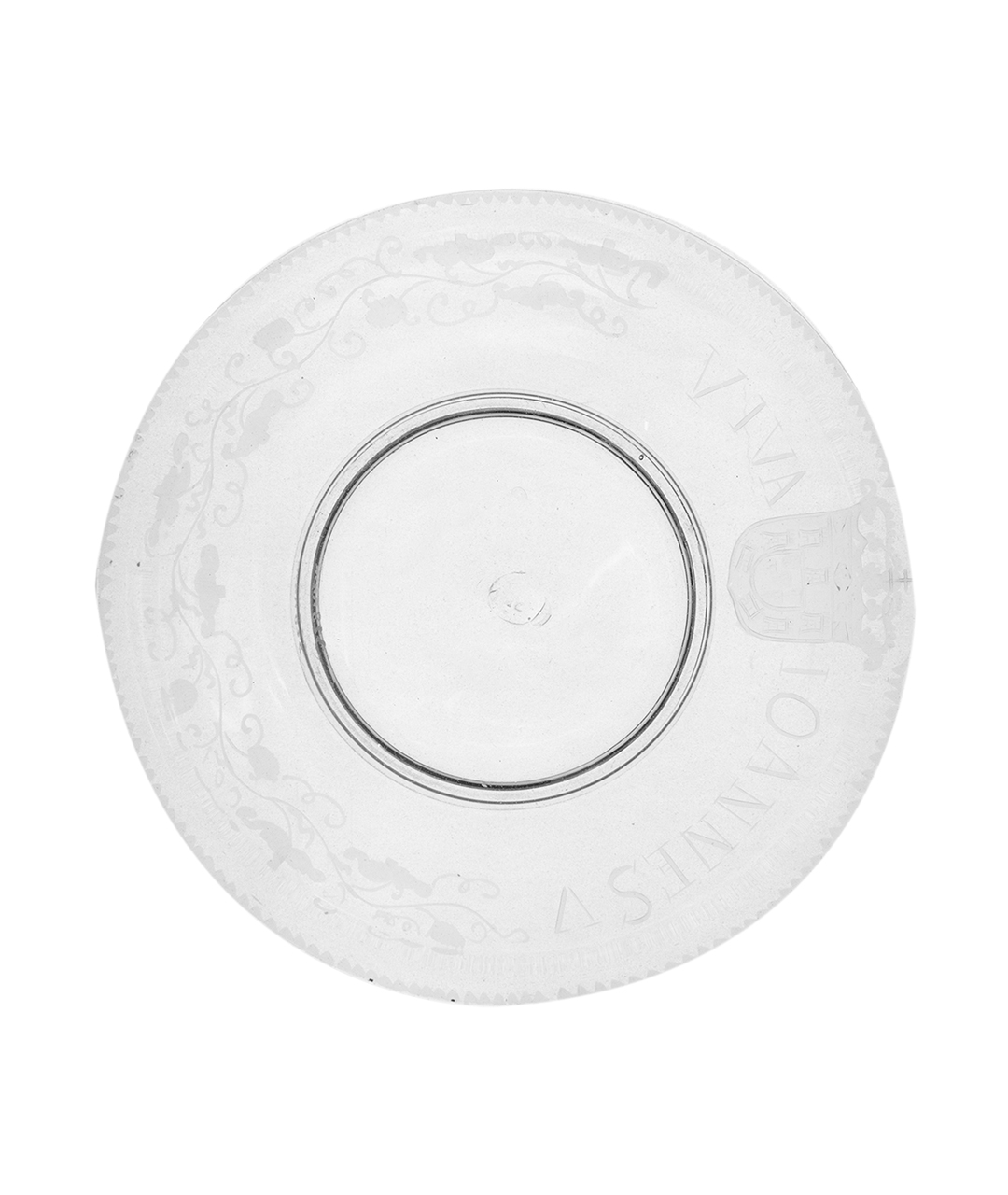 Royal Coina Glass Factory (?) 1719-1747 Colourless wheel engraved glass Inventory sheet The central motif of this plate or salver has the engraved Portuguese royal coat of arms and the inscription VIVAT IOANNES V [Viva João V] [Long Live João V] , which celebrates the monarch…
Dish